Turning Photos Into Collectible Toys: Figures, Blister Packs and Bobbleheads
Turn your own photos into believable toy figures: pick a format, describe vinyl, plush or resin, shoot them like products and design simple packaging.
Visual AI Club6 dk okuma
Bu rehber İngilizce yazılmıştır.
A toy version of your dog, your grandmother in her gardening hat or your five-a-side team makes a great birthday card or a funny group chat moment. The figures that look real share three things: a clearly chosen toy format, honest material descriptions and product-style photography. This guide walks through all three, plus packaging, so your toy looks like it came off a shop shelf rather than out of a 3D program.
Choose the toy format first
Collectible figures come in distinct families, and each has its own proportions, materials and presentation. Writing make me a toy leaves the model to average them all, which produces a generic plastic doll. Pick one format and name its defining traits.
| Format | Material and finish | Signature details |
|---|---|---|
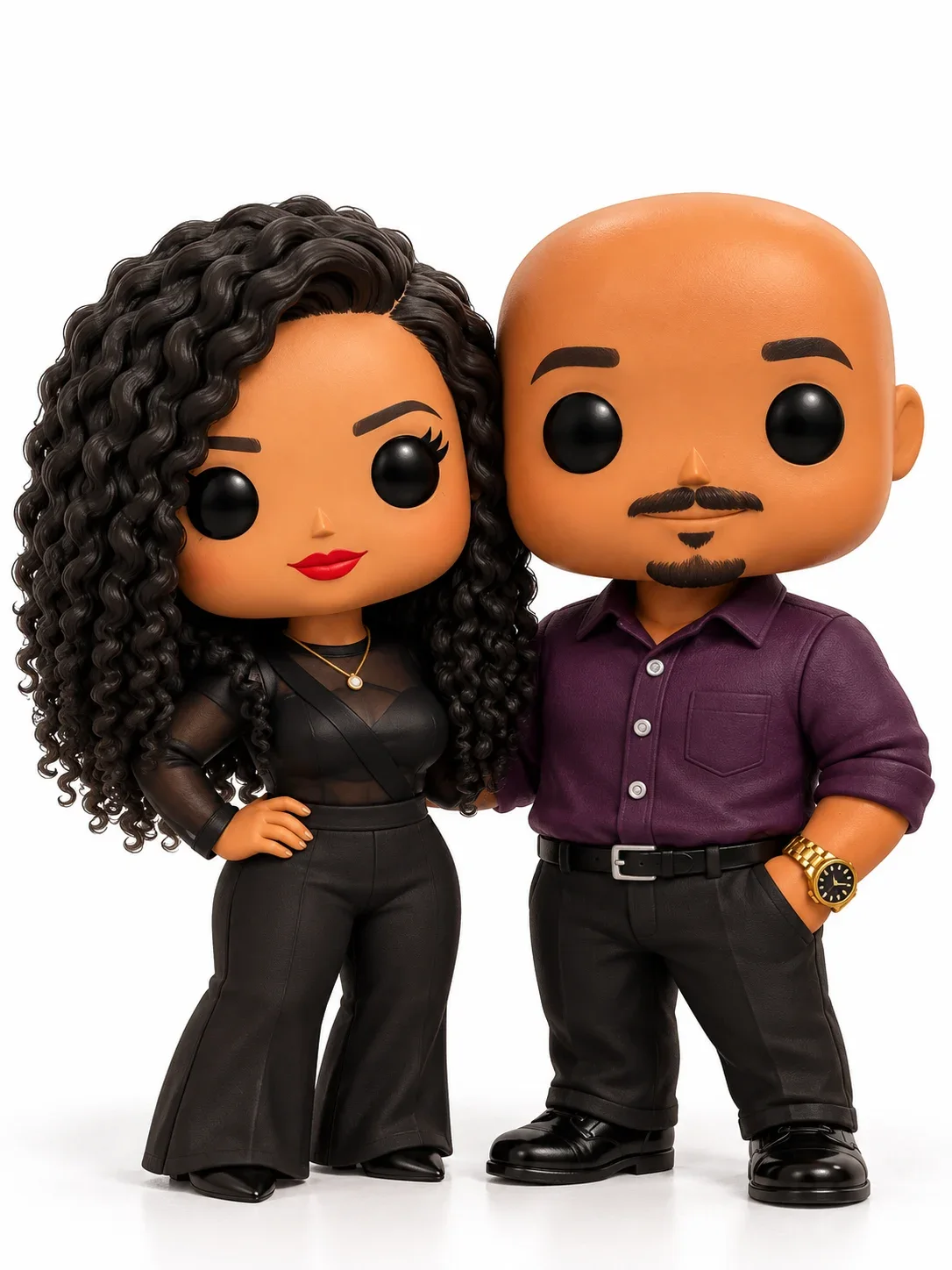
| Vinyl collectible figure | Matte soft vinyl, painted details | Oversized head, small body, simplified face, often a window box |
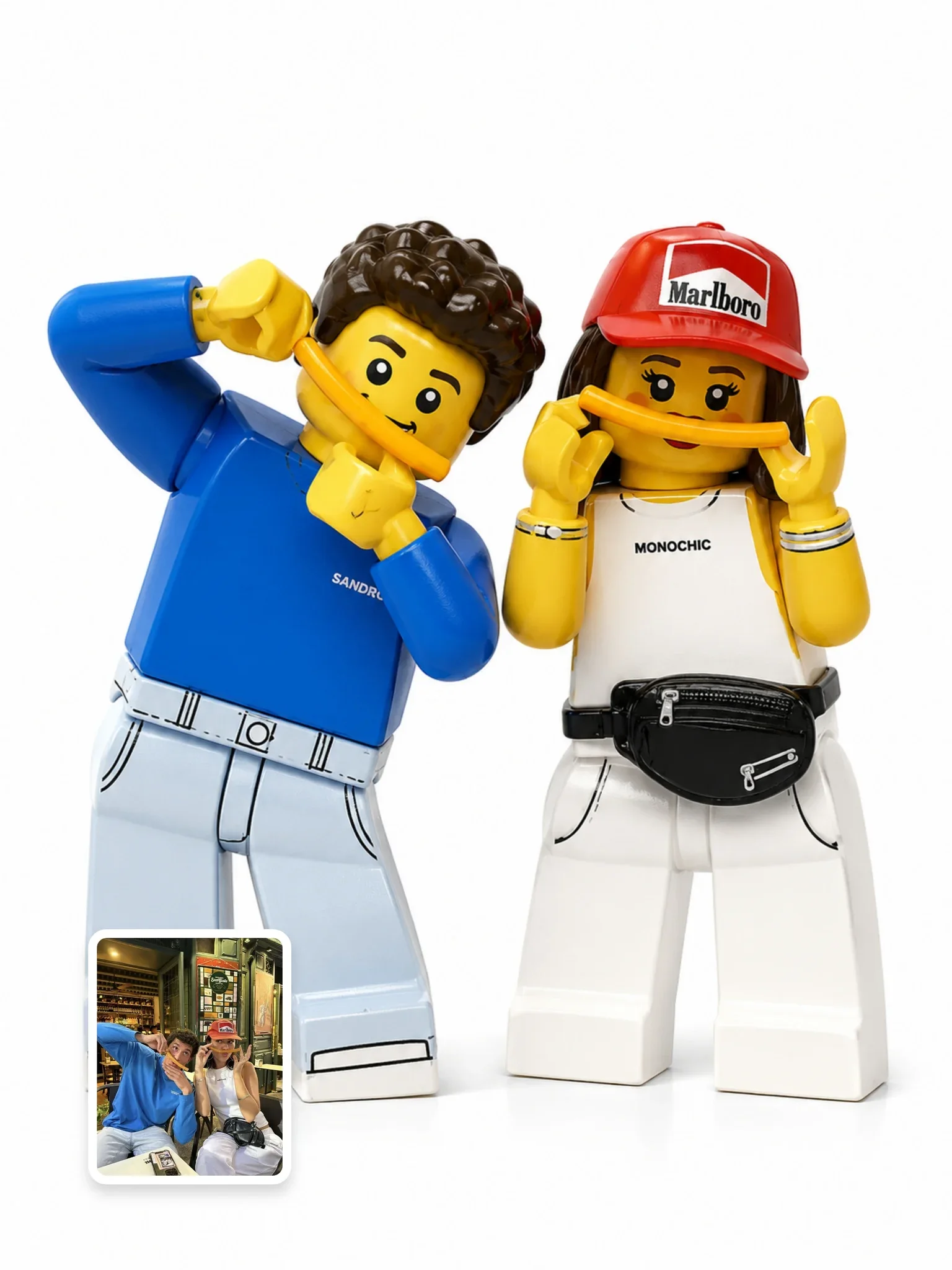
| Toy-brick minifigure | Glossy ABS plastic | Cylinder head, C-shaped hands, printed face and clothing, studs on base |
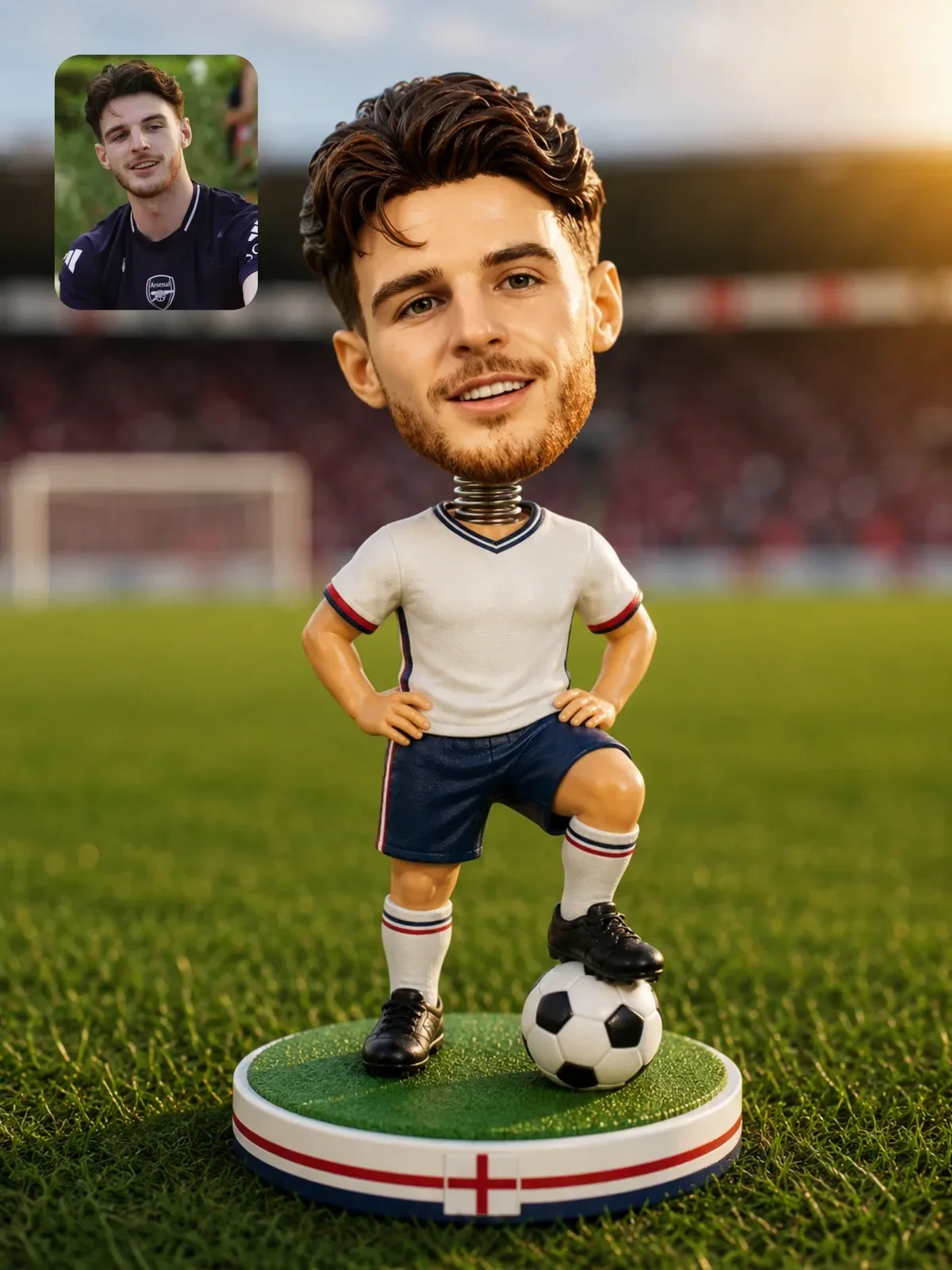
| Bobblehead | Painted resin or vinyl, slight sheen | Huge head on a spring, small body, round or square base with a name plate |
| Action figure in blister pack | Painted PVC, articulated joints | Visible joints, accessories, card backer, clear plastic bubble |
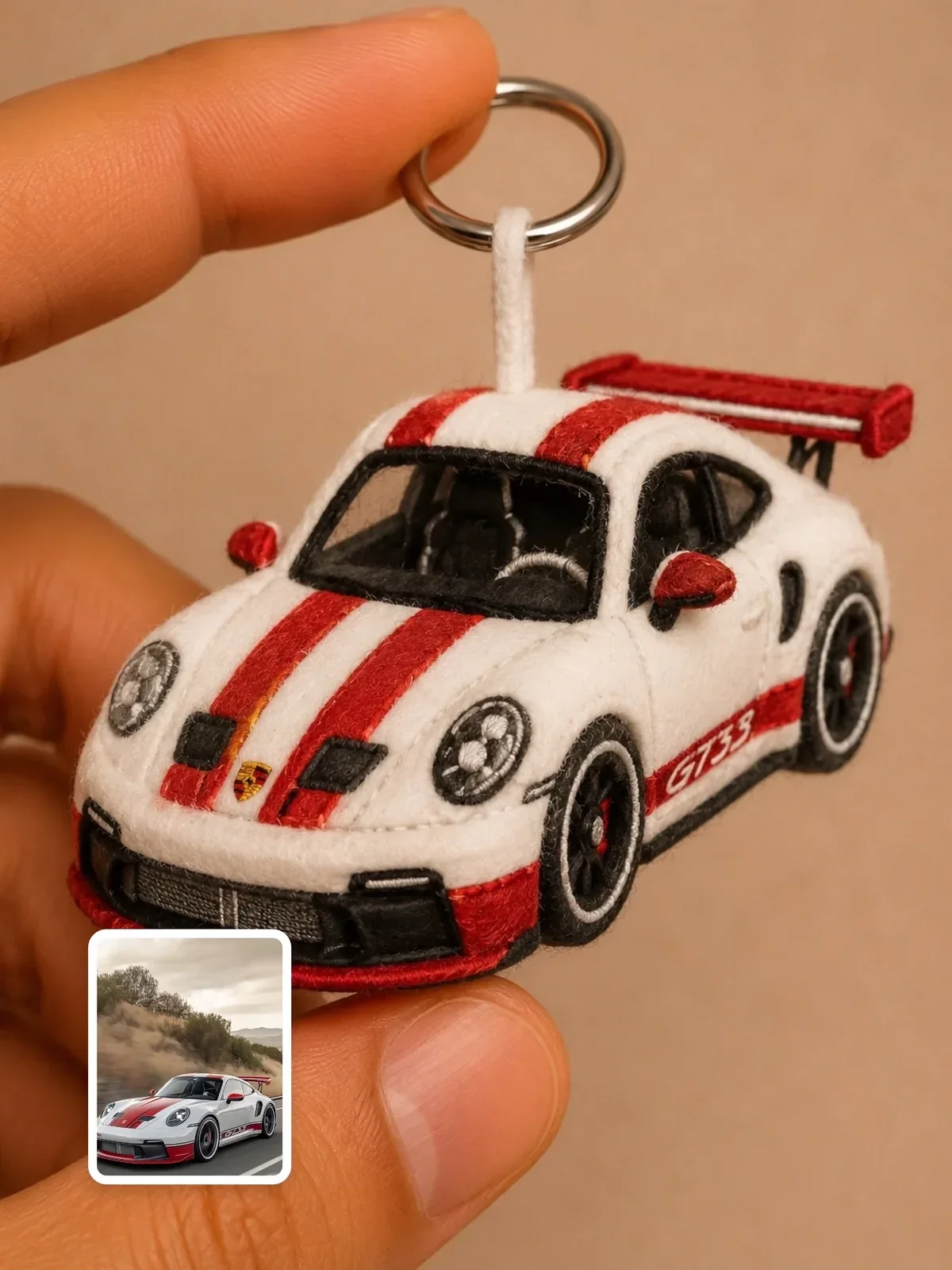
| Plush or keychain | Soft minky fabric, embroidery | Stitched seams, embroidered eyes, metal ring and chain |
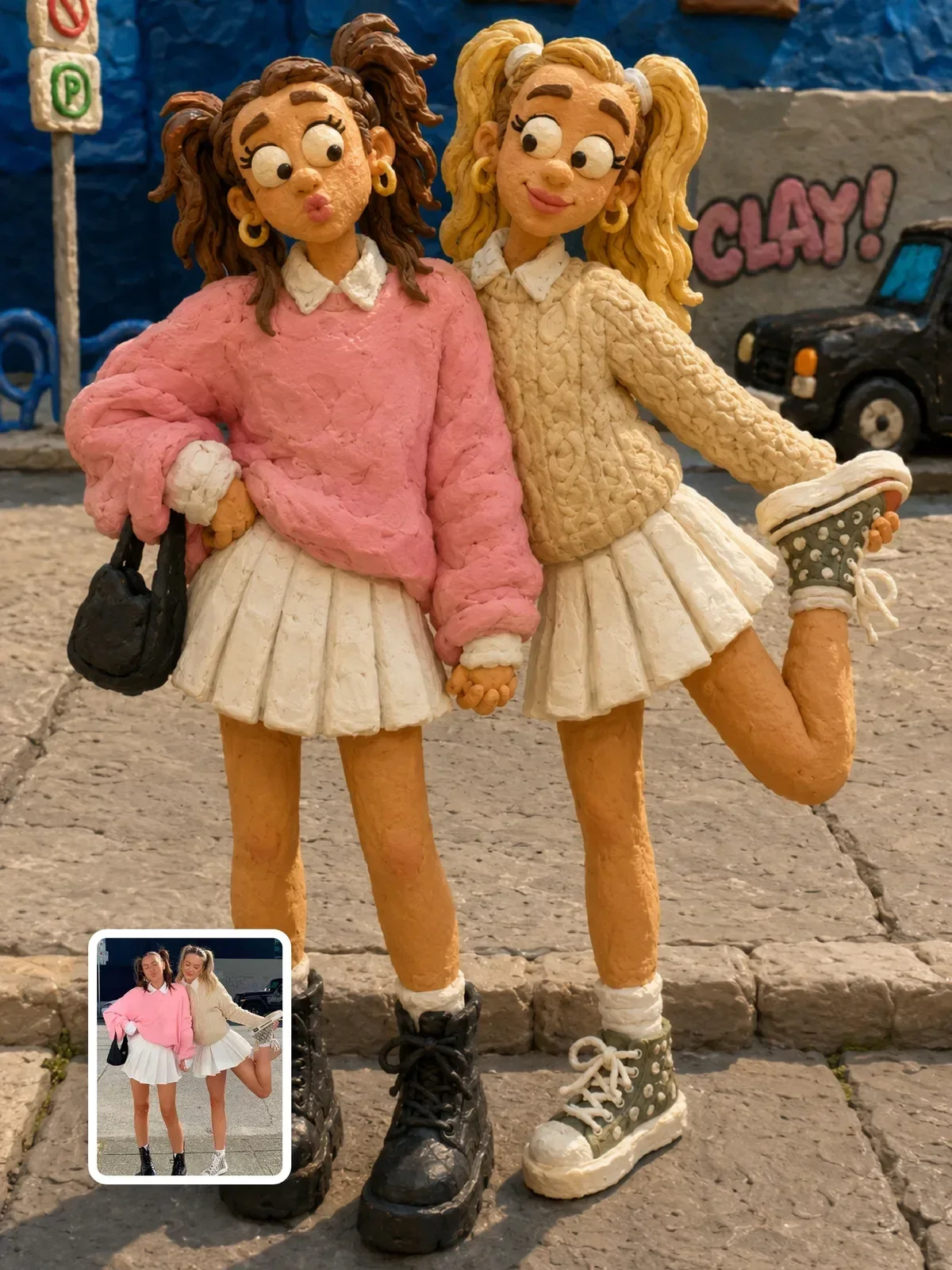
| Handcrafted miniature figurine | Painted resin or clay | Fine sculpted detail, small round display base |
Brand names in this space are trademarks, so describe the style rather than claiming a product. Vinyl collectible figure with an oversized head or toy-brick minifigure style gets you the look without implying an official item. That also matters if you share the image: it is a personal creation, not merchandise.
Materials are what make it believable
Toys are physical objects, and the eye knows how each material reacts to light. Soft vinyl has a gentle matte sheen and slightly rounded edges where it came out of the mold. Hard ABS plastic has crisp edges and sharper reflections. Painted resin shows tiny brush variations. Fabric shows fibers, stitched seams and slight fuzz along the edges.
- Mold lines: a faint seam along the side of a head or arm is a strong realism cue for vinyl and PVC.
- Paint applications: printed or painted eyes, slight overspray at color borders, crisp printed logos on clothing.
- Joints: visible swivel joints at shoulders and hips for action figures; none for vinyl statues.
- Plush details: embroidered eyes, felt appliqué, stitched seams, a small fabric tag.
Turn this photo into a cute toy figure.
Turn the person in this photo into a matte soft-vinyl collectible figure about 10 cm tall: oversized head, small body, simplified painted eyes, hairstyle and red jacket kept recognizable, a faint mold seam along the side of the head. Standing on a light gray seamless backdrop.
Photograph it like a product
Toy photos look real when they follow the rules of product photography. Small objects are shot close, usually on a seamless paper sweep that curves from the table up the wall, so there is no horizon line. Light comes from one or two large softboxes, giving soft shadows and long smooth reflections on glossy surfaces.
A macro or short telephoto lens, around 90 to 105mm, is common because it lets the photographer stay back from the object and avoids distortion. Small apertures like f/8 to f/11 keep the whole figure sharp; for very small objects, product photographers often stack several focus distances. In a prompt, sharp from front to back, product photography, 100mm macro, softbox lighting covers all of that.
Decide on one of two moods. Clean e-commerce: seamless white or light gray, soft even light, no props. Collector shelf: wooden shelf or desk, a few soft background objects out of focus, a warm practical lamp. Mixing them weakens both.

Building a believable blister pack
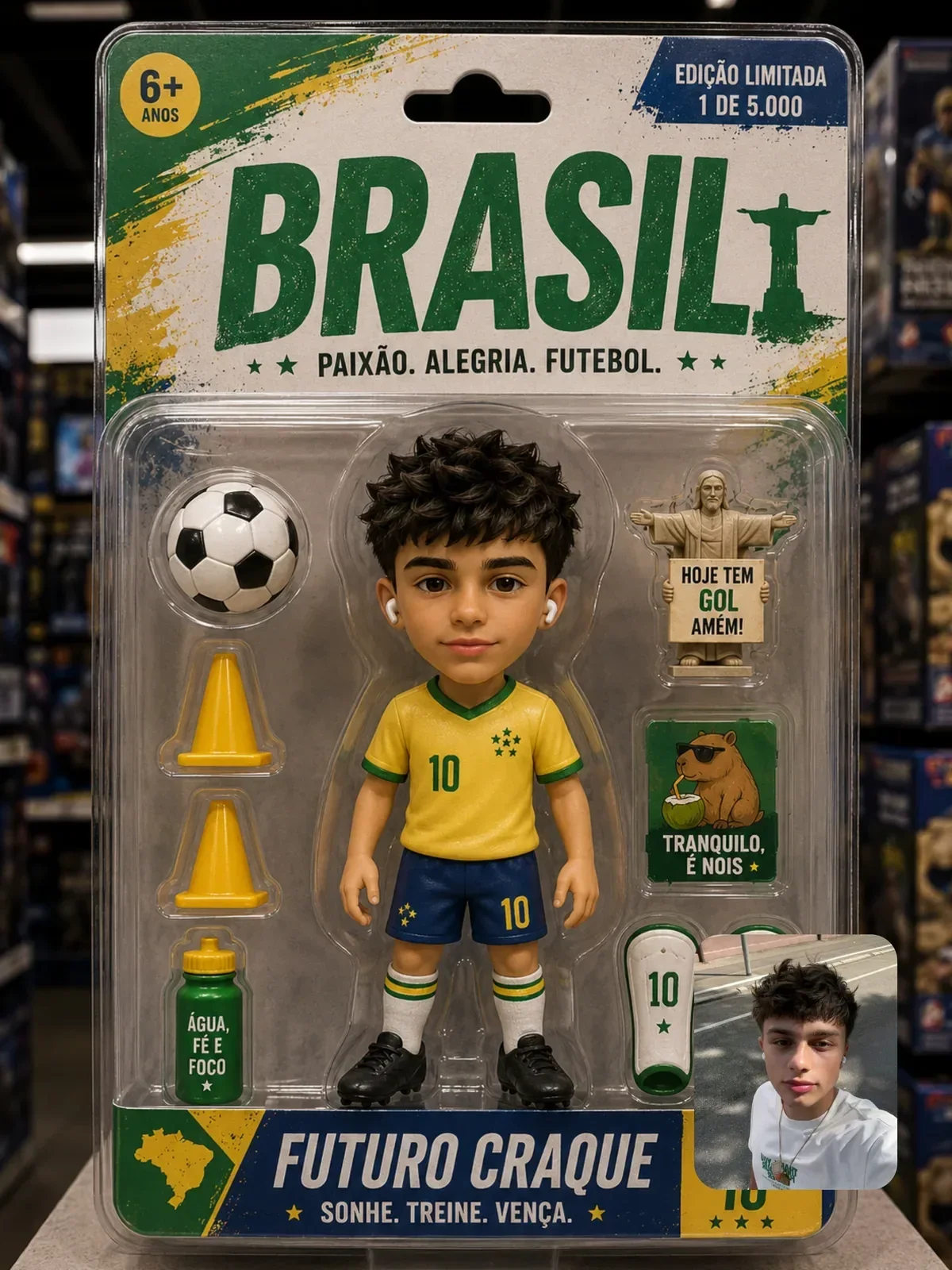
Blister packaging is a mini design project, and models do better when you describe it piece by piece instead of trusting the word packaging. Real retail blisters have a predictable anatomy.
- Card backer printed with background art, usually bold color and graphic shapes.
- Header at the top with a punched hang hole for a store peg.
- Clear plastic bubble molded around the figure and its accessories, with bright reflections along its curves.
- Accessory tray with small items like a ball, a mug, a tool or a pet.
- Front text: a short product name, the character's name and a small age label.
- Back panel (if shown): a few small photos and a brief description.
The bubble is what sells it. Ask for clear plastic blister with realistic reflections and slight warping and photograph the pack straight on with a softbox slightly to one side, so one clean highlight runs down the plastic. The soccer player toy in a blister pack is a good model of front-facing packaging with a clear hierarchy.
Keep packaging text short: two to four words for the title and a name. Long text is where image models still slip. If the lettering matters, the techniques in getting clean text in AI images will help, and you can always correct a letter in an image editor afterward.
Bobbleheads and big-head proportions
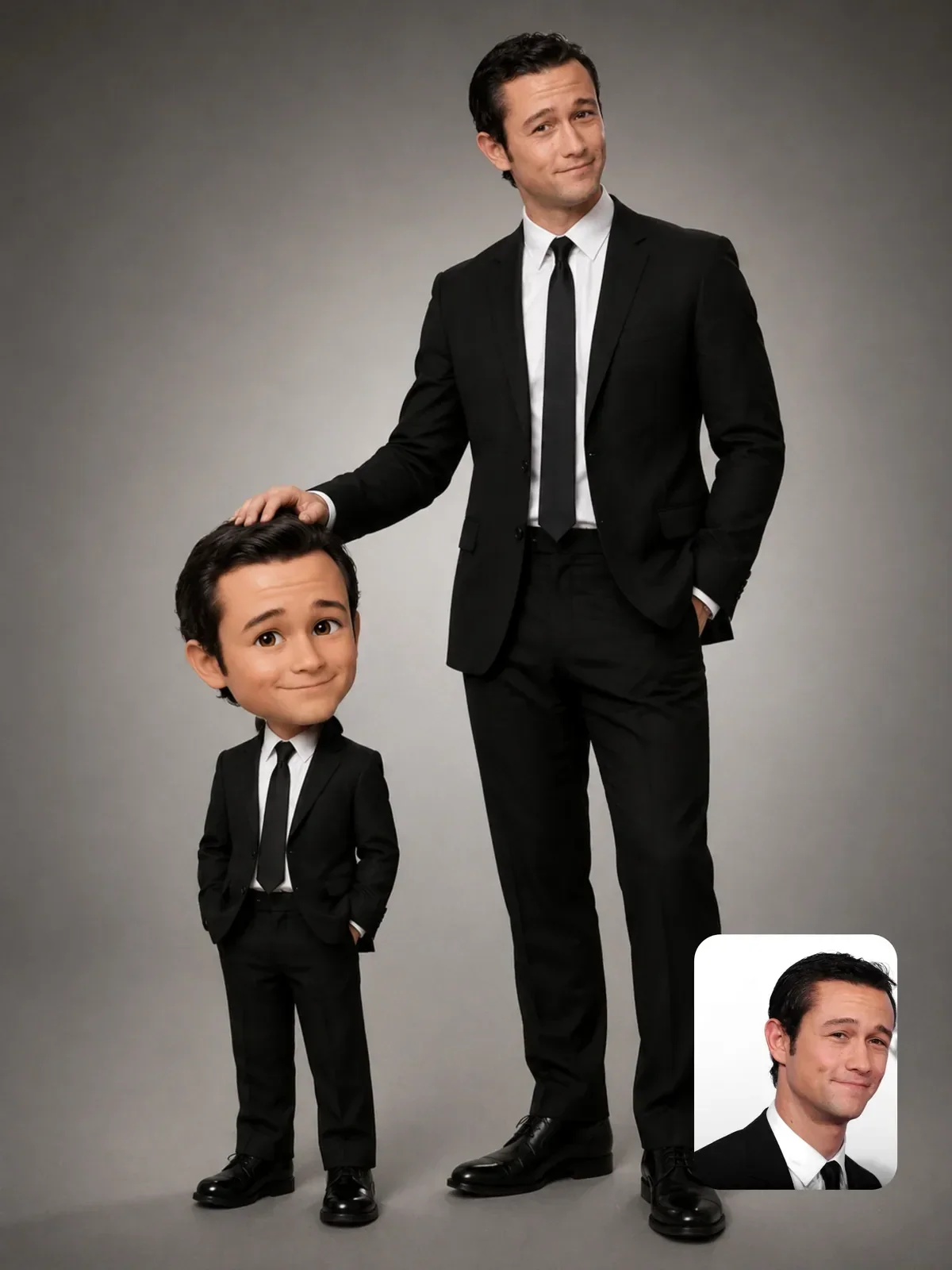
Bobbleheads exaggerate in a very specific way: the head is roughly as large as the entire body, sometimes larger, and sits on a visible spring or neck peg. The body is small and stiff, often posed in one characteristic action, and the base carries a name plate or team colors. Describe the ratio directly, such as head about the same height as the body, because words like big head are too vague.
Interestingly, the bobblehead football figure asks to keep only the general appearance, hairstyle silhouette and hair color, rather than copying the face exactly. That is a smart choice for toys. Heavy stylization combined with an exact face can look uncanny, while a few strong identity cues on a cartoon face reads as charming.
Stylize the person, keep the signature
What makes a toy feel like a specific person is rarely the nose or the jaw. It is the signature: the curly hair, the round glasses, the favorite cap, the band T-shirt, the way they stand with hands in pockets. Before you write the prompt, list the three things friends would mention if asked to describe that person, and make sure every one of them is in your instructions.
- Hairstyle silhouette and color
- One accessory: glasses, hat, scarf, headphones
- Outfit colors and one standout garment
- A typical pose or held object: coffee cup, guitar, football
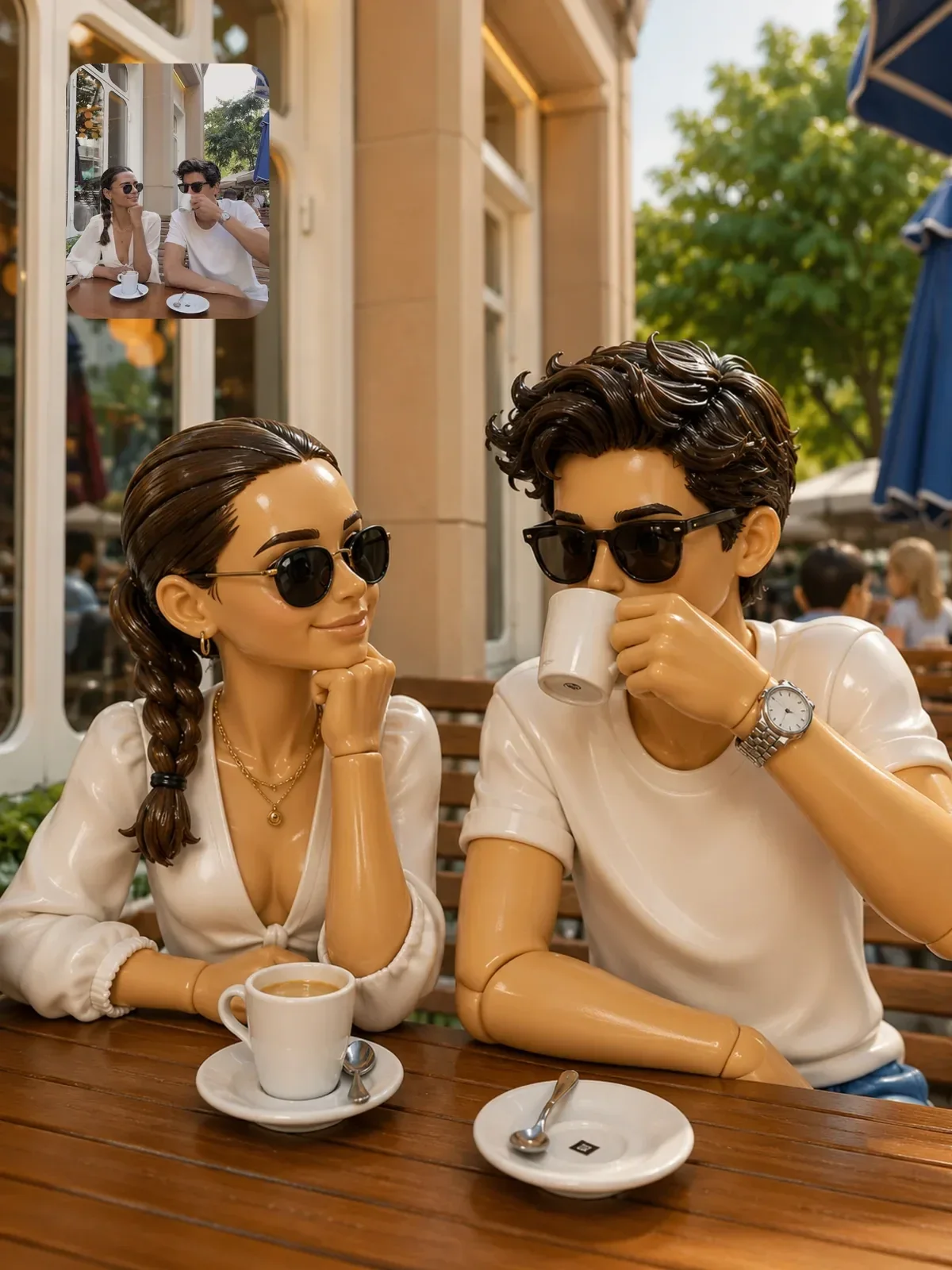
Only transform photos of yourself or of people who are happy to be turned into a toy, and ask parents before using any child's photo. For group shots, such as a family or a team, keep the number of figures equal to the number of people and describe their relative heights; group and couple photos explains why that matters.
Show the scale
Without a reference, a figure could be a statue or a thumbnail. Scale cues fix that instantly. The most effective is a human hand: two fingers holding a keychain, a palm under a small figure, a hand reaching toward a shelf. Familiar objects work too: a coffee mug, a keyboard, a pencil, a houseplant leaf.
The plush keychain character uses fingers holding the keychain in a close macro shot, which tells you its size and invites touch at the same time. Shallow depth of field around the hand reinforces that you are looking at something small and close.
The most playful scale cue is the real person. Placing someone next to a figure of themselves, as in you beside your chibi figurine, makes the size difference obvious and lets viewers compare the likeness directly. Light both with the same softbox so the figure and the person clearly share one room.
Before you share it
- The format is named and its proportions are described.
- At least two material cues are present, such as matte vinyl and a mold seam.
- Lighting and backdrop match one mood: clean product or collector shelf.
- The person's three signature traits survived the transformation.
- Packaging text is short and uses an invented name, not a real brand or logo.
- There is a scale cue if the figure is shown outside its packaging.
- Everyone shown agreed to it, and the image is shared as a fun personal creation.
A good first project is a three-image set of one person: a vinyl figure on a seamless backdrop, the same figure in a blister pack, and a plush keychain in someone's fingers. Keeping the signature traits identical across all three is excellent practice for any style transformation.