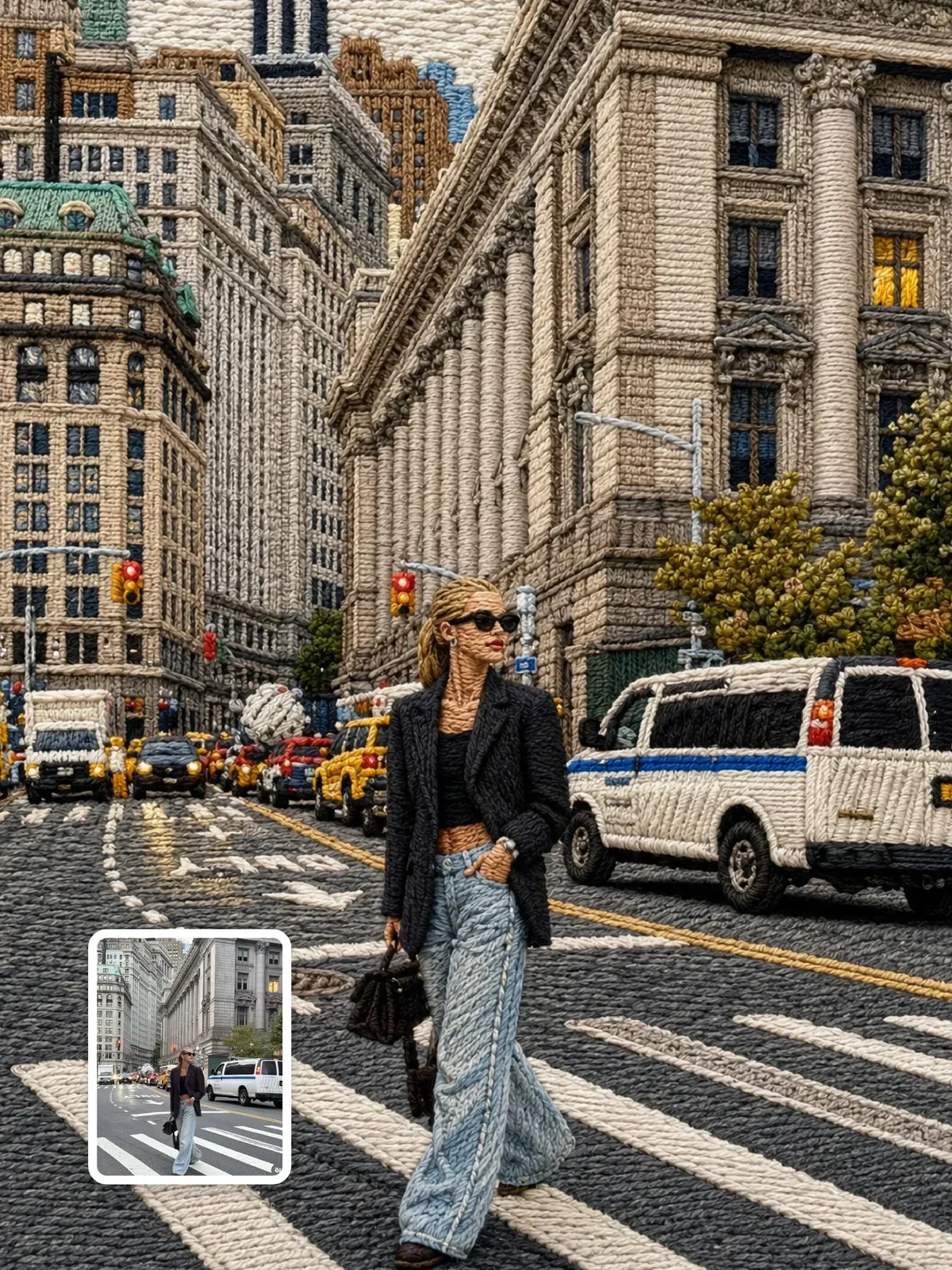
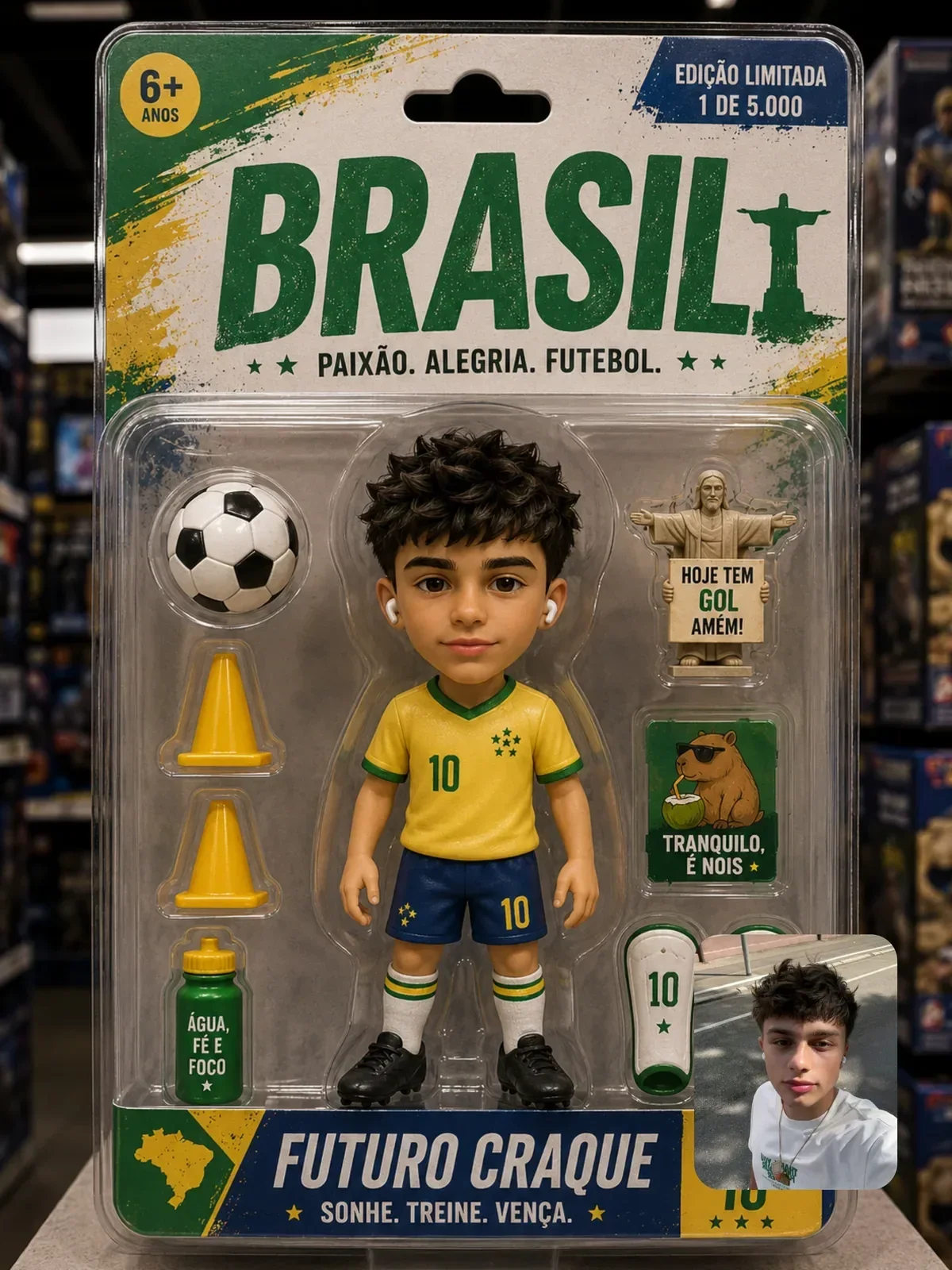
Claymation and Plasticine Worlds: Getting the Handmade Look
Prompt clay and plasticine scenes that look sculpted by hand: fingerprints, tool marks, the right sheen, miniature-set lighting and a stop-motion feel in video.
Visual AI Club7 min de lecture
Ce guide est rédigé en anglais.
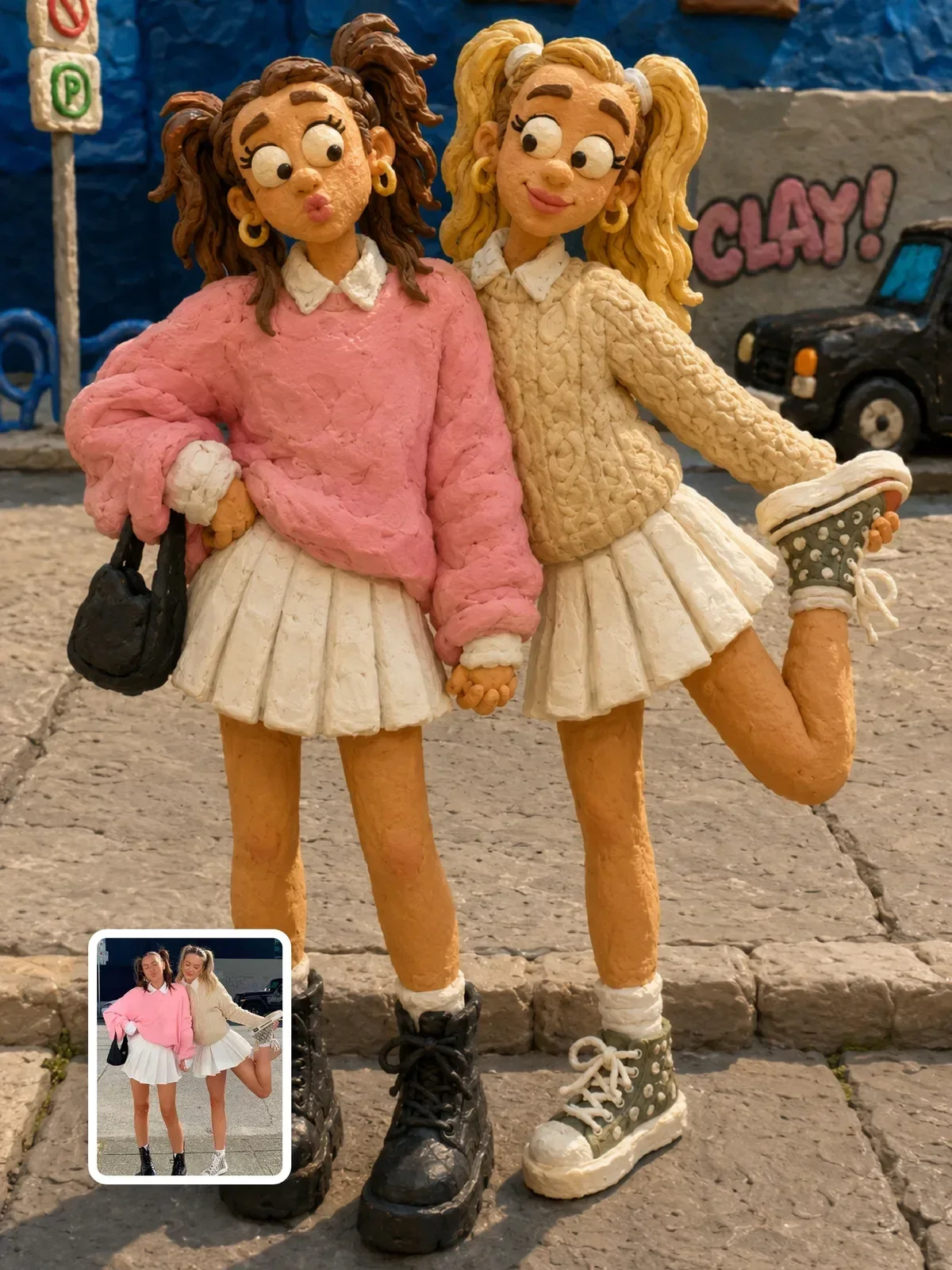
Clay is one of the few styles where small mistakes are what make it work. A thumbprint on a cheek, a slightly lopsided ear or a seam where two colors meet tells the viewer a person shaped this by hand. This guide shows you how to prompt those signs of making, light a scene like a tabletop animation set, and avoid the glossy toy-plastic look that image models often fall back on.
Why AI clay often looks like plastic
Image models have seen far more polished 3D renders than photos of real modeling clay. Ask for clay style and you frequently get perfectly smooth surfaces, symmetrical faces and a bright, even sheen. That is the look of injection-molded vinyl or a clean CG render, not of something squeezed between fingers.
Real clay records the hands that shaped it. Surfaces are slightly uneven, colors are flat and matte or softly waxy, and small details are stuck on as separate pieces. To get there, your prompt needs to describe the material and the making, not just the style name.
Know your clay: three different looks
Clay is not one material, and each type photographs differently. Naming the right one gives the model a much clearer target.
Oil-based plasticine
The classic stop-motion material. It never fully dries, stays soft, picks up fingerprints easily and has a gentle waxy sheen under strong light. Colors are bold and slightly chalky. Use it when you want the warm, squishy look of a handmade animated short.
Polymer clay
Baked in an oven until hard, polymer clay looks smoother and more refined, with crisper details and a satin finish. It suits collectible miniatures, charms and small figurines. If you want handmade but tidy, describe baked polymer clay with a satin finish.
Air-dry clay
Dries matte and pale, sometimes with fine cracks, and is usually painted afterward. It gives a craft-table, ceramic-adjacent feel. Use it for rustic dioramas, folk-art figures or anything that should look more sculpted than animated.
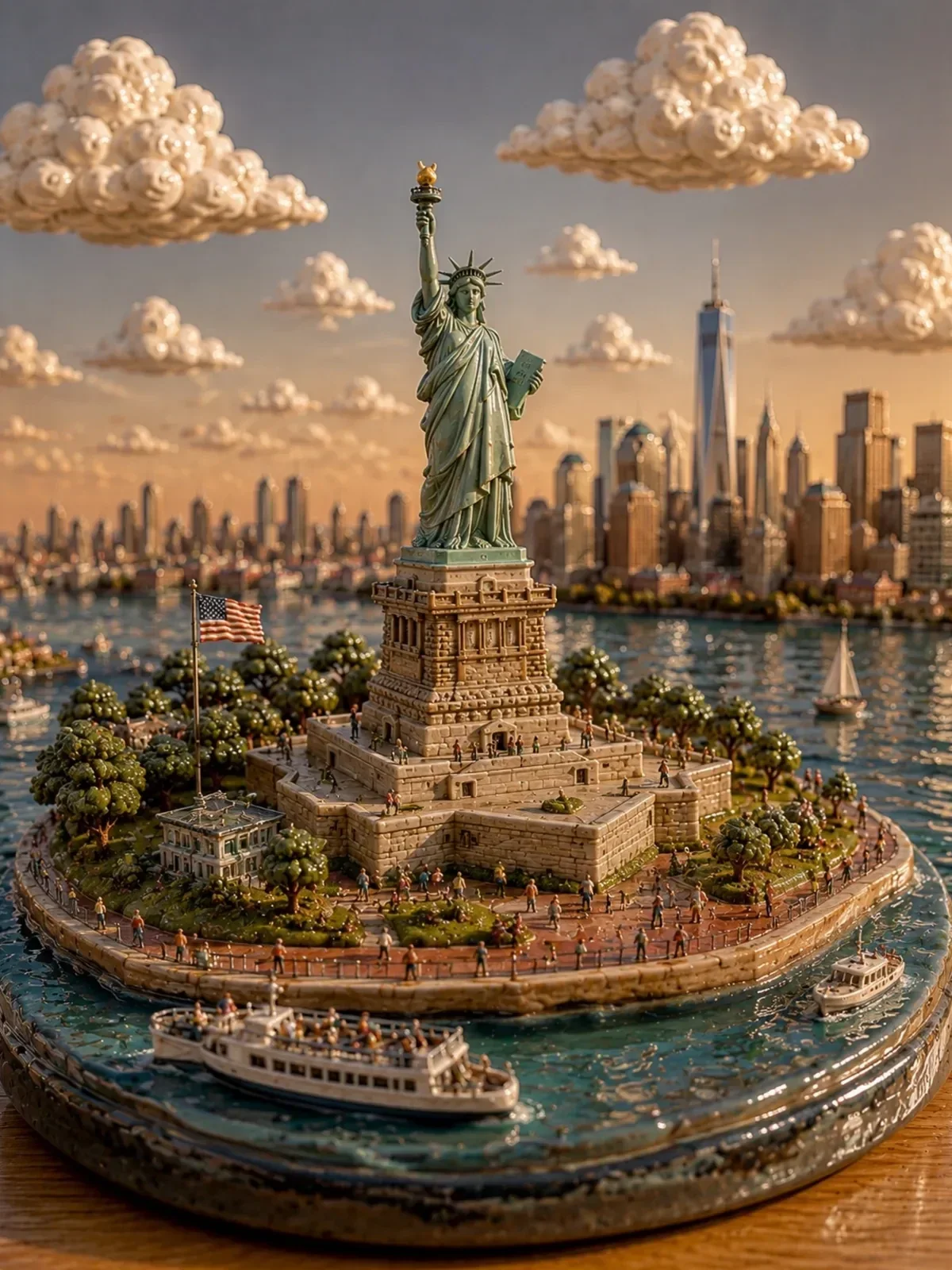
Glossy and clay can coexist: some dioramas pair matte clay with clear resin for water or glass. The clay-and-resin landmark diorama shows this combination, and miniature worlds and dioramas explores it further.
Five signs of handmade work to put in your prompt
- Fingerprints and thumb marks, especially on large smooth areas like cheeks, hills and car bodies.
- Tool marks: small grooves from a sculpting tool, dotted textures pressed with a pin, hatch lines for fur or grass.
- Imperfect symmetry: eyes not quite level, one arm slightly thicker than the other.
- Assembled parts: eyes as small beads or rolled balls, hair as extruded strands, buttons as flattened dots.
- Visible joins: faint seams where one color of clay was pressed against another.
Clay style scene of a fox in a forest, 3D, cute.
Handmade plasticine scene of a small orange fox sitting among mushrooms in a forest. Visible thumbprints on the fox's back, pressed tool lines for fur, bead-like black eyes slightly uneven, hand-rolled clay mushrooms with soft lumpy caps, matte surfaces with a faint waxy sheen.
Do not overdo it. If every surface is covered in fingerprints, the image looks dirty rather than crafted. Two or three types of evidence, applied lightly, are usually enough.
Light it like a tabletop set
Stop-motion sets are small, often built at a scale where a character is only a few inches tall. That scale has photographic consequences. The camera is close, so depth of field is shallow unless the aperture is very small. Lights are small lamps placed just outside the frame, so they create defined shadows and warm pools of light.
- Key light: a small soft lamp to one side, giving rounded shading that shows the sculpted forms.
- Practical lights: tiny lamps, lit windows or candles built into the set, glowing warmly.
- Background: painted backdrop or out-of-focus set pieces rather than an infinite horizon.
- Lens feel:
macro photography of a miniature set, shallow depth of fieldsignals small scale immediately.
Warm tungsten light around 3200K is a natural choice for cozy interiors. Cooler light suits night scenes or wintery sets. Avoid describing vast cinematic skies with volumetric god rays at full scale, because they contradict the tabletop feeling unless you want a deliberately epic contrast.
Designing a clay character
Clay figures are simplified for practical reasons: big shapes are easier to sculpt and to animate. Heads are usually large relative to bodies, hands are sometimes reduced to mitten shapes or four fingers, and expressions come from a few strong features such as wide eyes, a simple mouth line and expressive eyebrows.
Think about weight. Clay characters feel heavy and grounded; their feet plant firmly, their bodies sag slightly. Words like chunky, rounded, stubby limbs and solid base help. For a broader look at stylized proportions, compare 3D chibi and cartoon characters, which shares the big-head logic but uses smoother materials.
Color and set dressing
Clay colors come straight from the block or are mixed by kneading, so they appear as solid, slightly chalky fields rather than smooth gradients. When two colors are not fully blended you get marbled streaks, a lovely detail for rocks, planets or candy. Ask for solid matte clay colors, a few marbled streaks where colors were not fully mixed instead of airbrushed shading.
Real animation sets are rarely made of clay alone. Clouds are often cotton wool, grass can be flocked felt, buildings may be cardboard or foam board painted to match, and water is frequently clear resin or crinkled cellophane. Mixing one or two of these materials into your prompt, such as cotton wool clouds hanging on visible wires or felt grass, makes the whole world feel built by hand rather than rendered.
Turning a photo into a clay world
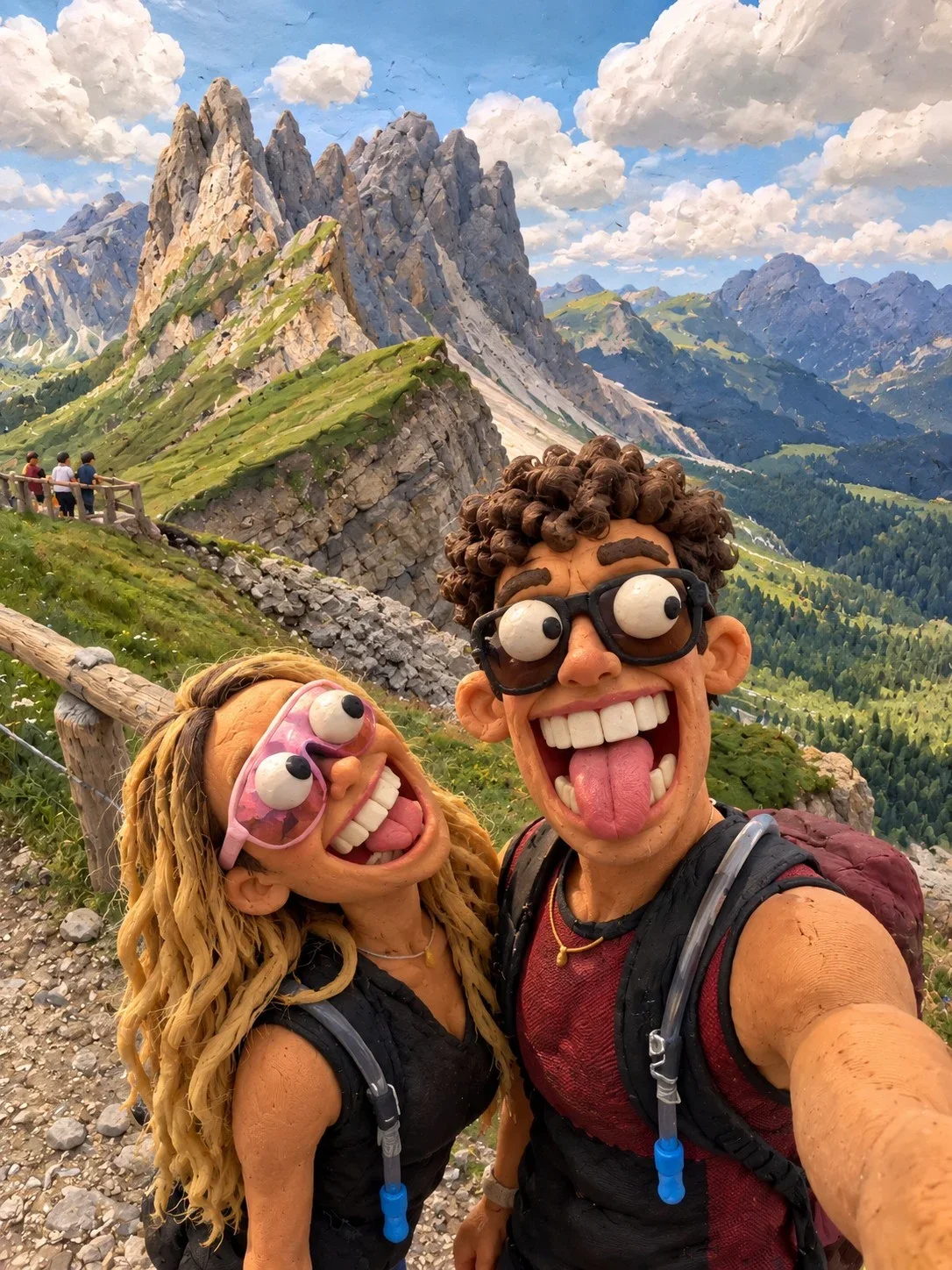
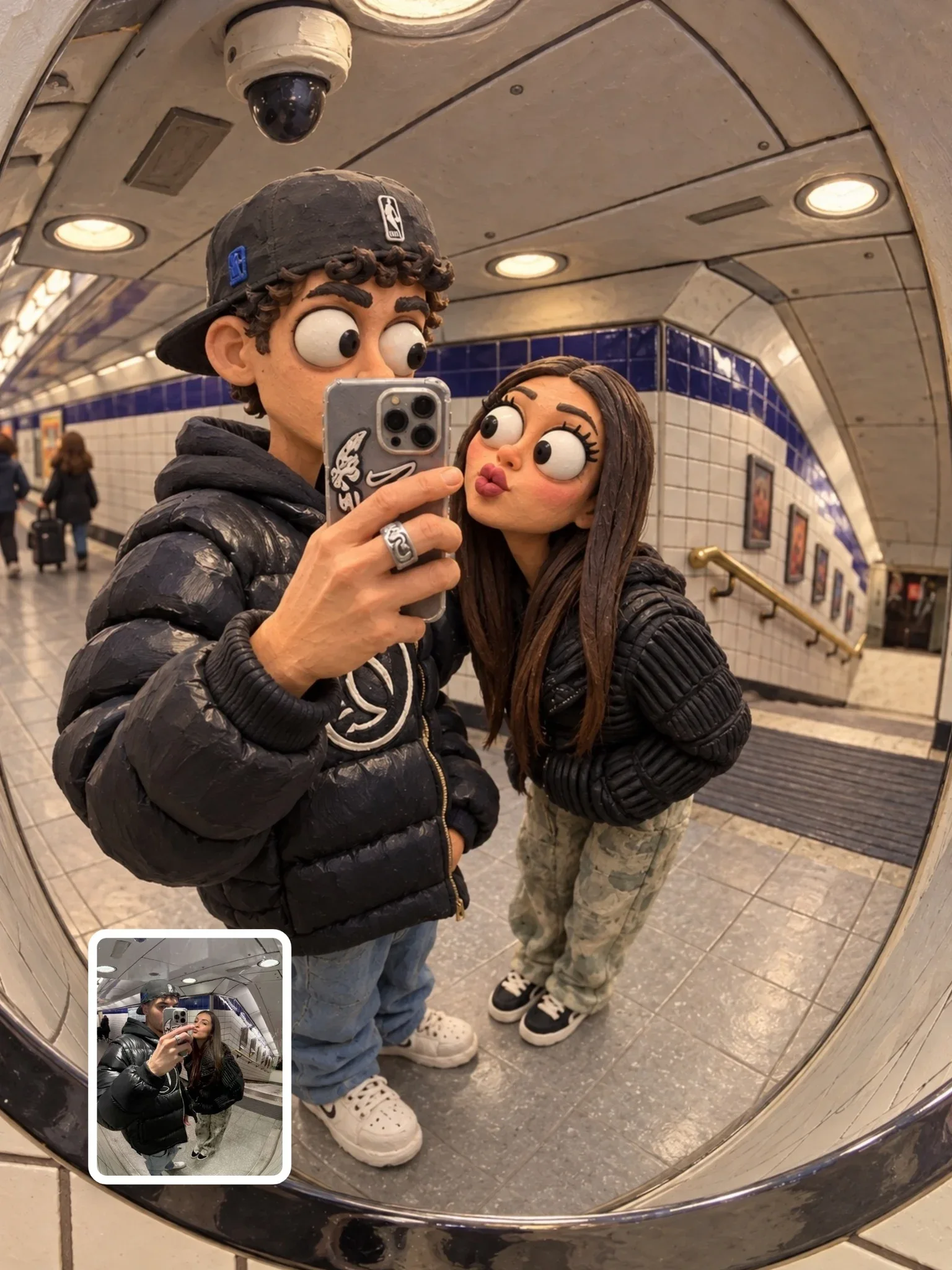
Transforming an existing photo into plasticine is one of the most satisfying uses of this style, because everyone recognizes the original scene. The difficulty is that a strong style transfer tends to rearrange things. The solution used in the absurdist claymation world is a composition lock: keep the framing, perspective and every object's position, and change only the material.

Once the layout is locked, you can push the character design far. The absurdist plasticine approach exaggerates heads and features into deliberately silly figures while the room, car or street stays exactly where it was. That tension between a faithful layout and wild characters is what makes the results funny.
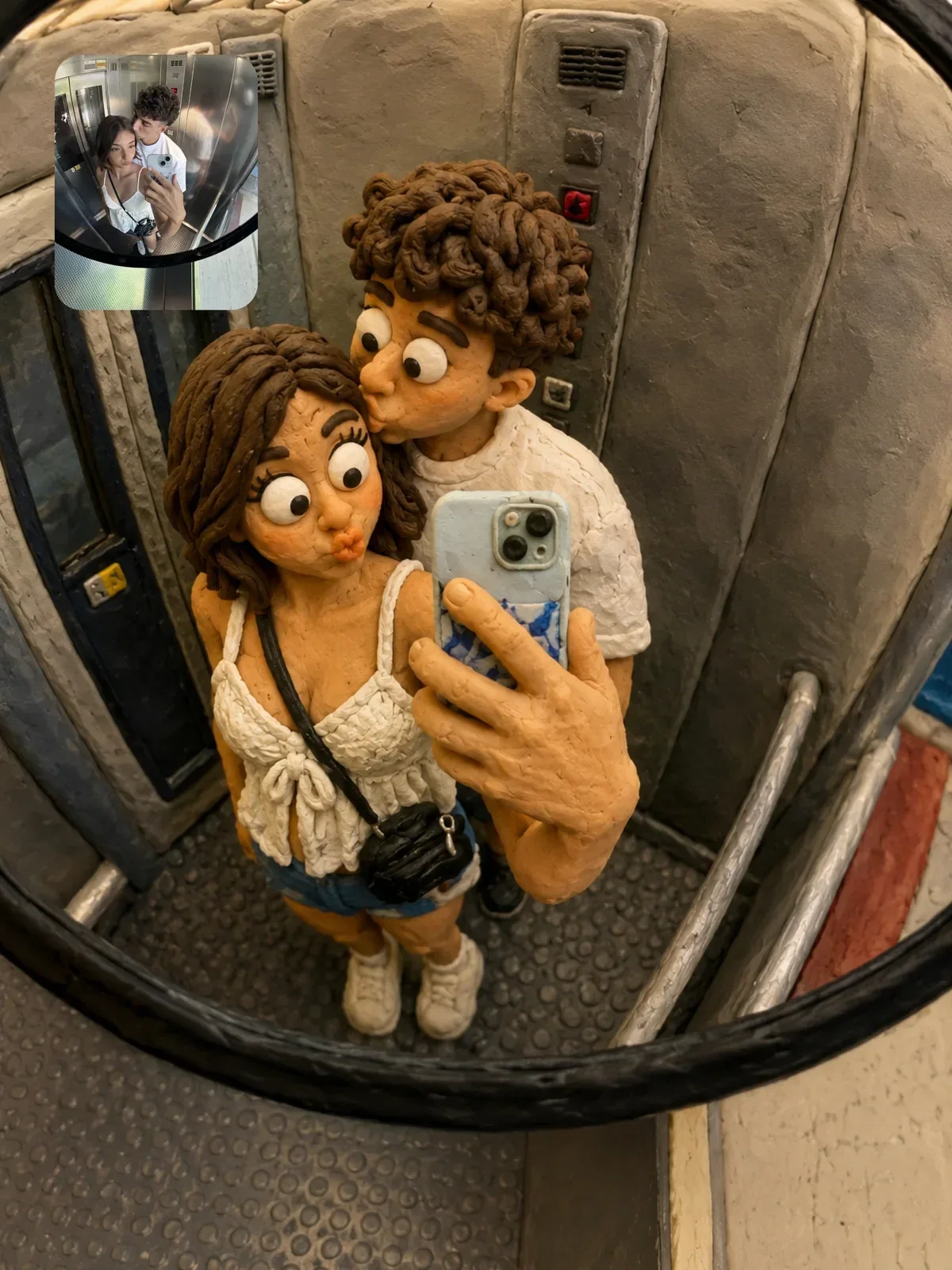
If the photo includes other people, ask them first. Caricature can feel unkind to someone who did not choose it, even when it is clearly playful.
From still to stop-motion video
Real stop-motion has a recognizable rhythm. Animators often shoot on twos, holding each pose for two frames at 24 frames per second, which gives 12 new poses per second and a slightly stepped, handmade motion. Small unintended shifts between frames, where clay surfaces shimmer as fingers touch them, are known as boiling.
When you animate a clay image with a video model, describe that rhythm: stop-motion animation, slightly choppy movement on twos, subtle surface boiling, locked-off camera. Video models default to smooth, fluid motion, which makes clay look like CG. A static camera also helps, because real stop-motion rigs move the camera carefully and rarely. The Seedance prompt guide covers how to structure the shot itself.
Choose actions that a real animator would enjoy rather than dread. One clear, simple movement per shot works best: a character turning its head and blinking, a door creaking open, a car wobbling down a clay road. Pouring liquid, flowing hair and crowds of moving figures are hard in real stop-motion and tend to break the illusion in AI video too, because the motion becomes too fluid to read as handmade.
Troubleshooting clay results
| What you see | Likely cause | What to change |
|---|---|---|
| Shiny, perfect toy surfaces | Model defaulted to vinyl or CG | Add matte plasticine, fingerprints, slight lumps; remove words like glossy or render |
| Everything looks dirty | Too many texture cues | Keep fingerprints to large areas only; ask for clean color fields elsewhere |
| Scene looks life-size | No scale cues | Add macro lens, shallow depth of field, tabletop set, small practical lamps |
| Layout changed from the photo | Style instruction overpowered structure | Put the composition lock first and repeat that positions must not move |
| Faces lost all likeness | Exaggeration too strong | Keep hairstyle, glasses, outfit colors; soften caricature to slightly oversized heads |
For your next session, take one photo of a familiar place, such as your kitchen or desk, and run it twice: once as tidy polymer clay with no characters, once as absurd oil-based plasticine. Seeing the same room in both materials teaches you more about clay vocabulary than any list of style words.