Surreal Photography With AI: Scale, Gravity and Impossible Scenes
Make surreal AI photos that feel real: break one rule of scale, gravity or material, keep the physics of light honest, and shoot the impossible plainly.
Visual AI Club7 min de lecture
Ce guide est rédigé en anglais.
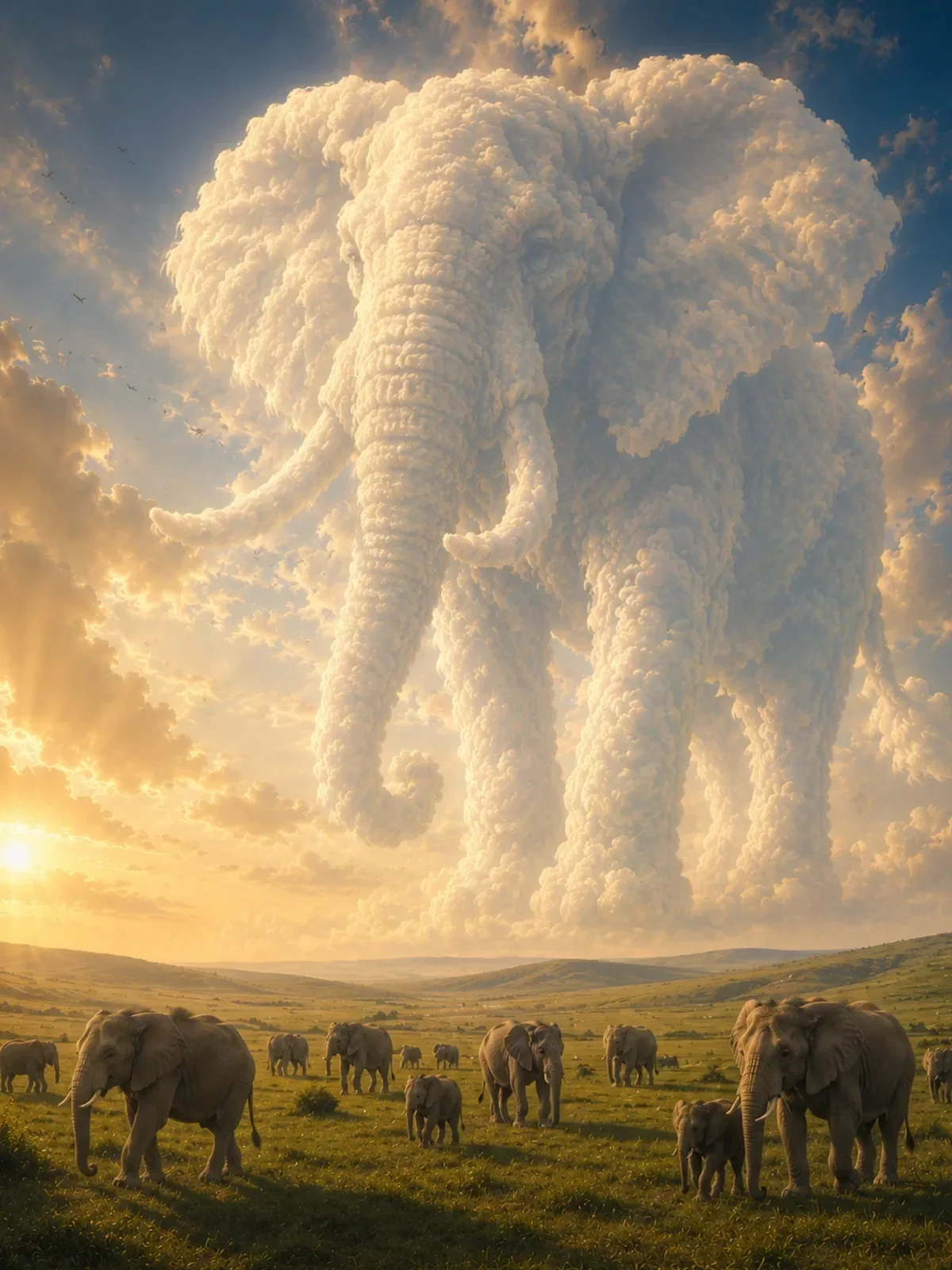
The surreal photos that stop people are almost boring in every detail except one. A normal field, a normal afternoon, and a deer the size of a mountain made of cloud. This guide teaches that discipline: pick one rule to break, then make everything else obey physics so carefully that the viewer believes it.
The one-rule principle
Surreal painters of the last century often worked this way: a realistic scene, painted carefully, with one impossible element. When everything is strange, nothing is, and the image reads as fantasy art. When only one thing is wrong, the brain keeps checking it, and that tension is the effect.
In practice, the rules you can break fall into a few families. Choose one per image, at least until you are comfortable.
| Rule broken | Example idea | What must stay real |
|---|---|---|
| Scale | A teacup the size of a house in a meadow | Haze, shadow length, grass detail at the base |
| Gravity | A table set for dinner floating above a lake | Light direction, reflections, shadows on the water |
| Material | A staircase made of folded paper in a stone hall | How light passes through or bounces off paper |
| Place | A living room on the seabed | Water color, caustics, floating fabric and hair |
| Time or weather | Snow falling only inside a room | Window light, snow settling on surfaces |
Making giant things look giant
Scale is the most popular surreal device, and the most often done badly. A huge object that looks like a small object pasted near the camera is the usual failure. Real large objects carry specific visual evidence of their size, and you can ask for each one.
- Atmospheric perspective: air between you and a distant object scatters light, so far things are lighter, lower in contrast and slightly blue. A colossal object should fade into the haze at the top.
- Reference objects: people, trees, cars or animals near its base give the eye a ruler. Without them, size is ambiguous.
- Shadow size: a giant object casts a giant shadow that covers parts of the landscape.
- Detail falloff: surface details at the far end are softer than those near the base.
- Camera position: shoot from the ground, low, with a wide lens, as a person standing there would. An overhead view makes big things look like models.
A giant cat in a garden next to a woman.
A cat as tall as a three-story house lying in a formal garden, photographed from ground level with a 28mm lens. A woman in a yellow dress stands near its front paw for scale. The cat's ears fade slightly into the afternoon haze, its shadow covers half the lawn and a row of hedges. Natural daylight, documentary style.
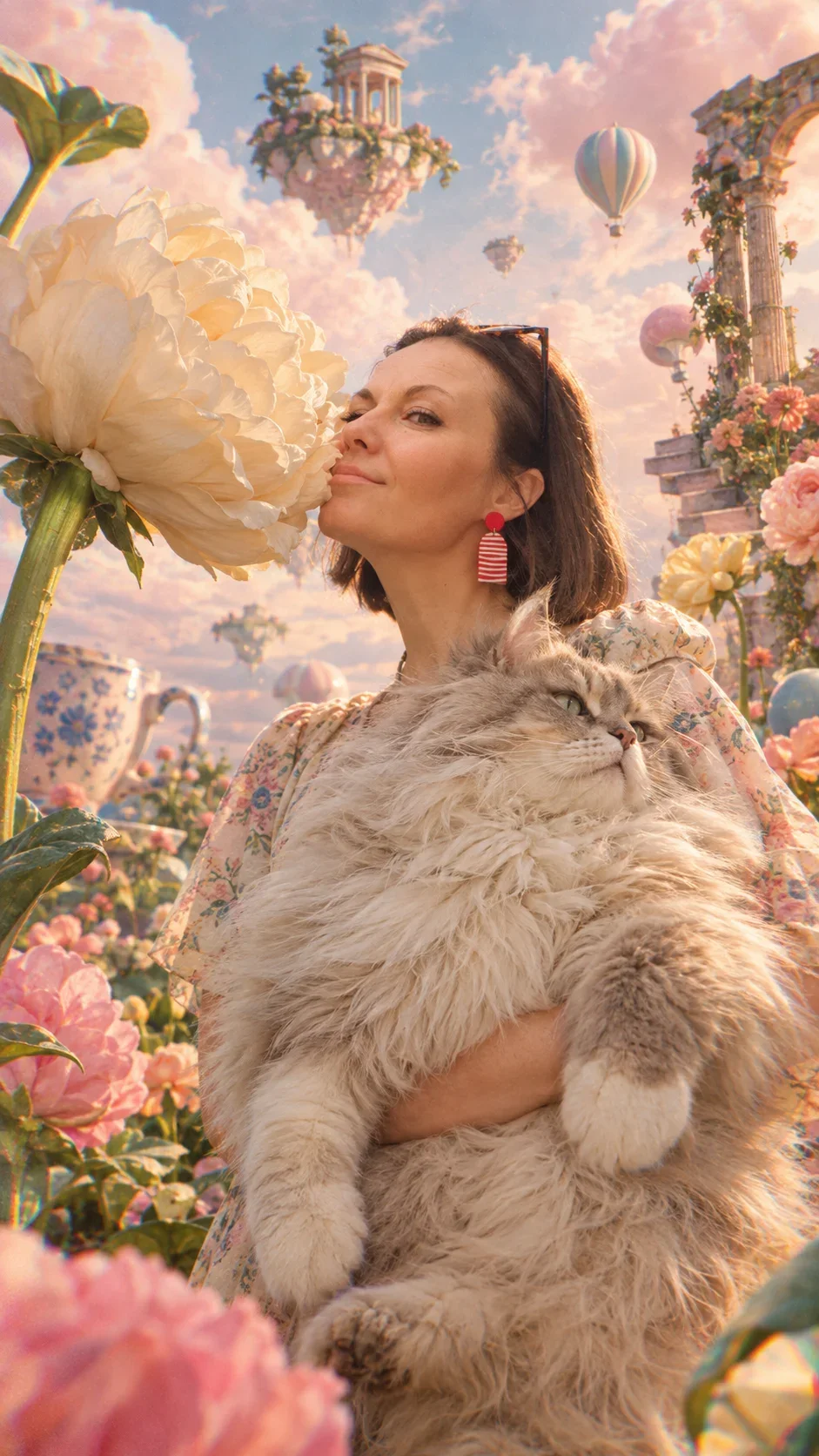

The reverse works too. To make a person tiny, shoot as if with a macro lens: very shallow depth of field, huge out-of-focus foreground objects, and a blade of grass taller than the person.
Gravity and floating objects
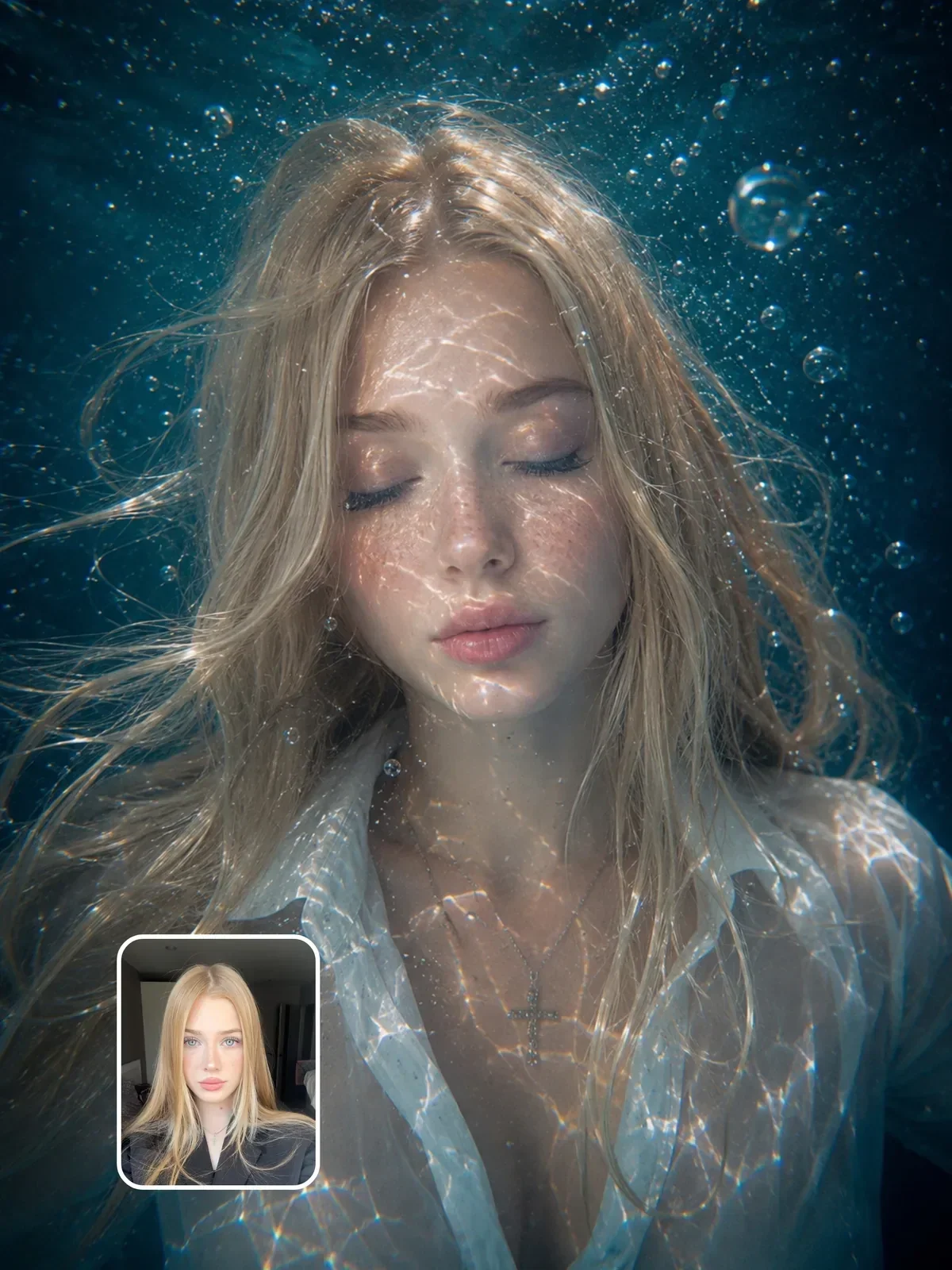
A floating object only looks convincing when it interacts with the scene below it. Ask yourself what the light would do. If a chair hangs two meters above a sunny floor, its shadow lands on the floor, detached and offset depending on the sun's angle. The gap between object and shadow is exactly what tells the viewer it is floating.
Fabric and hair are your second tool. Weightless or underwater scenes need hair spreading in all directions and fabric billowing without a single direction of wind. Floating with normal hanging hair reads as a cutout.
Water adds one more test. Anything resting on a lake or pool pushes the surface down and creates a ring of small ripples; anything floating above it appears again upside down in the reflection, slightly darker and softened by the movement of the water. Ask for both and the scene locks together. For terms like specular highlight or bounce light, see lighting vocabulary for AI prompts.
- Describe the shadow: detached, softer than the object, offset in the direction of the light.
- Describe reflections when there is water or polished floor beneath.
- Decide whether the scene is still or caught mid-motion, and freeze it with a fast shutter feel.
- Keep the horizon level. A tilted camera makes floating look like a fall.

Swapping materials
Changing what something is made of is subtle and very effective: a horse made of smoke, a sofa of moss, clouds shaped like animals. The challenge is to keep the object's form while changing how light behaves on it.
Think about the physics of the new material. Smoke and cloud are translucent and lit from inside by scattered light, bright on the sun side with soft gray in the shadow. Glass shows refraction and caustics, the bright focused patterns of light on surfaces below it. Moss is matte and absorbs light. Liquid metal reflects the whole environment. Write that behavior into the prompt and the swap becomes believable.
Keep the silhouette of the original object clear and simple. A cloud animal reads as an animal only if its outline is unmistakable from a distance: ears, legs, the curve of the back. Fine details like fur or eyes should be suggested by the material, such as wisps or shadows inside the cloud, rather than drawn on. If the silhouette is unclear, the viewer sees a random cloud and the idea is lost.
Light is the glue
The fastest way to spot a fake composite is light from two directions. The impossible element must be lit by the same sun or lamp as everything else, with matching color and shadow softness.
- Name a single light source and its direction, for example low sun from the right.
- Give it a color: warm late-afternoon light around 3500 K, or cool overcast daylight around 6500 K.
- Ask for contact shadows wherever the strange object touches the ground.
- Let the environment color the object: green bounce from grass, blue from the sky.
Overcast light is a secret weapon for surreal images. It is soft and directionless, so it hides small lighting mistakes and gives a quiet, dreamlike mood. Golden hour is the opposite: dramatic and beautiful, but every shadow must line up. The golden hour and blue hour guide explains how those two times of day behave.
Photograph the impossible plainly
Surreal images become stronger when the camera behaves as if nothing unusual is happening. Use calm, ordinary framing: eye level, a 35mm or 50mm lens, a straight horizon, natural color. Avoid fantasy words like magical, ethereal, epic, which push the model toward glowing illustration instead of photography.
A documentary or editorial tone works well: a person reacting calmly, or not reacting at all, to the strange thing. That understatement is funny and unsettling at the same time. For framing choices, see camera angles for AI images.
Color helps with this too. Muted, slightly desaturated color with natural skin tones says photograph. Very saturated, glowing color says digital art. If your surreal image looks like a fantasy poster, lowering the saturation and adding a little grain is often enough to bring it back to the real world; the color grading guide shows how to describe a palette.
Eye-level 35mm photo, overcast morning. A man reads a newspaper on a park bench while a lighthouse-sized goldfish bowl stands on the lawn behind him, a real goldfish inside. Soft gray light, muted natural color, the bowl reflecting the trees.
When to stop at one rule
Once single-rule images work, you can try two rules that support each other, like scale plus material: a mountain-sized hand made of sand. Two unrelated rules usually compete. If you add a second, make sure the image still has one clear idea you could state in a sentence.
A helpful test is to describe the image to someone in one sentence without using the word surreal. A lighthouse-sized goldfish bowl in a city park is a clear image. A dreamlike park with strange objects and floating shapes is not. If you cannot say it in one plain sentence, the model will not know what to prioritize either.
If you are putting a real person into a surreal scene, use your own photo or one shared with permission, and keep the result clearly artistic so nobody mistakes it for a real event.
Idea generator: noun, rule, place
Spend ten minutes on this. Write three short lists and combine one item from each.
- Ten ordinary nouns: teacup, umbrella, staircase, goldfish, piano, bicycle, pillow, lamp, apple, ladder.
- The five rules from the table above: scale, gravity, material, place, time or weather.
- Five plain places: parking lot, wheat field, office corridor, beach in winter, kitchen at night.
- Combine three ways, write each as one sentence, and add the light and camera lines.
- Generate all three and keep the one where you looked twice.
Then fix the weakest piece of evidence in that image, usually the shadow or the haze, and run it once more.