Documentary and Wildlife Looks in AI Video
Write AI video that feels observed, not staged: long-lens wildlife distance, believable animal behavior, available light, field sound and honest labeling.
Visual AI Club6 min de leitura
Este guia está escrito em inglês.
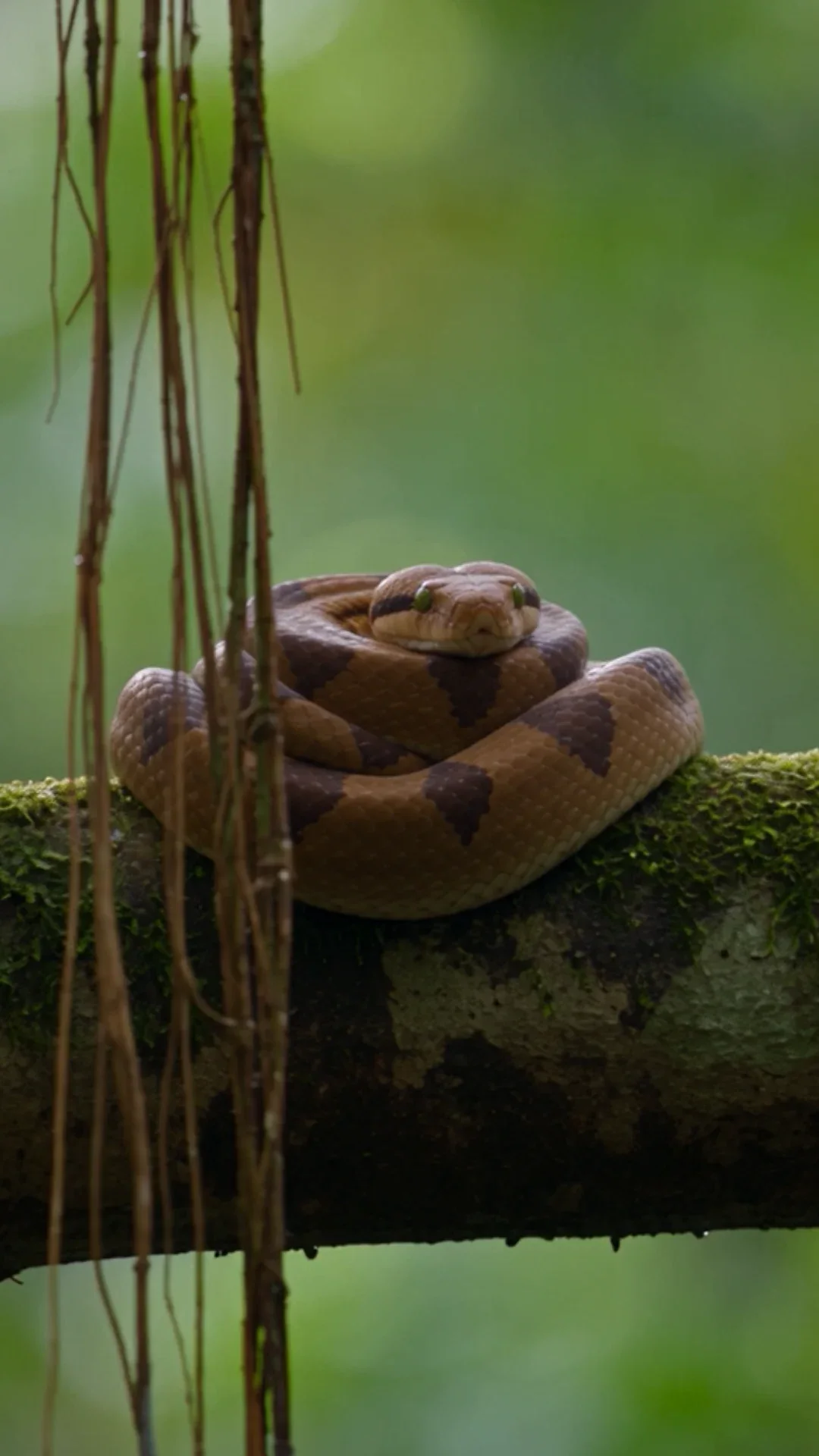
Documentary footage feels true because of how it was filmed: from a distance, with patience, using lenses and light the crew could only partly control. The sections below turn those habits into prompt language for wildlife scenes and for observational films about people, and ends with how to share the results without misleading anyone.
Start with the observer's distance
Wildlife crews rarely get close. They work from hides and vehicles with very long telephoto lenses, commonly in the 400mm to 600mm range and sometimes longer, because getting close changes an animal's behavior. That distance leaves visible fingerprints on the image.
- Compressed perspective: the background looks pulled up close behind the animal, and distant hills appear stacked.
- Very shallow depth of field: grass in front and behind melts into soft color, with only the animal sharp.
- Heat shimmer: on warm days the air between lens and subject wobbles slightly.
- Partial obstruction: out-of-focus stems or branches in the foreground, because the camera is hidden behind them.
Put those details in the prompt and a model will produce something that reads as observed rather than staged. Leave them out and you tend to get a sharp, centered, close-up animal that looks like a stock render.
Films about people work differently. An observational crew often stays in the same room as the subject, using normal focal lengths around 28mm to 50mm, handheld, and the subject ignores the camera. The distance is social rather than physical: nobody performs for the lens.
Behavior, not performance
Real animals spend most of their time doing small things: sniffing the air, grooming, resting, shifting position, crossing open ground carefully. Video models, asked for something impressive, tend to make animals behave like cartoon actors, with big expressive gestures and dramatic timing. Describe slow, specific, species-typical behavior instead.

Wildlife Documentary Seedance 2.5 sets clear limits before any action: one animal only, no predation, no prey and no humans, with the snake's markings fixed for the entire clip. Those limits keep the scene calm and plausible, and they keep the model's attention on one animal's identity.
Epic lion hunt in the savanna, dramatic, cinematic, 4K.
A single red fox trots along the edge of a frosted field at first light, pauses, tilts its head toward a sound in the grass, then moves on. Filmed from far away on a long telephoto lens from a low hide, soft background, breath visible. Natural sound only.
Give the animal a pause. A moment of stillness, ears turning, head lifting, is what wildlife camera operators wait hours for, and it is also easy for a model to render convincingly.
Four documentary setups and how to write them
Pick one setup per clip. Mixing a locked-off telephoto look with handheld walking energy confuses both the model and the viewer.
| Setup | Lens and support | Movement | Best for |
|---|---|---|---|
| Long-lens wildlife | 400–600mm, heavy tripod with a fluid head | Slow pans that follow the animal, small late corrections | Animal behavior at a distance |
| Macro nature | Macro lens on a slider | Tiny slides, slow focus shifts | Insects, dew, bark, textures |
| Observational handheld | 28–50mm on the shoulder | Walking follow, reframing after the action | People working, markets, workshops |
| Landscape b-roll | Wide to normal lens, tripod or aerial | Slow push, high slow drift | Establishing a place and its weather |
Then add a few small imperfections that come from a person operating the camera: "the pan lags slightly behind the animal, then catches up", "focus briefly searches, then locks on the eye", "framing adjusts after she moves." These are tiny in words and large in effect.
Slow motion deserves its own decision. Nature crews often film fast moments, a bird taking off or water splashing, at high frame rates and play them back slowed down. Used once, it reveals detail; used everywhere, it feels like a music video. If you want it, write it for one moment only, "the takeoff plays at about half speed", and keep the rest of the clip at normal speed so the contrast means something.
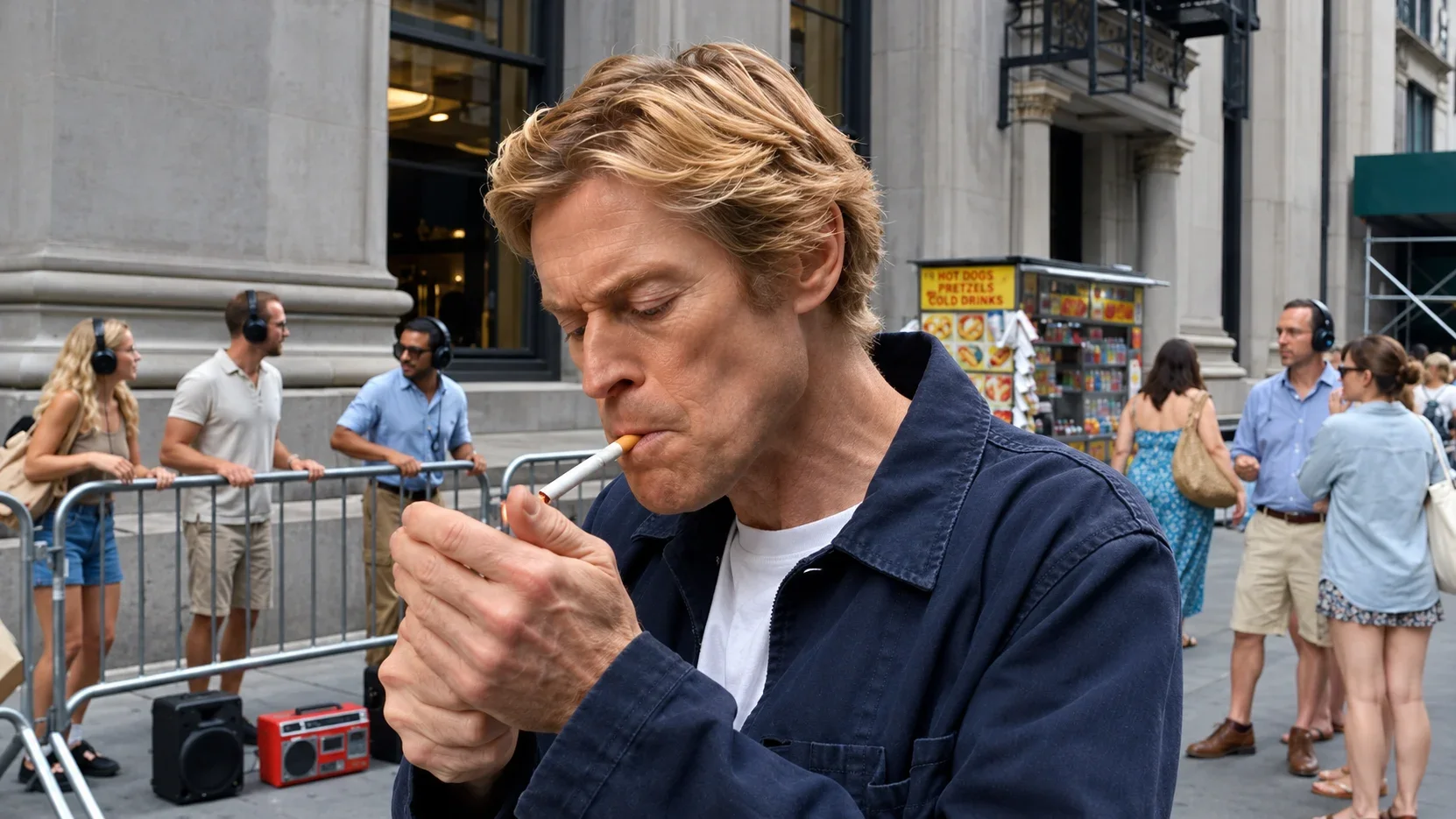
For a human example, Blender and Claude Skill by VAIC asks for documentary handheld texture, a 35mm film look with fine grain, natural muted color and soft overcast daylight with no golden hour. It is staged fiction, but the camera language is pure observational documentary.
Observational scenes with people
The human version of documentary has its own conventions, and they are just as easy to describe. The first rule is that people do not look into the lens. They look at their work, at each other, or just past the camera. A direct stare into the lens instantly turns a documentary shot into a vlog or a staged portrait, so write "never looks at the camera" whenever it matters.
- Work in progress: hands shaping clay, a fisherman coiling rope, a baker scoring dough. Process is more convincing than posing.
- The interview frame: subject seated slightly off-center, looking just past the lens toward an unseen interviewer, background softly out of focus.
- Detail inserts: tools on a bench, a kettle on a stove, worn shoes by a door. These cutaways are what editors use between longer takes.
- Unplanned moments: someone walks through the frame, a dog wanders in, a phone rings off screen and the subject glances toward it.
Observational documentary, handheld at shoulder height, 35mm lens. An elderly potter centers clay on a wheel in a cluttered workshop, absorbed in the work, never looking at the camera. Window light from the left, dust in the air, the hum of the wheel and birdsong outside.
Keep every person you depict fictional. The point is a believable type of scene, not a recognizable individual, and the same honesty rules below apply to people even more than to animals.
Light you do not control
Documentary crews mostly shoot with available light, and the audience has learned to read that as truthful. Perfect rim lights and glowing faces look like a commercial. Ask instead for the light a crew would actually get.
- Overcast daylight: soft, flat and forgiving, with muted color. Ideal for forests and city streets.
- Low first light: long shadows, mist, cool tones turning warm. Animals are often active then.
- Harsh midday: deep shadows, squinting, bleached sky. Unflattering, which is exactly why it feels real.
- Low light indoors: a single window, visible grain, slightly underexposed faces.
Write "available light only, no artificial lighting" and, where it fits, "slight exposure shift when the sun goes behind a cloud." For the physics behind early and late light, see golden hour and blue hour.
Sound: only what the microphone heard
Field recordings are made of ambience and the sounds of the subject: wind, birds, water, footsteps, the rustle of an animal in leaves. Unless you write a narration yourself, ask for no voiceover and no music. Microphone distance matters too; a long-lens shot heard from far away should sound distant and airy, not like a close-up foley track.
The sound and dialogue guide explains how to layer ambience and time single effects. For wildlife, one well-placed sound, such as a twig snapping just before the animal looks up, does more than a busy soundscape.
Present it honestly
Realistic documentary-style footage is exactly the kind of AI video that can mislead people, so treat it carefully. Label it as AI-generated wherever you share it. Never present it as a real wildlife record, as news, or as evidence of something that happened. Do not add the logos or on-screen graphics of real broadcasters or nature channels.
Do not depict identifiable real people or real events, and be careful with claims about animal behavior: a generated clip shows what a model imagined, not what the species does. Keep scenes family-friendly; there is no need to show predation or injury to make wildlife compelling. Using AI images responsibly covers labeling and consent in more depth.
A field exercise
Watch one minute of a real nature documentary with the sound off and take notes as a camera operator would. Guess the lens for each shot, count how long each shot holds, and write down every small camera correction you notice. Most people are surprised by how long shots hold and how little the camera moves.
Then write a single eight-second prompt for an animal you know well, perhaps a bird at a garden feeder or a cat on a sunny windowsill, using three of your notes. Generate it twice: once with your notes, once without. The version with a long lens, a pause and one late pan correction will be the one that looks filmed.