Using AI Images Responsibly: Consent, Likeness and Disclosure
A practical guide to consent, real people's likeness, children, fictional characters and disclosure when you make and share AI images of people.
Visual AI Club7 min de leitura
Este guia está escrito em inglês.
Most AI image prompts that people actually use start with a photo of a real person. That makes consent and honesty practical questions, not abstract ones. This guide gives you a few clear habits for whose face you use, how to handle children and relatives, when a fictional character is the better choice, and how to tell your audience what they are looking at.
Start from one principle: a face belongs to its owner
A person's face is how friends, employers and strangers recognize them. When you put that face into an image they did not choose, in a place they never stood, wearing something they never wore, you are making a statement about them. Even a harmless joke can be uncomfortable for the person if it travels beyond the people who know the context.
Laws on likeness, privacy and synthetic media differ between countries and are still changing, and every platform has its own rules on top. This guide is not legal advice. But the habits below keep you well on the safe side in most situations, and they are simply good manners.
The consent ladder
Think of whose face you are using as a ladder. The higher you climb, the more care you need, and above a certain rung the answer is simply no.
- Your own face. Fully your call. This is where most transformations, portraits and style experiments should start.
- A fictional person generated from scratch, matching no one real. Safe for most creative uses, as long as you do not pass them off as a real person giving real opinions.
- Friends and family who said yes. Ask before you generate, not after you post. Tell them what style and where it will appear. A yes to a private group chat is not a yes to a public account.
- Children. Only with a parent's or guardian's agreement, and with extra care about where the image ends up. More on this below.
- Relatives who have died. Talk to close family first. A restoration is usually welcome; a recreation that shows them doing new things can hurt.
- Strangers, public figures and celebrities. Do not. Not as a joke, not as fan art in photoreal style, not in an ad. The risk of confusion, harm and impersonation is too high.
A quick way to ask: send the person the original photo and one sentence about what you plan to make and where you will post it. A clear yes in writing is easy to look back on if questions come up later.
Situations you will actually run into
Principles are easy to agree with; the hard part is the specific case at 11 p.m. when the image is ready to post. Here are common ones and a sensible approach for each.
| Situation | Reasonable approach |
|---|---|
| Turning your friend into a 3D toy for their birthday | Ask first, or give it to them privately and let them decide whether it gets posted. |
| A stylized portrait of you for your profile | Go ahead. Consider a short AI note if the account is professional. |
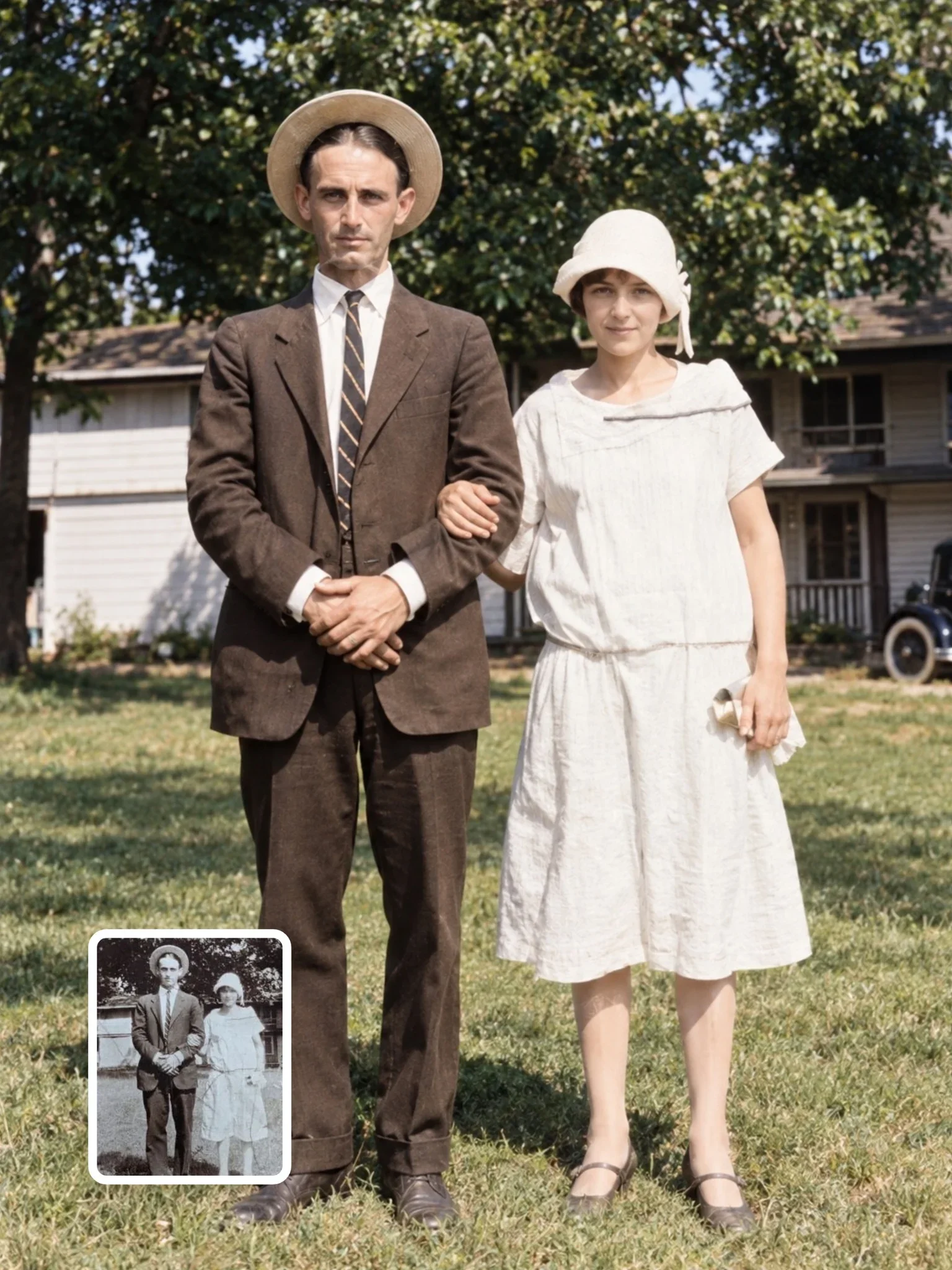
| Restoring a grandparent's photo for a family group | Fine to share privately with a note that it was AI-restored. Ask the family before posting publicly. |
| A group photo where one person did not answer | Leave them out, crop them out, or wait. Silence is not a yes. |
| Your toddler in a cartoon style for a public account | Think twice. Prefer styles that do not show a recognizable face, and strip location data. |
| A product ad with a person in it | Use yourself with written agreement from the business, a person who signed a release, or a clearly fictional character. |
| An image someone posted that you want to transform | Do not. Their photo, their face. Ask, or make your own. |
Children need a higher standard
Children cannot meaningfully agree to their image being transformed and published, and what is cute at four may be embarrassing at fourteen. Images posted publicly can be copied, saved and reused in ways you never see. That is a reason for restraint, not panic.
- Keep it private by default. A family album, a printed gift or a closed group chat is a better home than a public profile.
- Prefer stylized over photoreal. A loose crayon or watercolor style shows the moment without producing a sharp, reusable face.
- Remove location clues. School logos, house numbers and street signs in the background say more than you think. Also strip GPS metadata from the original before uploading anywhere.
- Never place children in suggestive, frightening or humiliating scenes, even as a joke. Keep it wholesome: storybooks, studio portraits, holiday cards.
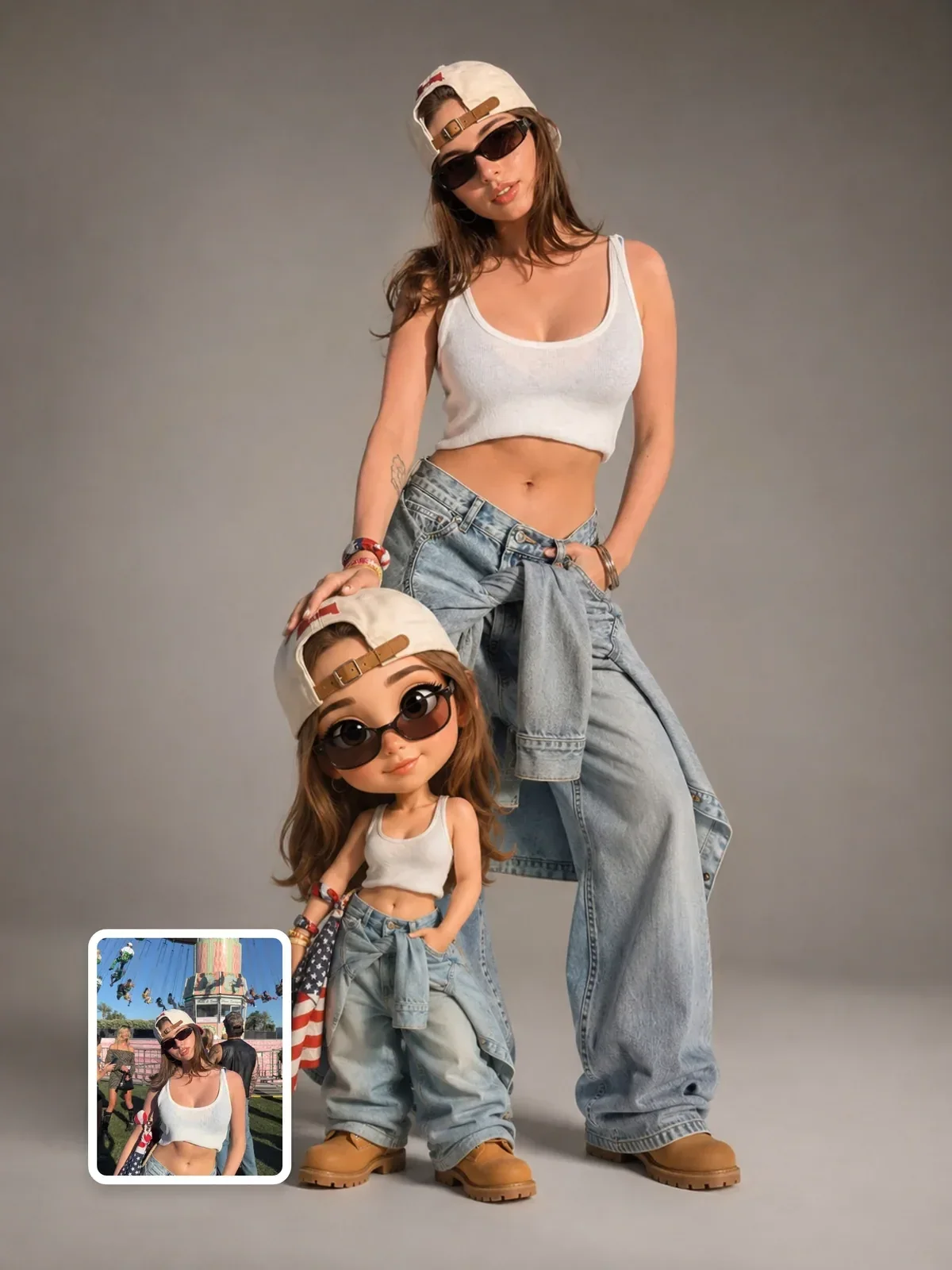

When a fictional person is the better choice
Many uses do not need a real face at all. A cafe menu illustration, a blog header, a fashion moodboard or a tutorial example works just as well with a person who does not exist. Fictional characters avoid consent questions entirely, and you can reuse them freely across a project.
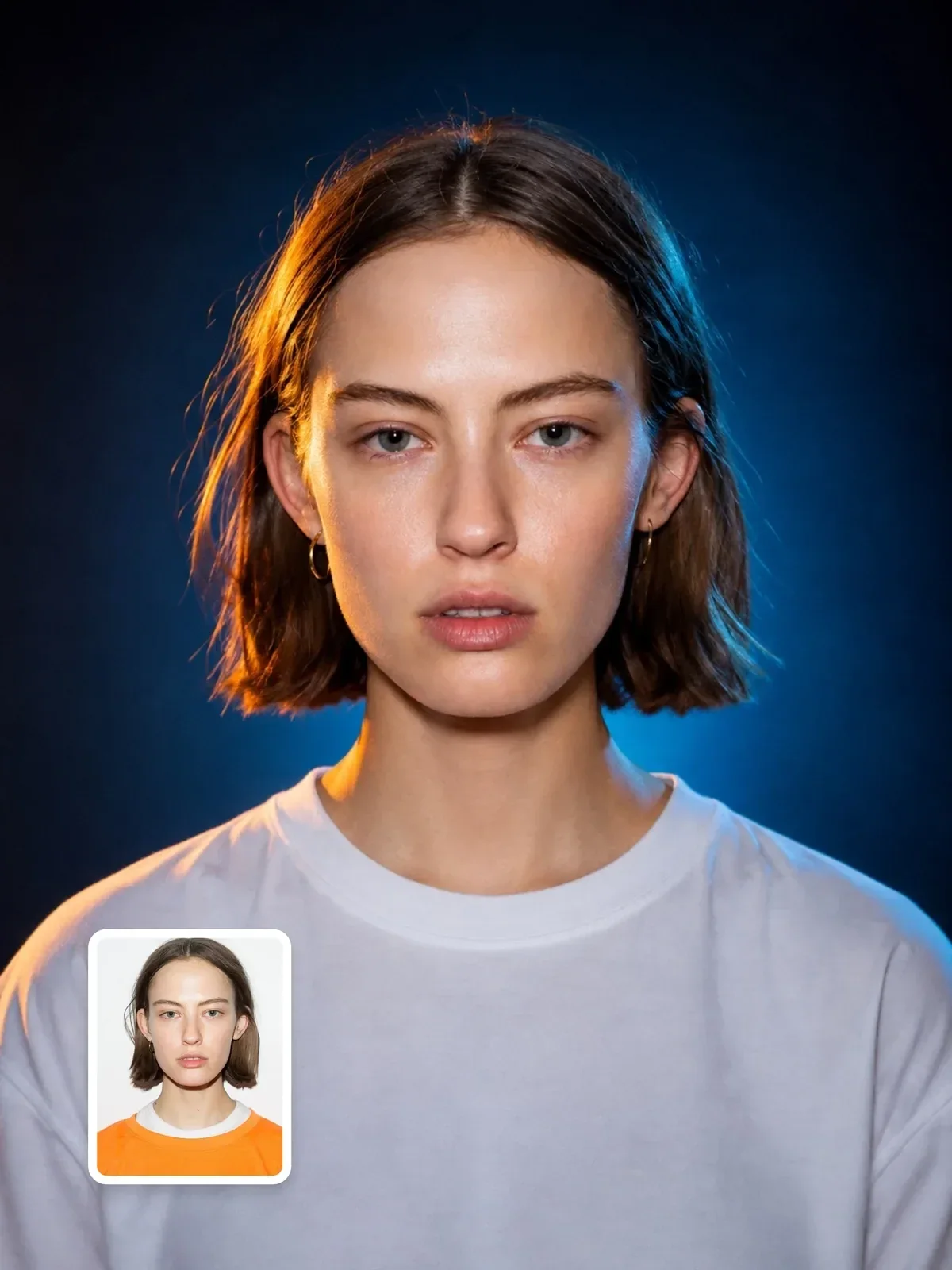
The Visual AI Club library includes prompts built for this. New Face, Same Photo treats a reference image as a template: it keeps its pose, light, clothing and setting, but replace the face with a fictional adult who matches no one. That is useful when you like a composition you shot yourself but do not want any real face in the final image. Use your own photos or ones you have the rights to as the template.
Two cautions. First, a fictional person should be fictional: do not describe them so closely after a real person, such as a famous actor, that viewers would think it is them. Second, be honest about a fictional character's status. If a made-up persona shares product opinions or life advice, followers deserve to know it is a character, not a person with real experiences.
Disclosure: tell people what they are looking at
AI images are getting harder to tell apart from photos. When an image could reasonably be mistaken for a real photo of a real event, say that it was generated or edited with AI. Viewers do not mind AI images nearly as much as they mind feeling tricked.
- Use the platform's label where one exists. Instagram, TikTok, YouTube and others have AI labels or disclosure settings for some content; their rules change, so check the current help pages.
- Add a short caption line when the label is missing or unclear: portrait made with AI from my own selfie, or photo restored and colorized with AI.
- Keep provenance data. Some image tools attach metadata, such as C2PA Content Credentials, recording that an image was AI-generated. Avoid stripping it when you export, unless you are removing personal data like location.
- Tell clients. If you deliver AI-assisted work, say so in writing, and say which parts were generated.
Disclosure matters most for images that touch the real world: anything that looks like news, documents, receipts, reviews or real events. Do not make AI images that pretend to be evidence of something that happened. That is the line between creative work and deception.
Styles, brands and characters you did not create
Many popular prompts reference a recognizable style: toy bricks, a famous animation studio, a video game look. Using those as loose style references for personal images of yourself is common. Problems start when you sell look-alike products, use another company's characters or logos, or imply that a brand made or endorsed your work. Keep brand names in the in-the-spirit-of category, never in the official-product category.
The same goes for living artists. Describing qualities such as loose ink lines, muted pastel palette or heavy paper texture gives you a style without leaning on one person's name and life's work. The how to write image prompts guide shows how to describe style through concrete attributes.
Five questions before you hit post
Run through these every time an image shows a real person. If any answer makes you hesitate, wait, ask or change the image.
- Did every recognizable person in this image agree to it being made and shared here?
- If a child is in it, did a parent agree, and is this the right place for it?
- Could someone mistake this for a real photo of a real event? If so, is it clearly labeled?
- Does it use a real brand, character or public figure in a way that suggests a connection that does not exist?
- Would I be comfortable if the person in it saw this post, with this caption, a year from now?
For restorations of old family photos, keep the original scan with the AI version and label which is which. The photo restoration guide shows a simple naming system.