Making an AI Travel Vlog Clip That Feels Real
Write an AI travel vlog clip that feels filmed: arm's-length wide lens, walking bounce, exposure jumps, places told by texture and unscripted lines.
Visual AI Club6 мин чтения
Этот гайд написан на английском.
Real travel footage is messy in specific, predictable ways. The lens is wide, the frame bounces with every step, the exposure jumps when you walk out of the shade, and wind hits the microphone. You will learn to write those imperfections into a prompt, build a short clip around one place, and keep it honest when you share it.
What a vlog camera actually sees
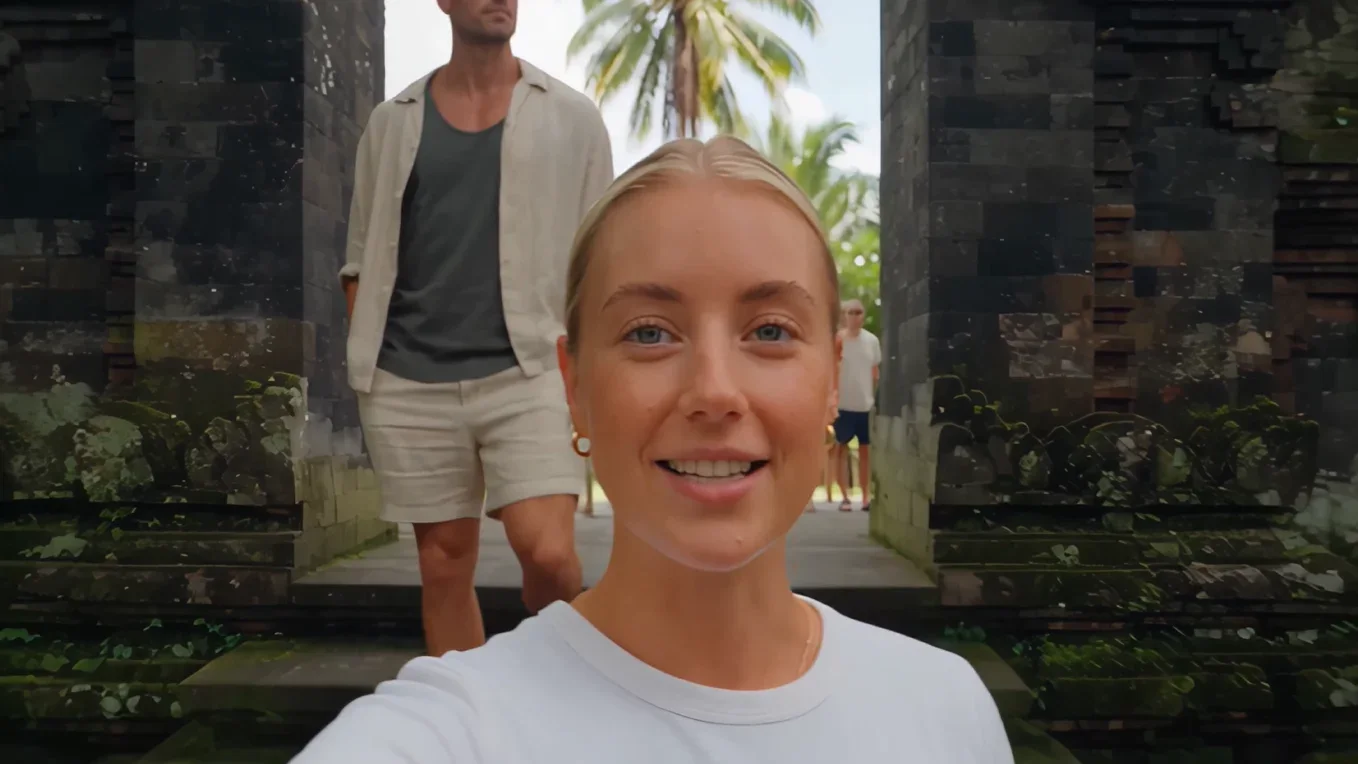
A vlogger holds the camera at arm's length, roughly half a meter to 70 centimeters from the face, through a wide lens. Phone front cameras and small vlogging cameras sit somewhere around the 20mm to 28mm range in full-frame terms, and some selfie modes go wider. At that distance and focal length, the face fills much of the frame, features nearest the lens look slightly larger, and plenty of background shows on both sides.
That is a very different picture from a cinematic portrait at 85mm, and models know the difference. Say it outright: "held at arm's length on a small wide-angle vlogging camera" or "filmed on a phone front camera at arm's length." The phone photo guide covers the still-image side of the same look.
The imperfections that sell it
- Walking bounce: the frame rises and falls slightly with each step.
- Autofocus shifts: focus moves between the face and the background when she turns the camera.
- Exposure jumps: the image brightens or darkens a moment after she walks from shade into sun.
- Late reframing: the operator notices the framing is off and corrects it half a second later.
- A slightly tilted horizon: nobody holds a camera perfectly level while walking.
- Wind on the microphone: a low rumble on gusts, the voice briefly muffled.
Pick three or four, not all six. A clip with every flaw at once looks like a parody of amateur footage.
Structure the clip as talk, turn, reveal
Most travel vlogs follow the same grammar. The creator talks to the lens, turns the camera around to show the place, then swings back for a reaction, often from a friend. It works because each turn of the camera is a little reveal, and it works for AI video because every beat is one simple camera action.

Travel Video Seedance 2.5 Skill follows this pattern across a 30-second single take in a temple courtyard: selfie talk on the steps, a slow sweep across the carvings and jungle, then a swing back to her friend with a macaque sitting calmly on his shoulder. Every reveal is motivated by where she points the camera.
For a 12 to 15 second clip, trim it to three beats:
- 0–5s, selfie talk: she walks and speaks to the lens, the place visible behind her.
- 5–10s, the turn: she turns the camera away from herself and sweeps slowly across the view, her voice continuing off screen.
- 10–14s, the reaction: the camera comes back to her face, or to a companion, for one short line or a laugh, then holds.
Ban the edits a single phone would never make. Write "one continuous take, no cuts, no slow motion, no zooms, no drone shots." A sudden aerial cutaway is the fastest way to break the illusion that one person filmed this.
Describe the place by texture, not by name
A famous place name alone pulls the model toward the most photographed postcard version of it, usually empty, perfectly lit and slightly unreal. What makes footage feel like someone was actually there is the small, specific texture of the place at a particular moment.
A woman vlogging in an old European city, beautiful views, sunny.
Late afternoon in a hilly old town: a steep cobbled lane, laundry on iron balconies, tiled facades warm in low sun, a small tram rattling past at the bottom of the street. She walks uphill, a little out of breath, talking to the lens.
- Materials: worn stone steps, peeling paint, wet cobbles, sun-bleached wood
- Small life: a cat on a step, a shopkeeper sweeping, scooters parked at angles
- Crowd level: a few tourists, a busy market, or almost empty early morning
- Weather and time: one clear choice, such as humid late morning or cool blue dusk
Keep shop signs generic and avoid real business names or brand logos in the frame. You are describing a kind of street, not advertising a particular café.
Lines that sound unscripted
Travel vloggers do not narrate like guidebooks. They react: short, informal, slightly breathless, often unfinished. Write lines as fragments with contractions, and give each one plenty of room. Roughly two and a half spoken words per second is a comfortable pace, so a five-second selfie beat holds one line of about ten words.
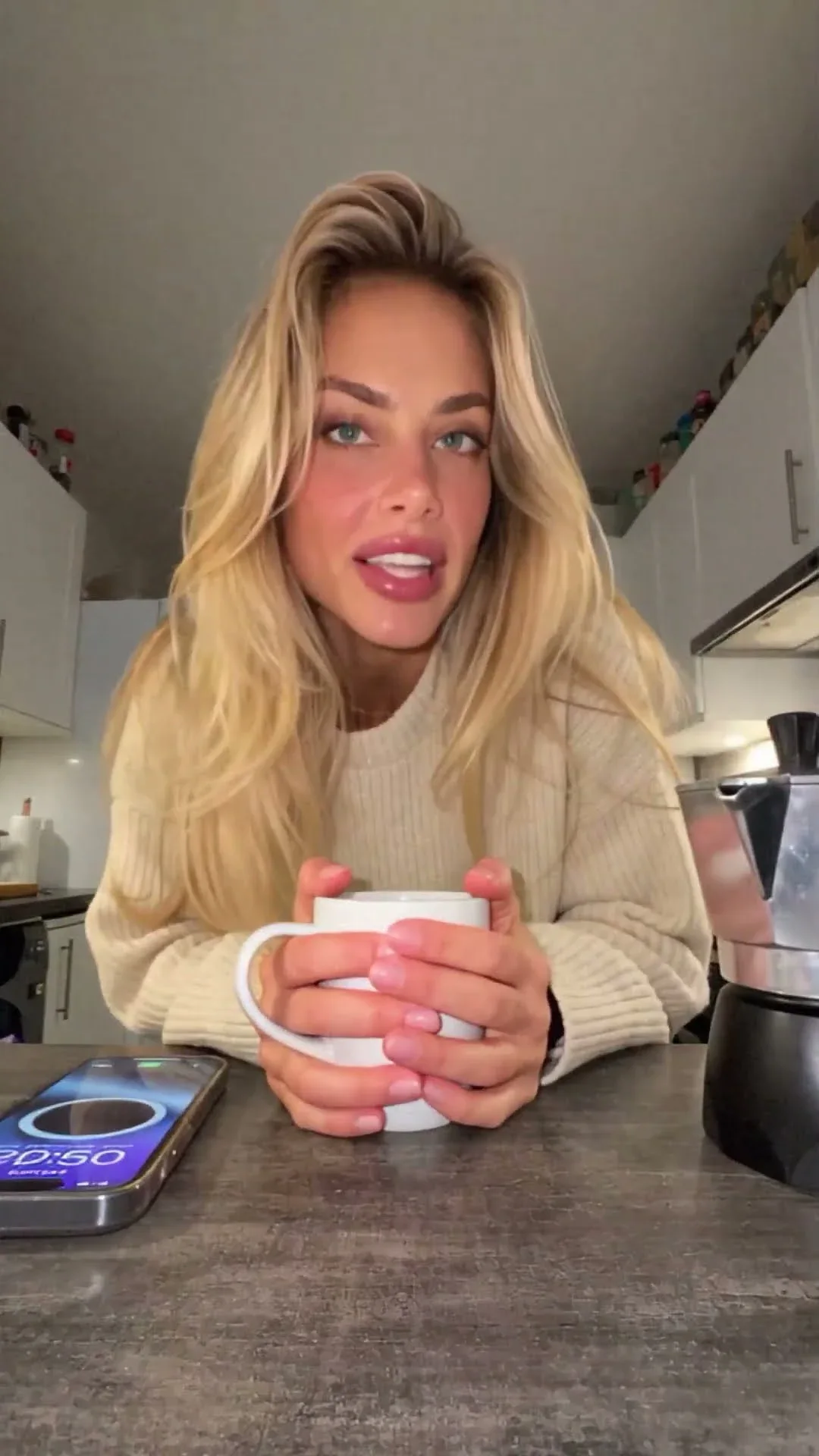
AI Influencer VLOG is a good model for tone: a sleepy, dry line about the rain to open the day, then short reactions as she heads out. It also shows how weather becomes physical detail, with drops on the umbrella and lens, damp coat shoulders and wet strands of hair. More on timing lines in sound and dialogue in AI video.
Companions, passersby and the odd glance
Nothing exposes a generated street faster than a crowd that behaves like extras on a film set: everyone walking at the same pace, nobody reacting to a person talking into a camera. Real public spaces are uneven. Write that unevenness in.
- Most people ignore the camera, and one or two glance at it briefly as they pass, then look away.
- People move at different speeds: someone stops to check a phone, a child tugs a parent's hand, a cyclist weaves through.
- Keep passersby in the background and soft. Faces of strangers should stay small and out of focus, which is also what real vlog autofocus does.
- Give the companion a role. A friend who lags behind, takes their own photos or rolls their eyes at the camera adds life without needing lines.
Companions are also where a little humor fits naturally. In the temple clip above, the friend's calm while a monkey sits on his shoulder is the payoff of the whole take, and it needs no dialogue at all. A small, believable surprise like that is worth more than any dramatic event, and it is far easier for a model to render convincingly.
Keep light and weather continuous
Choose one time of day and one kind of weather, and repeat them at the end of the prompt. A single take that starts in hard noon sun and ends in soft evening light reads as a glitch, not as time passing. Let the weather show up on people and objects: squinting in bright sun, sunglasses pushed up into hair, a sheen of sweat on a humid day, a raindrop on the lens in a shower.
Hard tropical sun is worth embracing rather than avoiding. It creates deep shadows under hats and harsh contrast on stone, which is unflattering and therefore believable. The polished, evenly lit look is what gives AI travel clips away.
The person on camera
Use your own face as a reference, a fictional character, or a friend who has said yes. Never build a vlog around a stranger's photo or a public figure. If your reference is a selfie, the selfie portrait guide explains which photos make the best references.
Then be honest about what the clip is. Viewers make real decisions about places from travel content: whether a beach is quiet, whether a street is safe at night. Label the clip as AI-generated, and do not present it as a trip you took. Animals in the frame should be treated kindly and behave naturally. Using AI images responsibly covers disclosure in more detail.
Plan your first clip
- One place, one time of day, one kind of weather
- Camera stated: wide-angle, arm's length, one continuous take
- Three beats: selfie talk, the turn, the reaction
- Three or four chosen imperfections, not all of them
- Place described by materials, small life and crowd level
- One short, unscripted-sounding line per beat
- Exclusions: no cuts, no slow motion, no zooms, no text, no logos
- AI label ready for when you post
Write the clip for a street you know well, perhaps your own neighborhood. You will immediately notice which details make it feel real, because you know exactly what the place sounds and looks like at that hour. Generate it, then show it to someone who knows the street too. Ask them what feels wrong, not what looks good. Their first answer, usually a detail about light, crowd or sound, is the next line to fix in your prompt.