Focal Length in Prompts: 24mm, 50mm, 85mm and 135mm Compared
What 24mm, 50mm, 85mm and 135mm really change in a picture, why distance matters more than the lens, and how to write focal length into AI image prompts.
Visual AI Club7 dk okuma
Bu rehber İngilizce yazılmıştır.
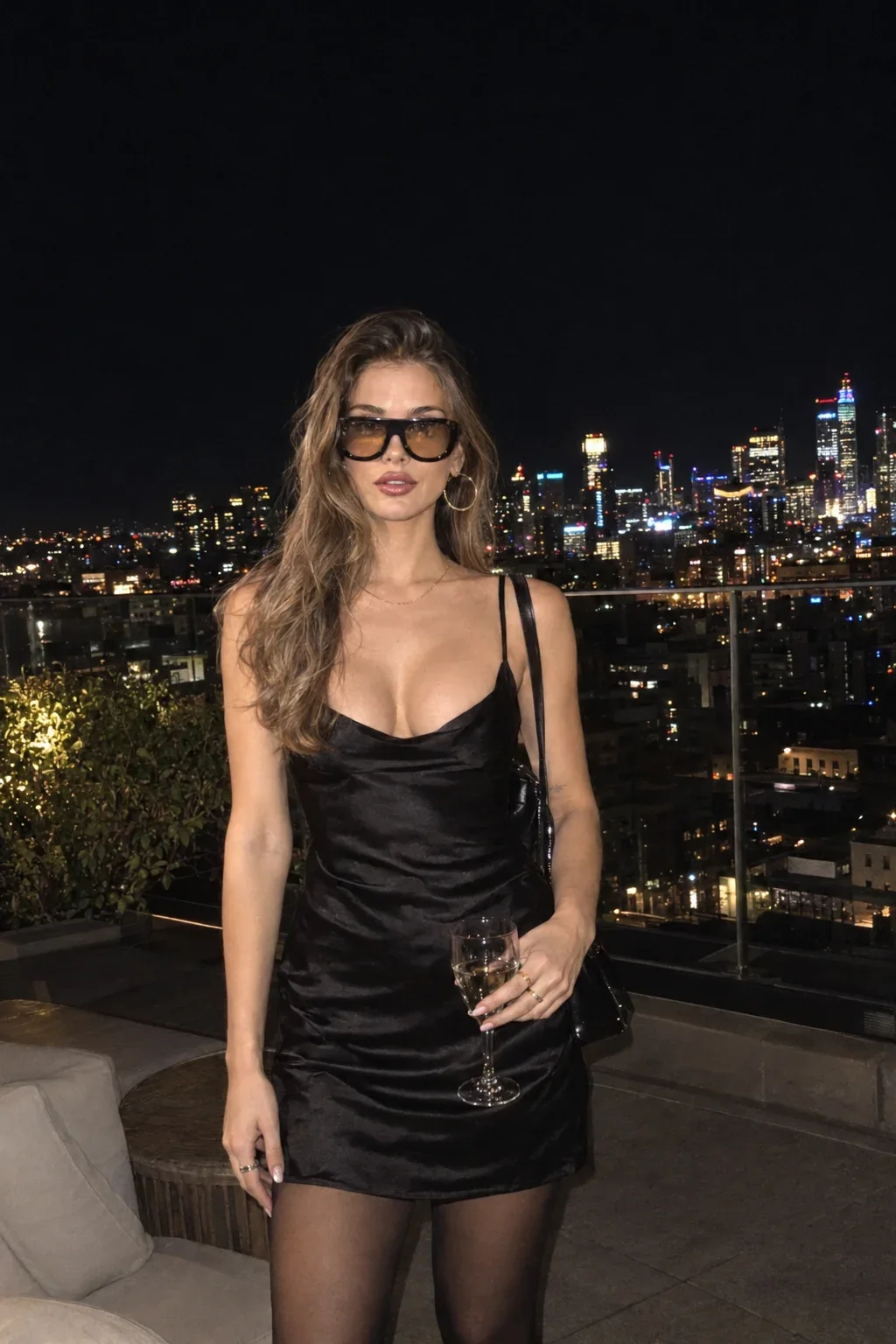
Adding "85mm" to a portrait prompt is a habit for many people, and it often helps. But few people know what the number is doing. Once you understand what focal length changes in a real photo, you can choose 24mm, 50mm, 85mm or 135mm on purpose, and fix faces and backgrounds that look wrong.
The secret: it's really about distance
Here's the part most lens comparisons skip. The shape of a face in a photo, how big the nose looks, how much the ears show, depends on how far the camera is from the face. The focal length decides how much of the scene fills the frame from that distance.
In practice the two are linked. If you want the same head-and-shoulders framing with different lenses, you have to stand at different distances. A wide lens forces you close; a long lens pushes you back. And distance is what changes the face.
Get close, and the parts of the face nearest the camera (nose, chin) are noticeably closer than the parts further away (ears, the back of the head), so they appear larger. Step back several meters and those differences become tiny relative to the distance, so the face looks flatter and more even. That's why long lenses are called flattering and why a selfie at arm's length can make a nose look bigger than it is.
When you write a focal length in a prompt, the model doesn't calculate any of this. It has simply seen a huge number of photos with lens information in their captions and descriptions, and it has learned what a typical 24mm photo looks like compared with a typical 135mm photo. You are borrowing that whole look, distance included.
The four lenses side by side
The numbers below assume a full-frame camera, the reference most photographers mean when they quote a focal length. Fields of view are approximate diagonal angles. Distances are rough figures for a vertical head-and-shoulders portrait.
| Lens | Field of view | Distance for head and shoulders | Character |
|---|---|---|---|
| 24mm | about 84° | about 40 cm | wide, immersive, stretches the edges |
| 50mm | about 47° | about 80 cm | natural, close to how we notice a scene |
| 85mm | about 28° | about 1.4 m | flattering, calm, separated from background |
| 135mm | about 18° | about 2.2 m | compressed, intimate from afar, background enlarged |
If you remember one rule, make it this: a wider lens means a closer camera and more drama; a longer lens means a more distant camera and more calm. Every other effect in this guide follows from that.
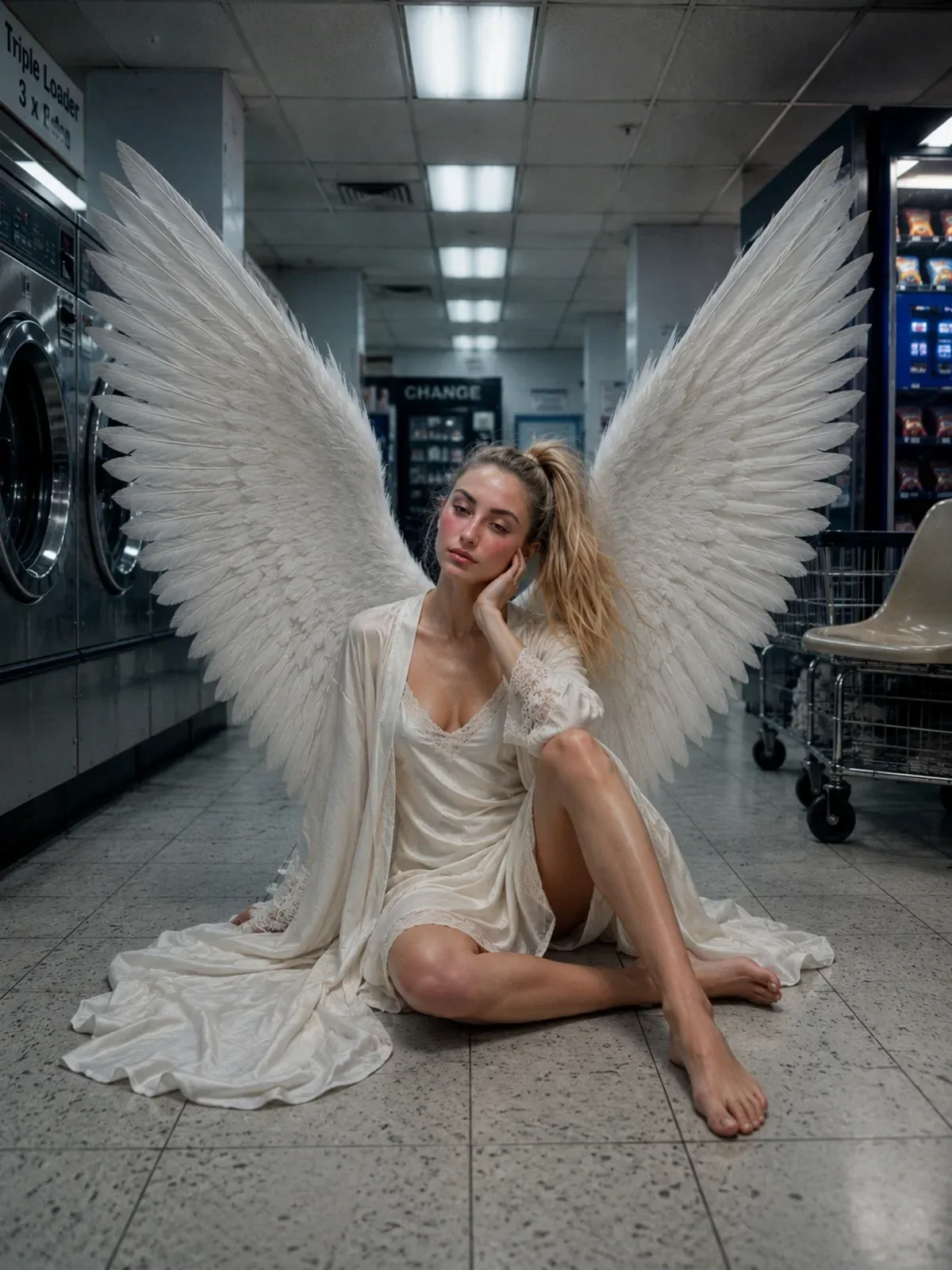
24mm: in the middle of things
A 24mm lens sees a lot. For portraits it means standing very close or including much of the environment. Close up, it stretches features toward the edges of the frame and makes whatever is nearest the camera look big. Further back, it's the classic environmental portrait: a baker in a whole bakery, a cyclist in a whole street. Use it for interiors, travel, architecture and energetic, close action. Keep faces near the center: a wide lens also stretches anything placed near the edges and corners of the frame, so a face there can look pulled sideways even from a sensible distance.
50mm: the honest middle
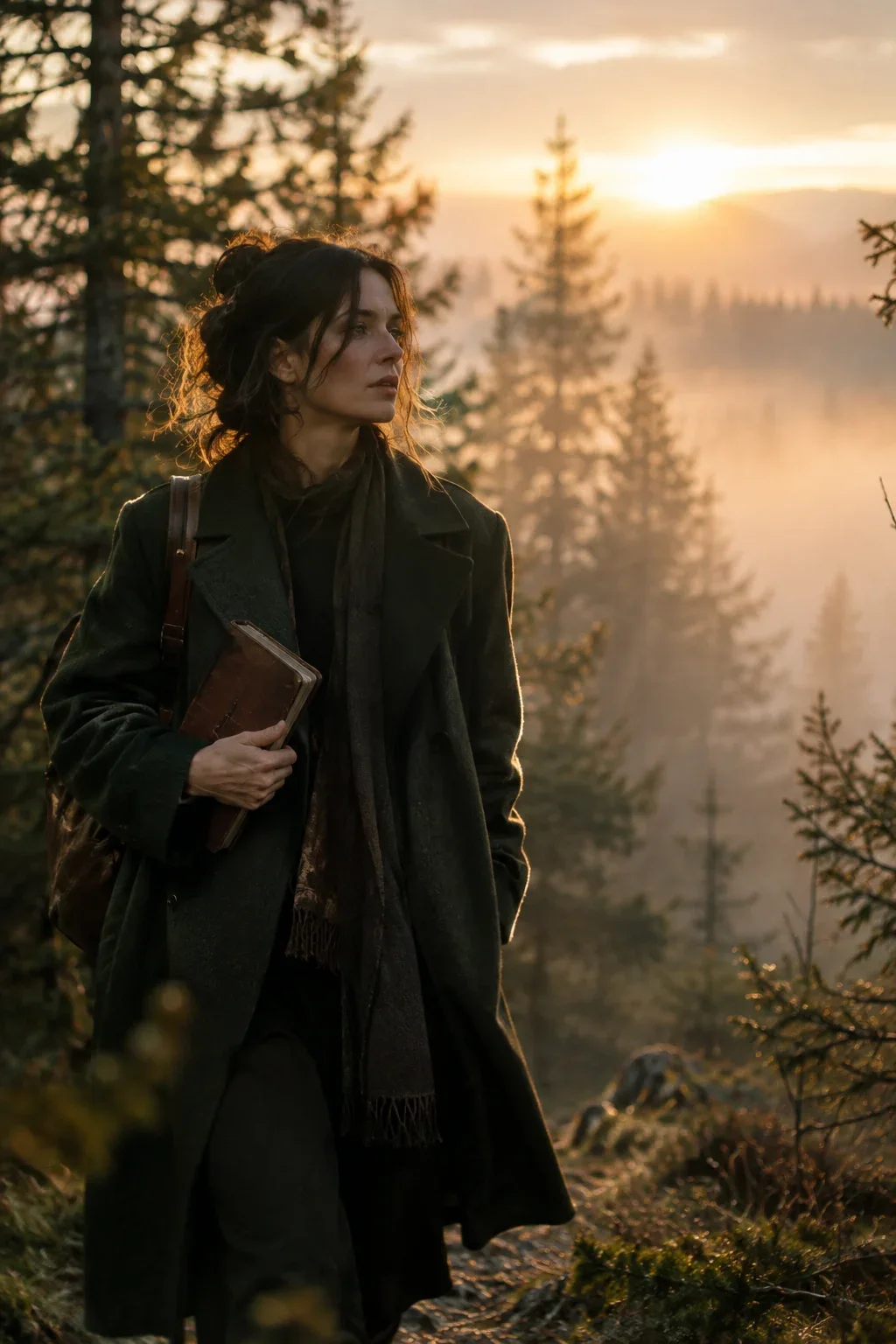
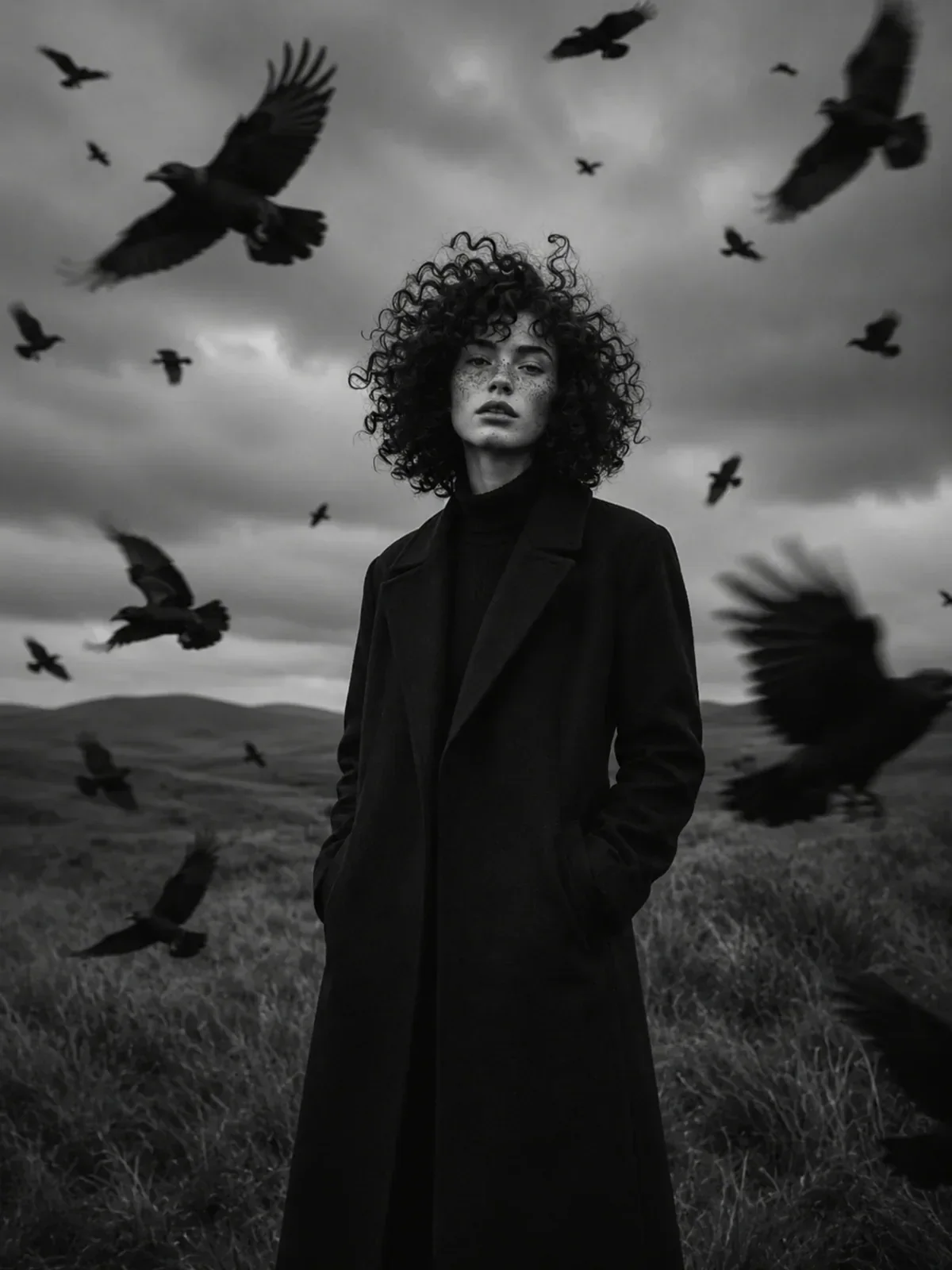
A 50mm lens on full frame gives a perspective that feels neither wide nor tight. Faces look normal at a conversational distance, and backgrounds stay recognizable. It suits street photography, documentary, half-body portraits and food on a table. The misty forest journal prompt uses 50mm for exactly this storytelling middle ground.
85mm: the portrait standard
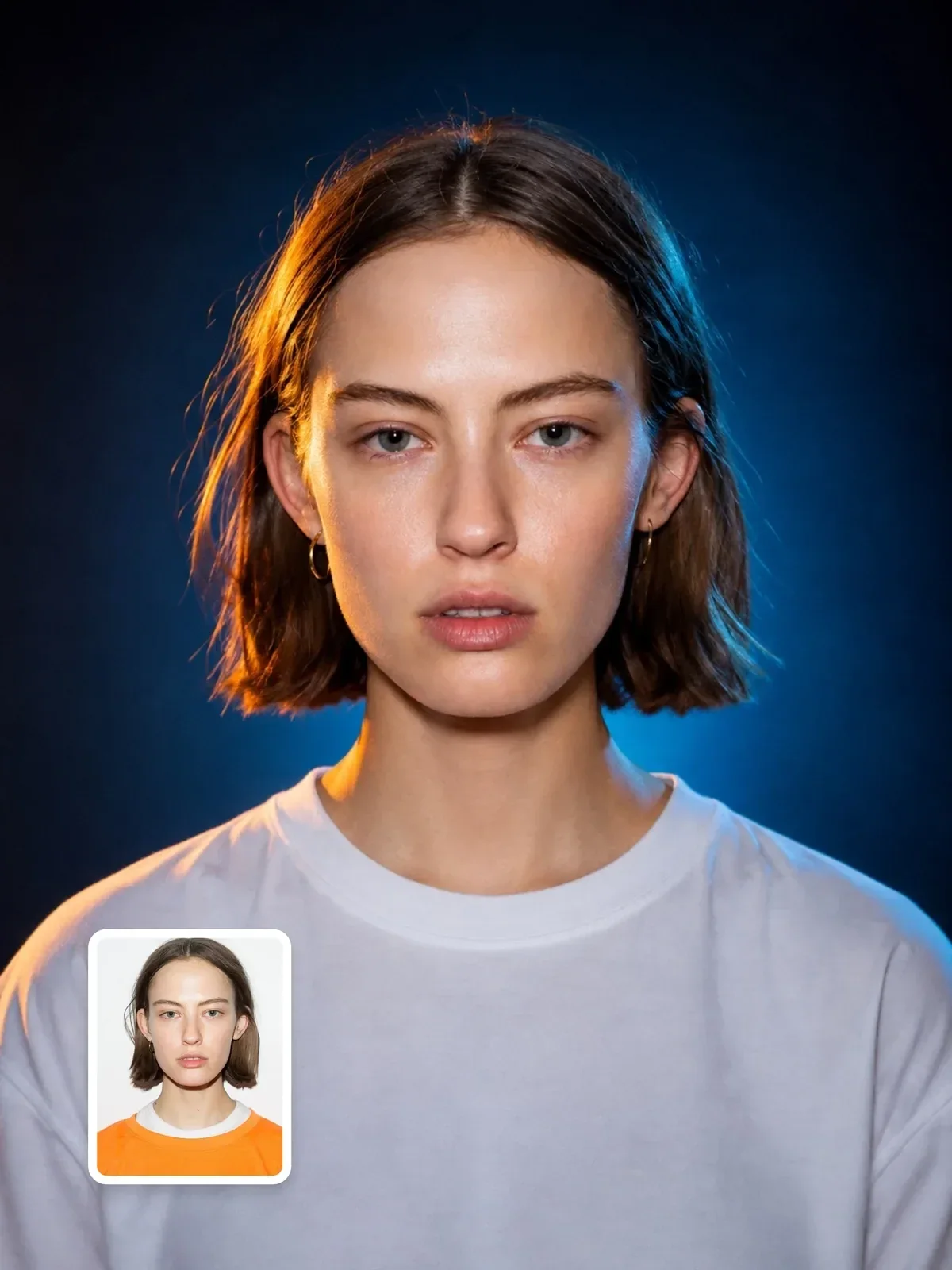
At around 1.4 meters for a head-and-shoulders frame, facial proportions look the way people expect to see themselves. Backgrounds fill less of the frame, so they're easier to blur and simplify. That's why 85mm is the most common lens word in portrait prompts, and why it's the right default for headshots and beauty.
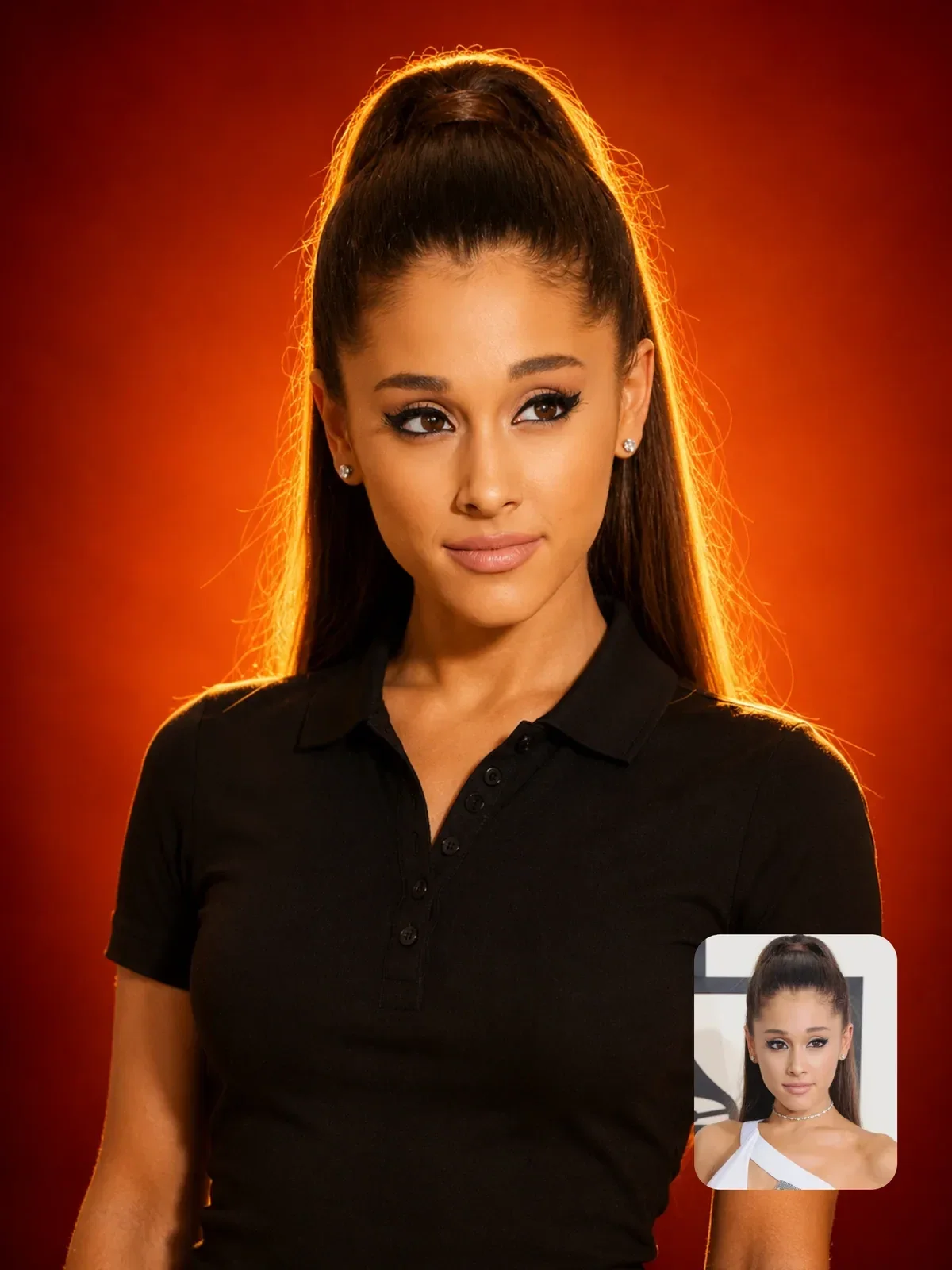

The black polo studio portrait pairs 85mm with a wide aperture, a typical professional portrait combination.
135mm: watching from across the room
A 135mm lens makes you step back more than two meters for the same framing. Features flatten slightly further, and the background is magnified so a few leaves or lights fill the frame behind the subject. It's lovely for candid portraits, weddings, fashion outdoors and any scene where the subject shouldn't feel the camera.
Compression: why long lenses make backgrounds bigger
Long lenses seem to squash distance. A mountain behind a hiker looks closer and larger; a row of streetlights appears stacked together. Photographers call it compression. Strictly, it's the long viewing distance again: from far away, the subject and the background are at more similar distances from the camera, so they're rendered at more similar sizes. The narrow field of view then crops in on that relationship.
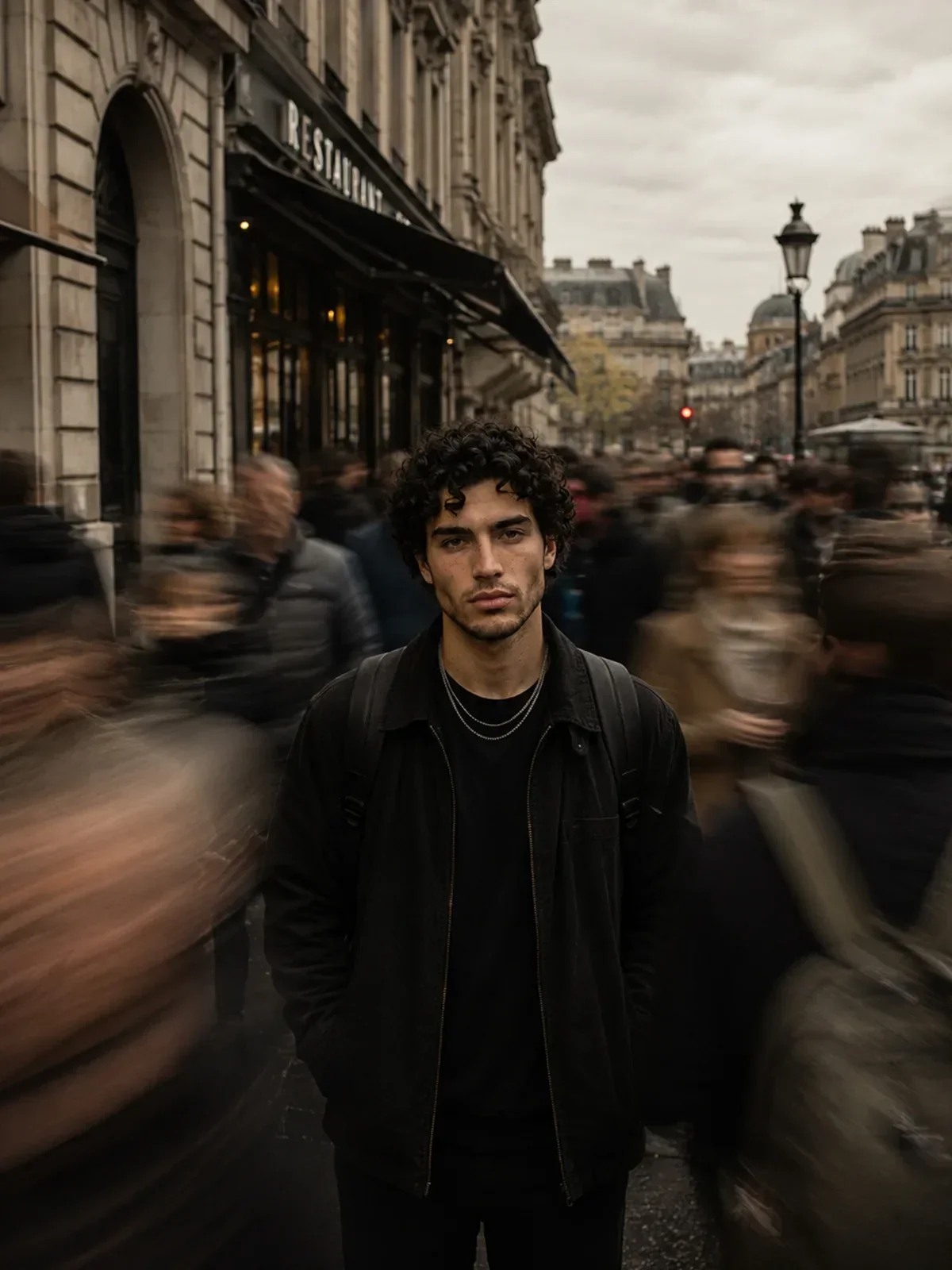
You can use this deliberately. A setting sun behind a person looks huge only from far away with a long lens. City lights become dense walls of bokeh. Sports photographers use very long lenses from the sidelines, which gives broadcast and stadium images their packed, flattened look.
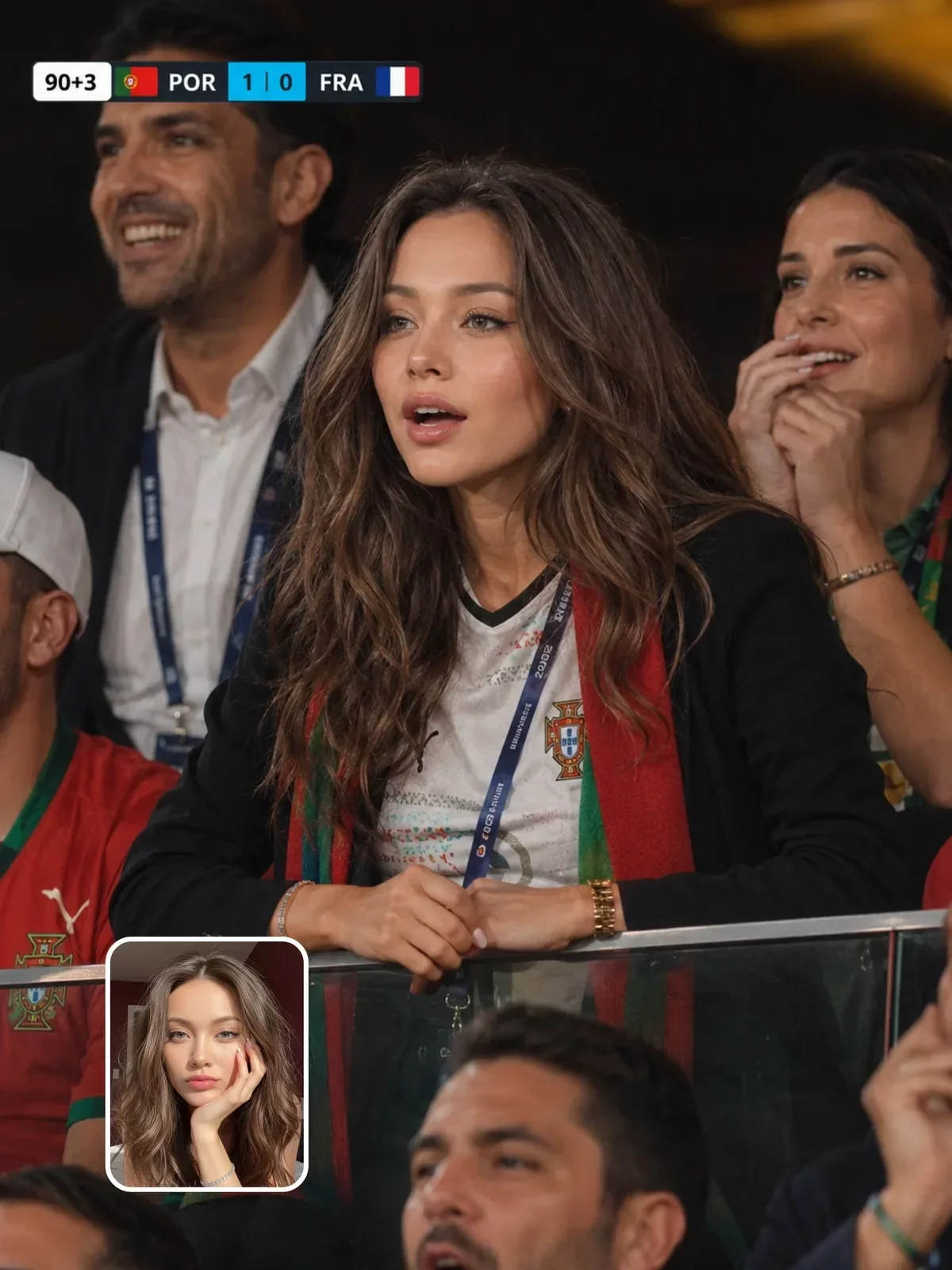
The football broadcast spectator shot relies on that long-lens compression to feel like a real TV frame.
Your phone is a wide-angle camera
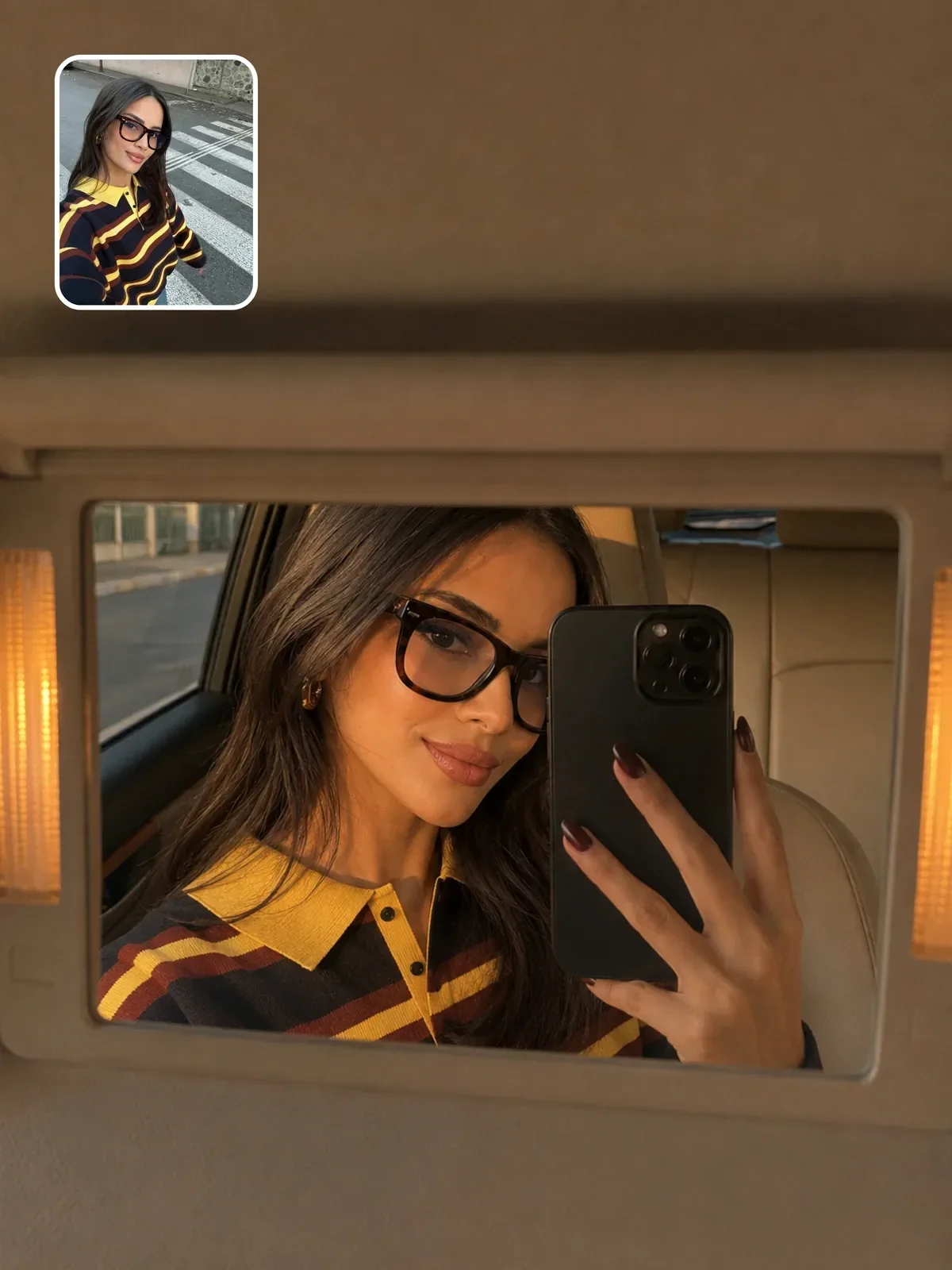
The main camera on most smartphones has a field of view roughly equivalent to a 24 to 28mm lens on full frame. That's why phone photos of rooms look spacious and why selfies taken at arm's length, around 40 to 50 cm away, make the center of the face look a little bigger than it does in person.
This matters both ways. If you want an AI image to look like a real phone photo, ask for the wide look: shot on a smartphone main camera, wide angle, slight distortion at the edges. If you want a flattering portrait from a selfie, describe a longer lens and a greater distance instead. The guide on making AI images look like real phone photos covers the rest of that look.
Other numbers you'll see in prompts
The four lenses in this guide cover most portrait and lifestyle work, but you'll meet a few others in prompts and photo captions:
- 14–16mm: ultra-wide. Dramatic interiors, big skies, skateboard and action shots taken very close. Strong stretching near the edges of the frame.
- 35mm: a favorite of street and documentary photographers, a touch wider than 50mm. Enough context to tell a story, close enough to feel present. It's a good default for scenes with people in a place.
- 200mm and longer: sports, wildlife and stage events, shot from far away. Very strong compression and backgrounds that become a smooth wash of color.
One more detail: focal lengths are quoted for full-frame cameras unless someone says otherwise. Many cameras have smaller sensors, which crop the image, so a 50mm lens on one of them frames more like a 75 to 80mm lens on full frame. Image models have learned from photos made on all kinds of cameras, but the full-frame meaning is the most common, so use full-frame numbers in your prompts.
Writing focal length into a prompt
A lens number works best when the rest of the prompt agrees with it. Add framing and distance so the model gets a consistent picture.
Portrait of a fisherman on a harbor, 24mm, close-up, blurry background.
Environmental portrait of a fisherman on a harbor wall, shot with a 24mm lens from about one meter away. He fills the left half of the frame; boats, nets and the harbor town are visible behind him in reasonable focus.
The first version asks for three things that fight each other: a wide lens, a tight close-up and a strongly blurred background. A wide lens at a normal portrait distance keeps much of the background readable. If you want the blur, choose 85mm or 135mm and say background softly out of focus; for the actual control of blur, see the depth of field guide.
- Use one focal length per prompt. Two numbers average into nothing.
- Pair the lens with distance or framing:
85mm, head and shouldersor24mm, full room visible. - Match the lens to the angle. Wide lenses exaggerate low and high angles; long lenses calm them down. The camera angles guide has examples.
- For illustration styles, lens words still affect perspective even when the image isn't a photo.
Ten-minute lens test
Take one portrait prompt, ideally based on your own photo, and generate it four times with only the lens line changed: 24mm from 40 cm, 50mm from 80 cm, 85mm from 1.4 m, 135mm from 2.2 m. Keep the framing the same: head and shoulders.
Compare the nose, the ears and the background in each one. You should see the face settle and the background grow and soften as the number rises. Then do the same with a landscape or street scene, where the change shows up in how much of the world fits in and how close the distant objects appear.