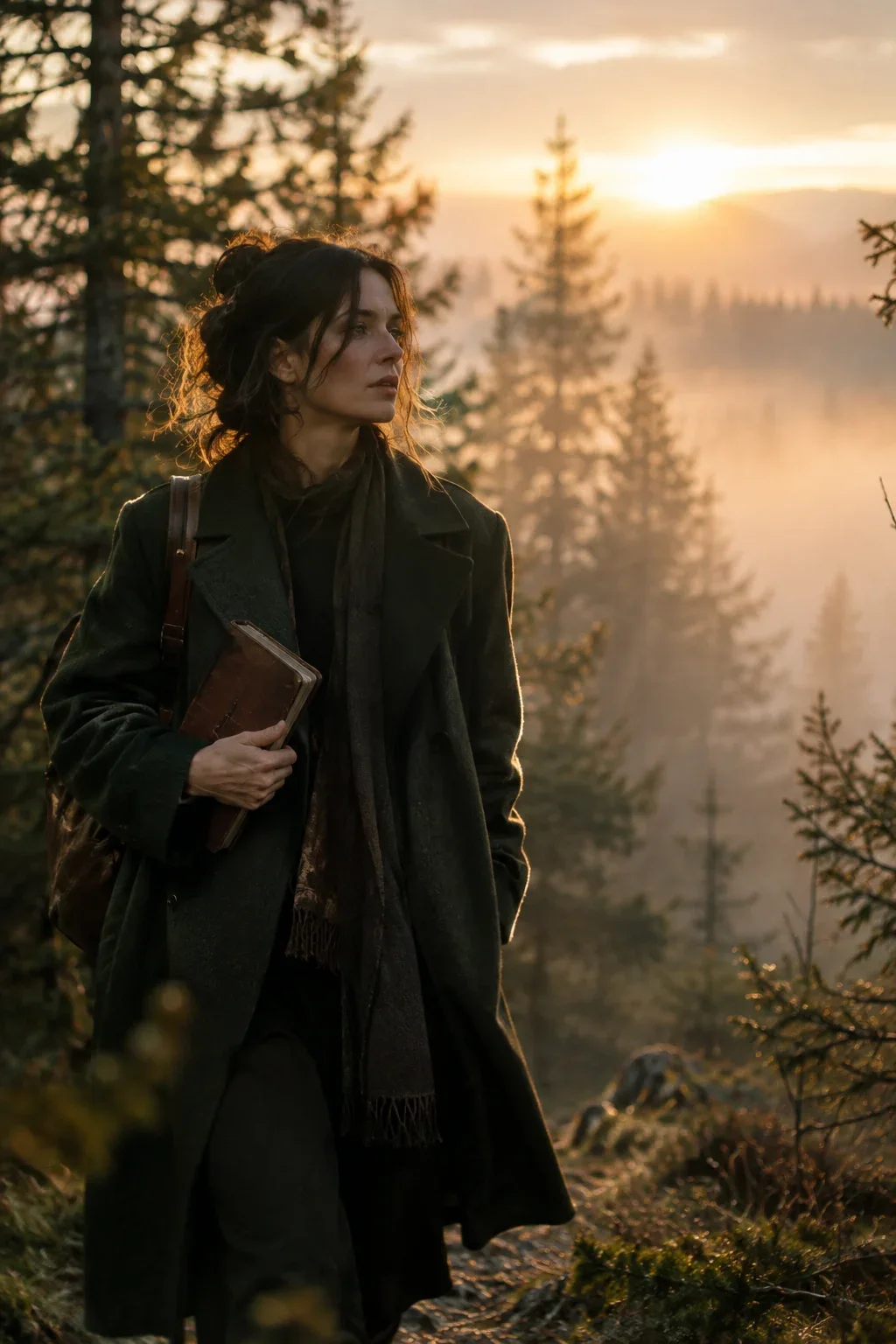
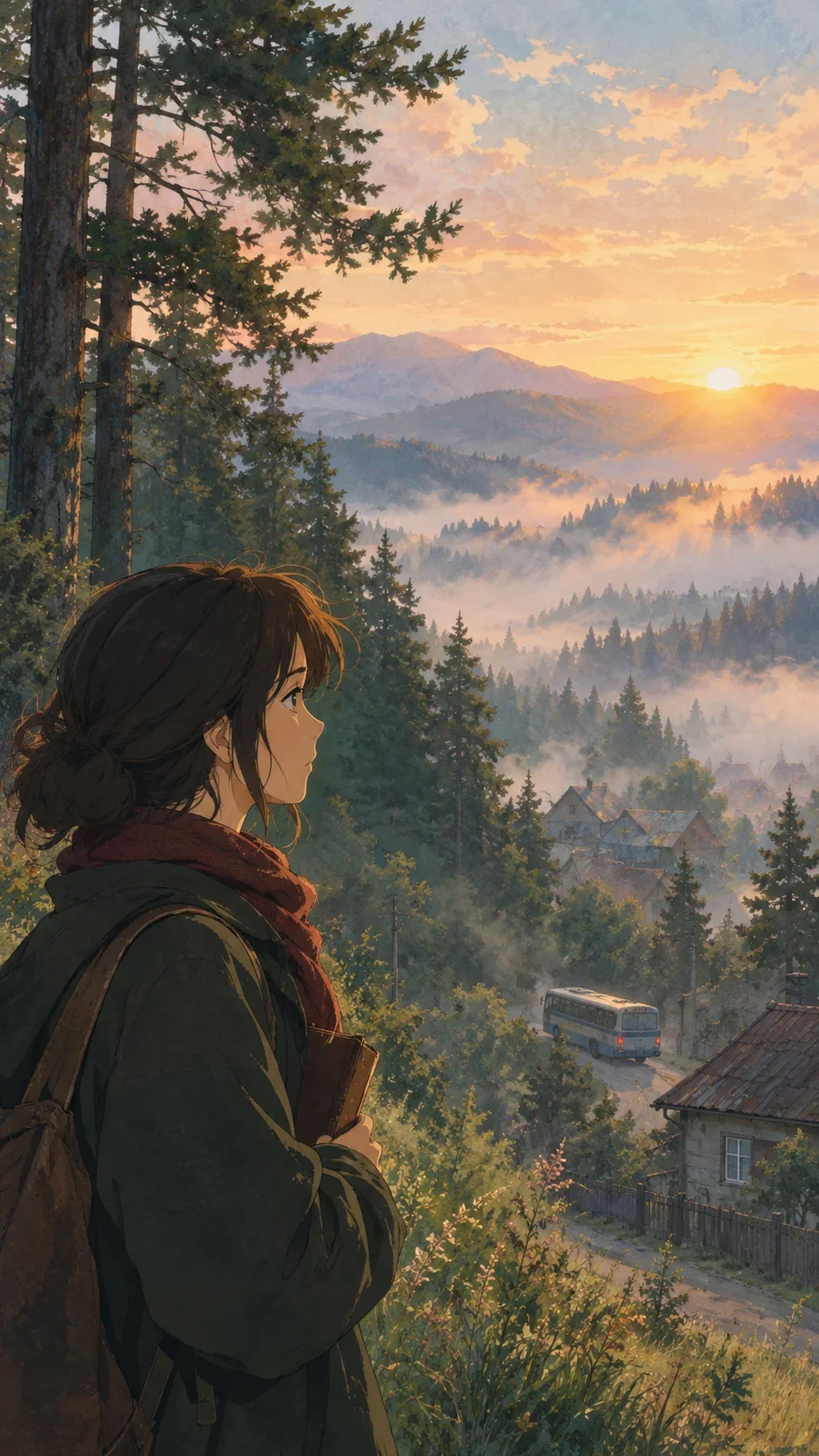
Golden Hour and Blue Hour: Prompting Time of Day
Why light changes near sunrise and sunset, and how to prompt golden hour, blue hour and the hours between with the right color, shadow length and sun direction.
Visual AI Club7 Min. Lesezeit
Dieser Ratgeber ist auf Englisch geschrieben.
Typing "golden hour" gets you an orange picture. Getting a picture that feels like a real evening, with long shadows, glowing edges and a sky that matches the ground, takes a few more words. This guide explains what changes in the light as the sun goes down, and gives you the phrases that make a model render a specific time of day convincingly.
What the atmosphere does to low sunlight
At noon, sunlight takes a short path through the atmosphere to reach you. Near sunrise and sunset it travels sideways through far more air. Along the way, the short blue wavelengths are scattered out of the beam in every direction, which is the same effect that makes the daytime sky blue. What survives the long trip is weighted toward yellow, orange and red.
Three things change at once, and a convincing image needs all three:
- Color. Direct sunlight warms up, from a neutral white at midday to amber and then deep orange right at the horizon.
- Angle. The sun is low, so light arrives nearly horizontally. It hits faces from the front or side instead of from above, and it slips under tree canopies and between buildings.
- Shadows. Low sun means long shadows. At about 10 degrees above the horizon, a shadow is roughly five to six times longer than the object casting it. At 45 degrees, it's the same length as the object.
Meanwhile the shadows themselves are lit by the open sky, which is still blue. So golden-hour images aren't simply orange: they are warm in the light and cool in the shade. That warm-cool split is what your eye recognizes as real evening light.
The light through one clear day
Photographers think of a clear day as a sequence of distinct looks. The Kelvin figures are rough, typical values for the dominant light, not exact readings; real conditions vary with weather, season and latitude.
| Time | Light | Shadows | Prompt words |
|---|---|---|---|
| Blue hour before sunrise | cool, even skylight, well above 9,000K | almost none | deep blue predawn light, streetlights still on |
| Sunrise golden hour | warm low sun, around 3,000–3,500K | very long, soft-edged | low warm morning sun, mist, dew, long shadows |
| Midmorning | clean daylight, near 5,000K | medium length, crisp | bright clear morning light |
| Midday | neutral, around 5,500K and high overhead | short, under objects | harsh overhead noon sun, short dark shadows |
| Sunset golden hour | amber to orange, can drop below 3,000K | very long | low golden sunset light, warm rim on hair, long shadows |
| Blue hour after sunset | deep blue sky, warm artificial lights | none from the sun | blue hour, city lights just switched on |
Use the table as a reminder that every time of day has a look, not only the two famous ones. A crisp midmorning street can be more useful than another sunset, especially for products and food.
Writing golden hour so it looks real
The fix for flat orange images is to describe the light's behavior, not just its color. Tell the model where the sun is, what it touches and what the shadows do.
A woman walking her dog in a park at golden hour.
A woman walking her dog along a park path at sunset. The sun is low behind her on the left, just above the trees, putting a warm rim of light on her hair and the dog's fur. Long shadows stretch toward the camera across the grass. Her face is in soft open shade, slightly cooler than the light behind her.
The second version specifies the sun's position relative to the camera, which is the most important golden-hour decision you'll make.
Three ways to point the sun
- Sun behind the camera (front light). Faces glow evenly in warm light and colors are rich, but shadows fall behind the subject and the image can look flat. Good for landscapes and buildings.
- Sun to one side (side light). Long shadows cross the frame, textures in grass, stone and skin come alive, and the image gains depth. The most versatile choice.
- Sun behind the subject (backlight). Glowing hair and edges, translucent leaves, haze in the air, possibly flare. The face sits in shade, so mention a reflector or soft bounce if you want it visible.

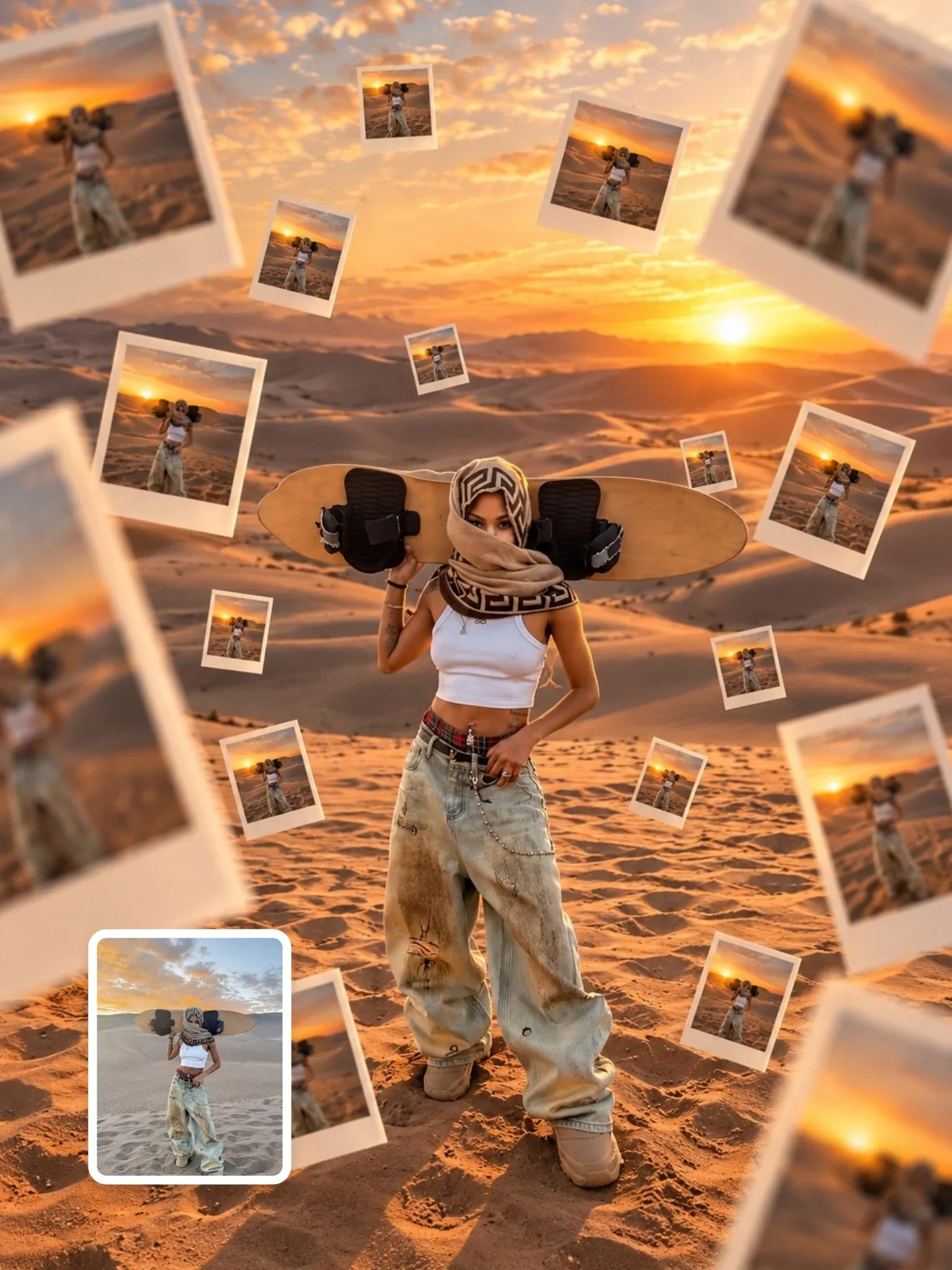
The golden hour memory collage shows how warm low light works from a high viewpoint: long shadows across a field read as late afternoon even when the sky isn't in the frame.
Morning or evening?
Models can tell the difference if you give them clues. Mornings often bring mist in valleys, dew, damp pavement, empty streets and slightly cleaner, cooler air. Evenings bring haze and dust in the air, warmer tones, more people, and windows starting to glow. Choose the clues that fit your story and include one or two.
Writing blue hour
Blue hour is the short window when the sun is below the horizon but the sky is still bright. There is no direct sunlight at all, so there are no hard shadows. The whole scene is lit by the sky, which glows a deep, saturated blue, and it often lasts well under an hour.
Its power comes from contrast with artificial light. Streetlights, shop windows and car headlights are warm, and they appear exactly when the sky is cool. That is why city shots at blue hour look so balanced: the sky is still bright enough to show detail, and the lights are bright enough to glow without blowing out.
A quiet street corner at blue hour, fifteen minutes after sunset. The sky is a deep even cobalt blue with no stars yet. Warm yellow light spills from a bakery window onto wet cobblestones. No direct sunlight, no hard shadows, soft reflections in puddles.
If your blue-hour image comes back as full night with a black sky, add the sky still bright blue, not black and just after sunset. Models often confuse blue hour with night because both have lit windows.
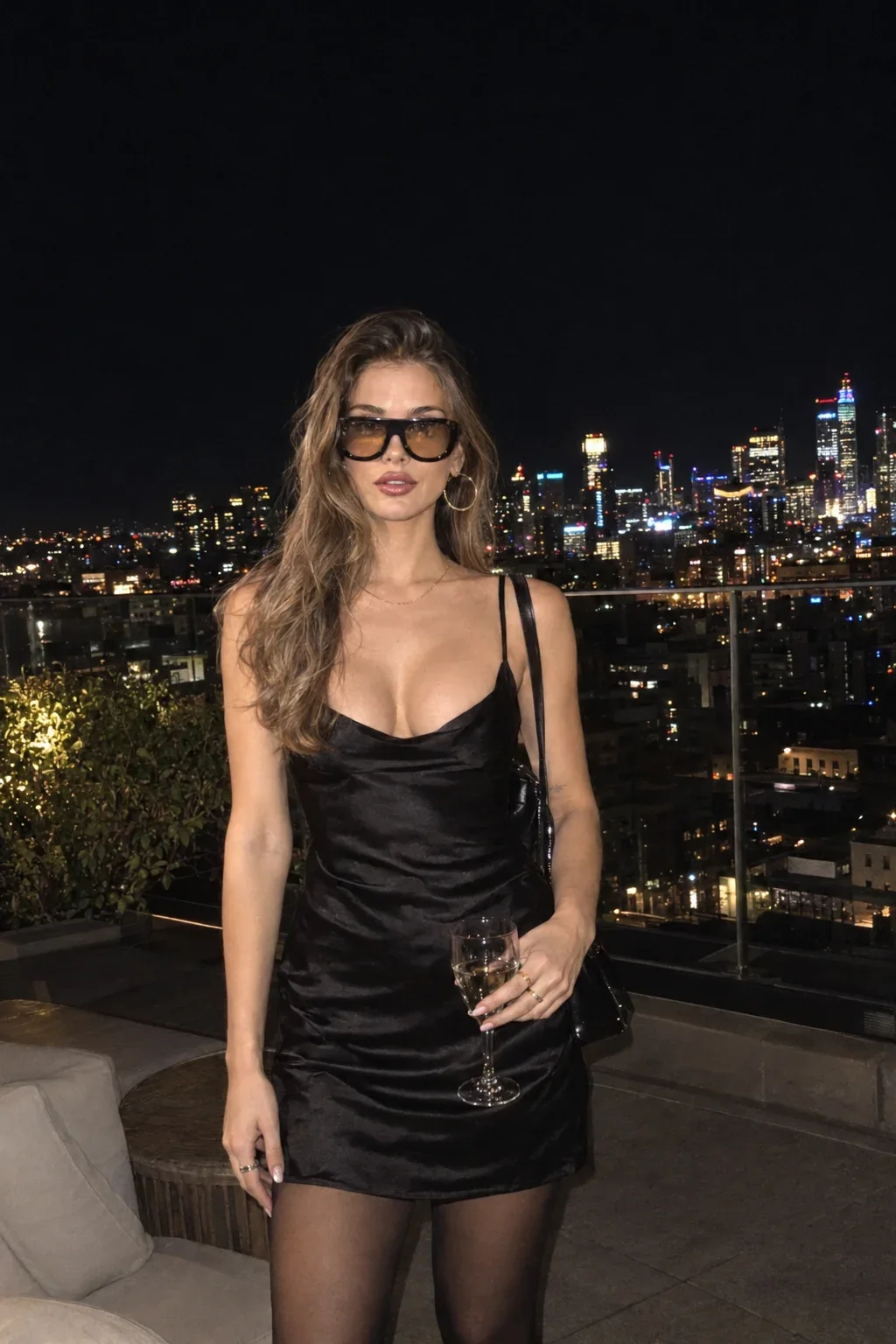

The rooftop city view prompt is set later, at night, which makes a useful comparison: once the sky goes dark, the city lights become the key light and the mood changes completely.
Time of day indoors
Time of day isn't only an outdoor problem. Low sun reaches deep into rooms, so a kitchen at 6 p.m. looks nothing like the same kitchen at noon, and describing that is one of the easiest ways to make an interior feel lived in.
- Late golden light comes through a window almost horizontally and lands as a bright, warm, sharply shaped patch on the far wall or floor. The window frame and anything on the sill cast long shadows inside that patch.
- Midday light through the same window falls steeply, staying close to the window, with a bright square on the floor and a softer, neutral room behind it.
- Blue hour indoors means the window glows blue while lamps inside are warm, so the room mixes two color temperatures. Ask for both:
cool blue window, warm table lamp on the right.
A small kitchen in late afternoon. Low sun through the window lays a warm, sharp-edged rectangle of light across the back wall, with the shadow of a potted plant inside it. The rest of the room is in soft, cooler shade.
Light patches like this act as natural spotlights. Place the subject inside one and the image composes itself.
Mistakes that give the time away
- Wrong shadow length. Golden-hour color with short noon shadows looks fake. Always mention long shadows.
- Everything orange. Real golden hour keeps blue in the shadows and the sky. Ask for
cool blue shadowsalongside the warm light. - Sun in two places. A sunset glowing behind the subject while the face is lit hard from the front breaks the logic. Pick one direction and add a soft bounce for the face.
- Sun and sky disagree. Low sun in a deep midday-blue sky, or a glowing sunset with no warm light on the ground. Describe both sky and ground.
- Lens flare everywhere. Flare only happens when a bright source is in or near the frame. Leave it out unless the sun is behind the subject.
For more on warm and cool light as a creative choice, see the lighting vocabulary guide. To push the warm-cool contrast further in post, read color grading in prompts.
Exercise: one place, four times of day
Write one scene you know well, such as your street, a beach or a café terrace, and keep every word the same except the time-of-day line. Generate it four times:
Blue hour before sunrise, streetlights still on, no shadows.Low morning sun from the left, mist, long soft shadows.Midday sun overhead, short hard shadows.Low sunset sun behind the subject, warm rim light, cool blue shadows, the sky orange near the horizon.
Check each result for color, shadow length and sun direction. Whichever line produced the most convincing image becomes your saved time-of-day phrase, ready to drop into any prompt. Then run the same four lines on a very different scene, such as a forest path or a product on a table, to check they hold up outside the place you tested them.