Watercolor, Crayon and Colored Pencil: Traditional Media in AI
Make AI images that look truly painted or drawn: how watercolor, wax crayon and colored pencil behave on paper, and the words that make models copy it.
Visual AI Club7 min de lectura
Esta guía está escrita en inglés.
Type the word watercolor into an image model and you usually get a smooth digital picture with soft edges and a paper filter on top. This guide shows you how to describe what real pigment, wax and pencil lead actually do on paper, so your results look like something a person made at a desk, not a screen effect.
You will learn the physical behavior of three media, the vocabulary that triggers each one, and a quick test you can run on a single photo to compare them side by side.
Why the style word alone is not enough
Image models learned traditional media from millions of scans and photos, but a lot of those images are digital imitations: brushes in painting apps, filters, stock illustrations labeled watercolor. When you write only the style name, the model averages all of that together, and the average is clean and digital.
Real media leave evidence. Watercolor leaves hard rims where a wash dried, crayon skips over the bumps in the paper, colored pencil builds up in visible strokes. If you describe that evidence, the model has something specific to draw. The rest of this guide is a list of evidence for each medium.
Always name the surface. Paper texture is the single cue that most often separates a convincing traditional piece from a digital one, because it shows through every stroke.
Watercolor: water does the drawing
Watercolor is transparent pigment carried by water. The painter never adds white paint; the white is the paper left untouched. Light colors are thin washes, dark colors are many washes layered on top of each other after each one dries. That is why good watercolor glows: light passes through the pigment, bounces off the white paper and comes back through.
The marks that prove it is watercolor
- Wet-in-wet: paint dropped into a wet area spreads into soft, feathered edges. Skies and backgrounds are usually done this way.
- Wet-on-dry: paint on dry paper keeps a crisp edge. Use it for details like eyes, windows, branches.
- Hard edges and tide lines: as a wash dries, pigment collects at its border and leaves a darker rim.
- Blooms or backruns: when water flows back into a half-dry wash, it pushes pigment outward into cauliflower shapes.
- Granulation: some pigments settle into the paper's valleys and look speckled, especially blues and earth tones.
- Reserved whites: highlights are simply bare paper, often with a slightly irregular edge.
Paper matters too. Cold-press paper has a medium tooth and is the most common choice. Hot-press is smooth and gives sharper edges. Rough paper shows strong texture. Professional sheets are typically 300 gsm (140 lb), heavy enough that they buckle only slightly when wet, and that gentle buckle is something you can ask for.
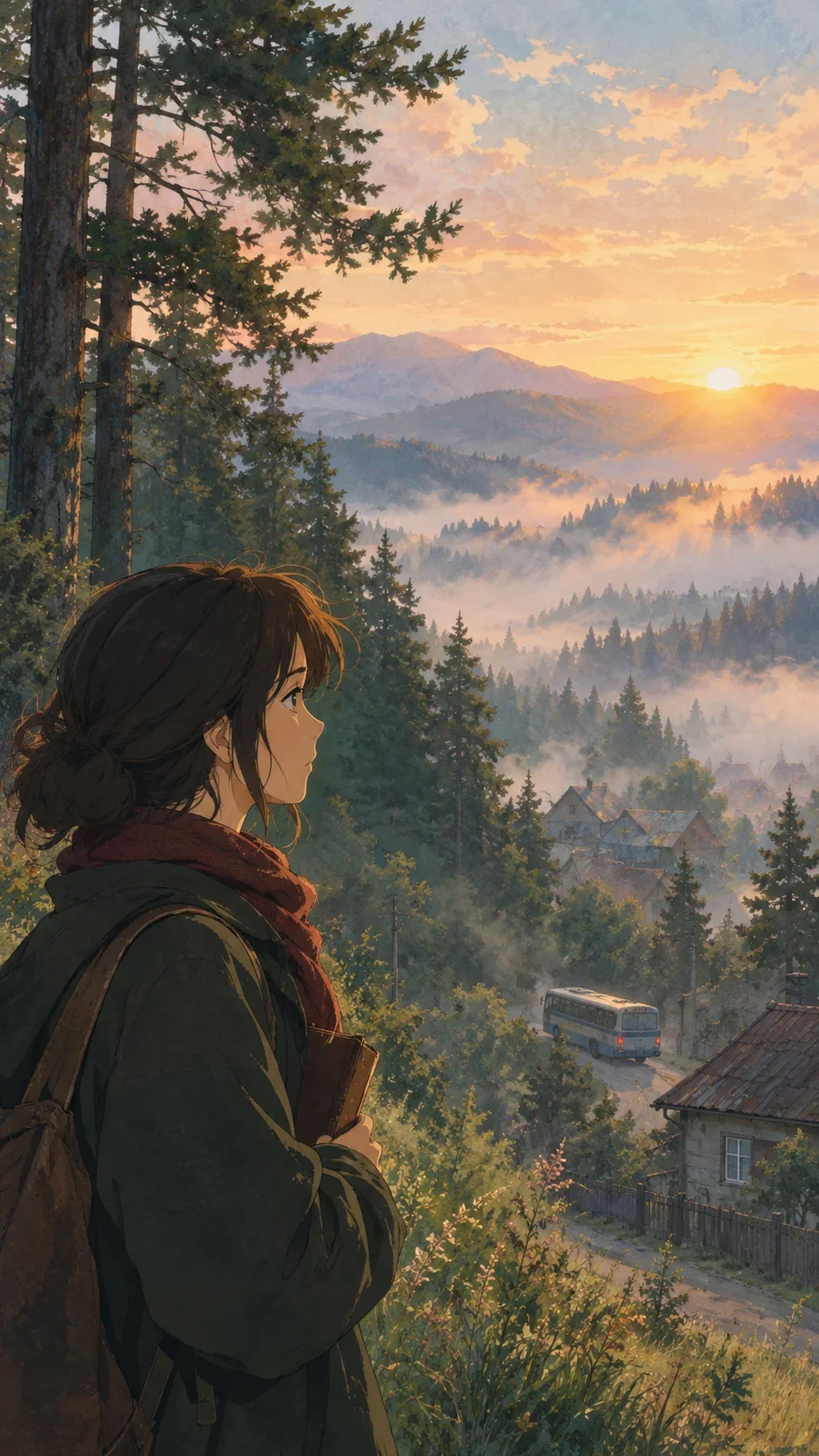
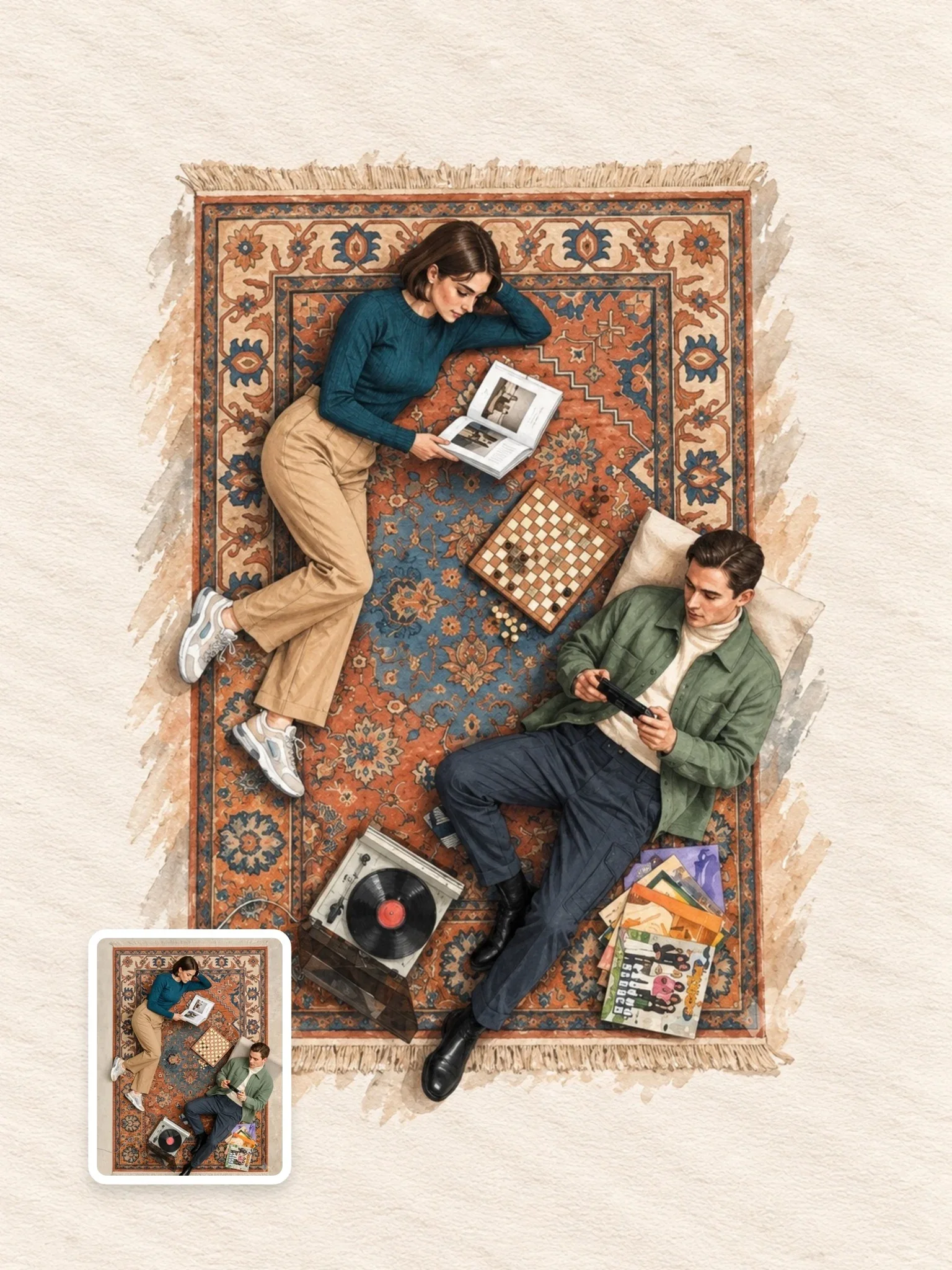
A watercolor painting of a fishing village at sunrise.
Loose watercolor on cold-press paper of a fishing village at sunrise. Sky painted wet-in-wet with peach and cobalt blue bleeding together, boats and houses added wet-on-dry with crisp edges, visible tide lines, a few granulating blues in the water, bare white paper for the sun's reflection, light pencil underdrawing still visible.
Notice that the second version also says loose. Watercolorists leave things unfinished on purpose. If you want that quality, ask for areas that fade into bare paper at the edges of the sheet instead of a full-bleed painting.

Wax crayon: pressure, skips and resist
Crayon is pigment in wax. It sits on top of the paper instead of soaking in, so it catches only the raised peaks of the paper's texture. Light pressure leaves a broken, speckled stroke with white showing through. Heavy pressure fills the tooth and gives a waxy, slightly shiny patch that can even look smeared.
Because wax repels water, crayon also creates the classic resist effect: draw with a white or light crayon, brush a watercolor wash over it, and the crayon lines stay bright. It is a lovely mixed-media look, and models handle it well when you name both media and the order they were used in.
Child drawing versus artist crayon
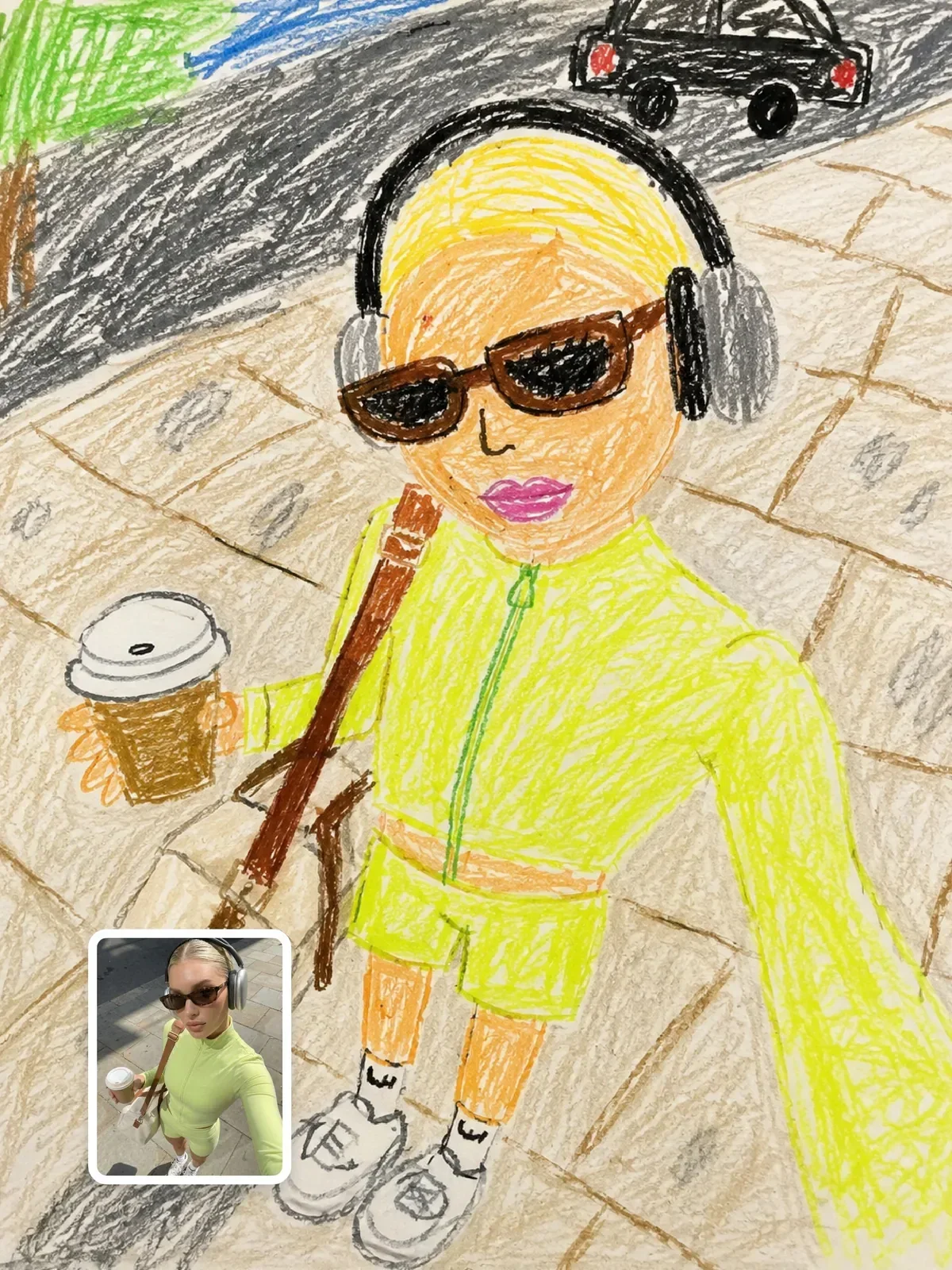
There are two very different crayon looks, and mixing them up is the most common mistake. A young child's drawing has scribbled fill that goes past the outlines, big heads, stick arms, a sun in the corner and only a few bright colors straight from the box. An artist using oil pastel or wax crayon builds layers, scrapes back into them, and blends colors on the paper.
Decide which one you want and describe the person holding the crayon. Saying drawn by a four-year-old produces a very different picture than layered wax crayon by an illustrator, even with the same subject.
Colored pencil: layers you can count
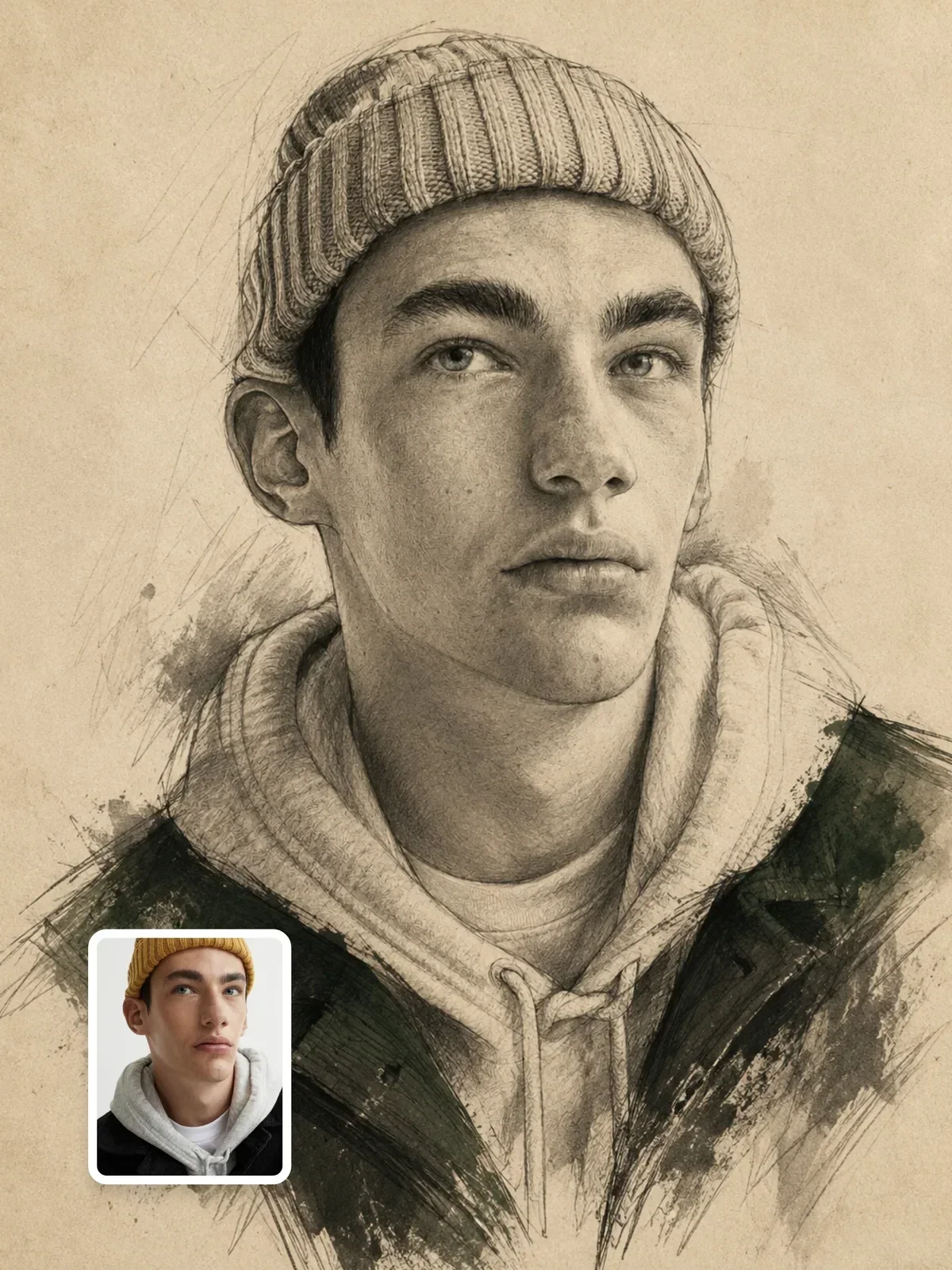
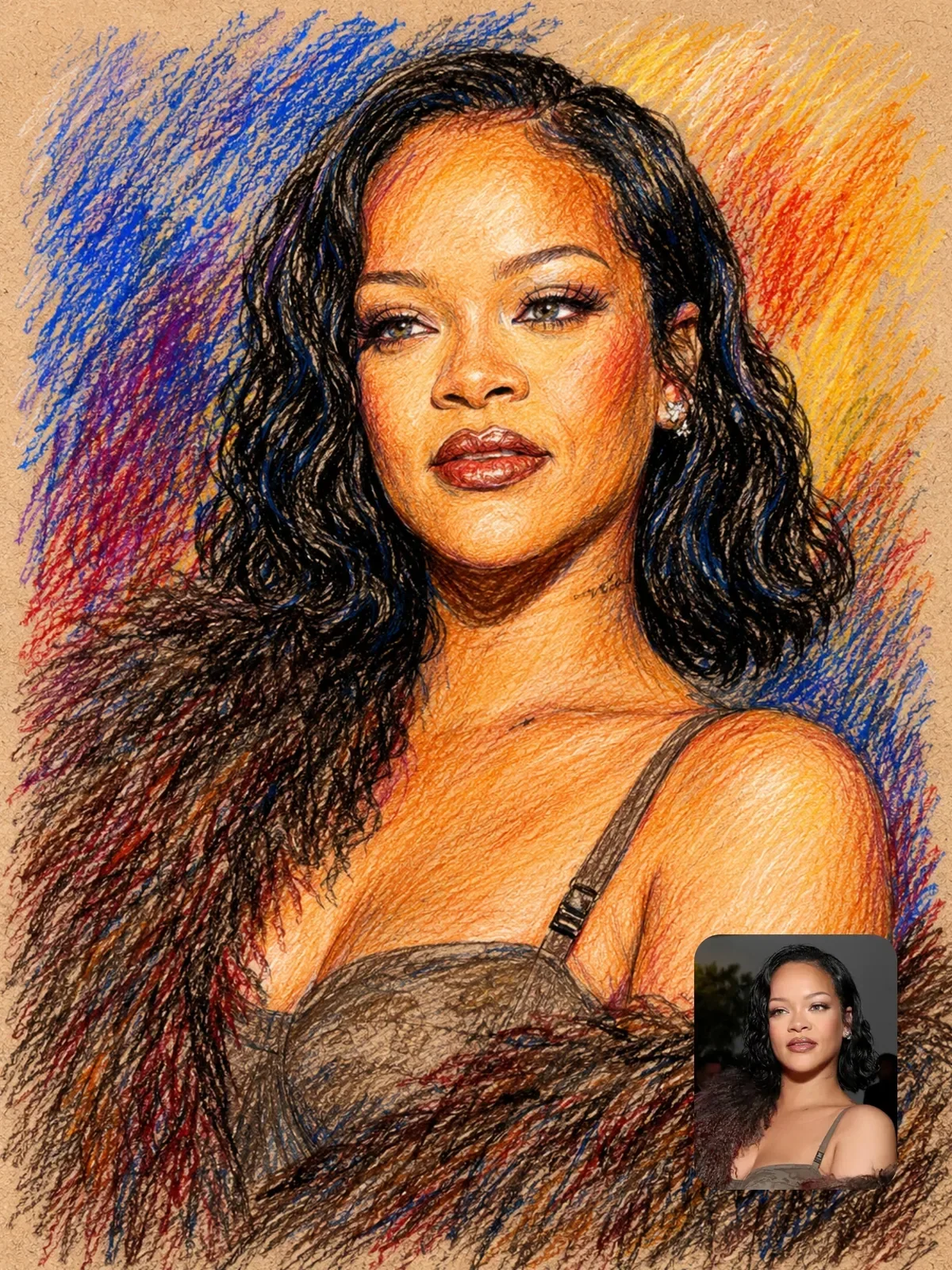
Colored pencil is the most controlled of the three. The lead is harder than crayon and is applied in many thin layers, so you see the direction of the strokes. Artists build color by laying one hue over another, which is why a pencil drawing of skin may contain yellow, pink, violet and green when you look closely.
- Hatching and cross-hatching: parallel lines, then a second set at an angle, to build value.
- Directional strokes that follow the form, like curved strokes around a cheek.
- Paper tooth showing through as tiny white flecks in lightly layered areas.
- Burnishing: heavy final pressure that crushes the tooth and gives a smooth, waxy, almost polished surface in the darkest areas.
- Toned paper: mid-gray or tan paper with white pencil highlights, a common sketchbook choice.
If your result looks like a smooth digital airbrush, add visible directional strokes and paper tooth. If it looks scratchy and unfinished, ask for burnished darks and more layers.
All three side by side
| Medium | How white appears | Edges | Words that help |
|---|---|---|---|
| Watercolor | Bare paper, never white paint | Soft where wet, crisp tide lines where dry | wet-in-wet, blooms, granulation, reserved whites, cold-press paper |
| Wax crayon | Paper peeks through broken strokes | Waxy, uneven, scribbled past outlines | paper tooth, heavy pressure, wax resist, scribbled fill |
| Colored pencil | Tiny flecks of paper in light layers | Clean, built from many strokes | hatching, layered color, burnished darks, toned paper |
You can combine them. Watercolor washes with pencil detail on top is a classic illustration technique, and crayon over watercolor gives energy to a calm painting. When you mix, say which medium came first, because order changes the look: wax under watercolor resists it, while watercolor under pencil just becomes a base.
Present the artwork like a real object
A convincing traditional piece is often about how it is shown. You have three choices, and each sends a different signal.
- Flat scan: the sheet fills the frame, evenly lit, no shadows. Best when you want to use the image as an illustration or print.
- Photographed on a desk: the paper at a slight angle with brushes, a water jar or a pencil tin nearby, soft window light from one side. This instantly tells the viewer it was made by hand.
- Sketchbook spread: two pages, the center gutter, a little page curl, maybe a color test swatch in the margin.
For the desk version, describe the light the way you would for any tabletop photo: a window on the left, raking light that shows the paper texture and buckle. Raking light means light coming in at a low angle across the surface, and it is what makes paper texture visible. If you want more control over that, see lighting vocabulary for AI prompts.
Turning your own photo into a drawing
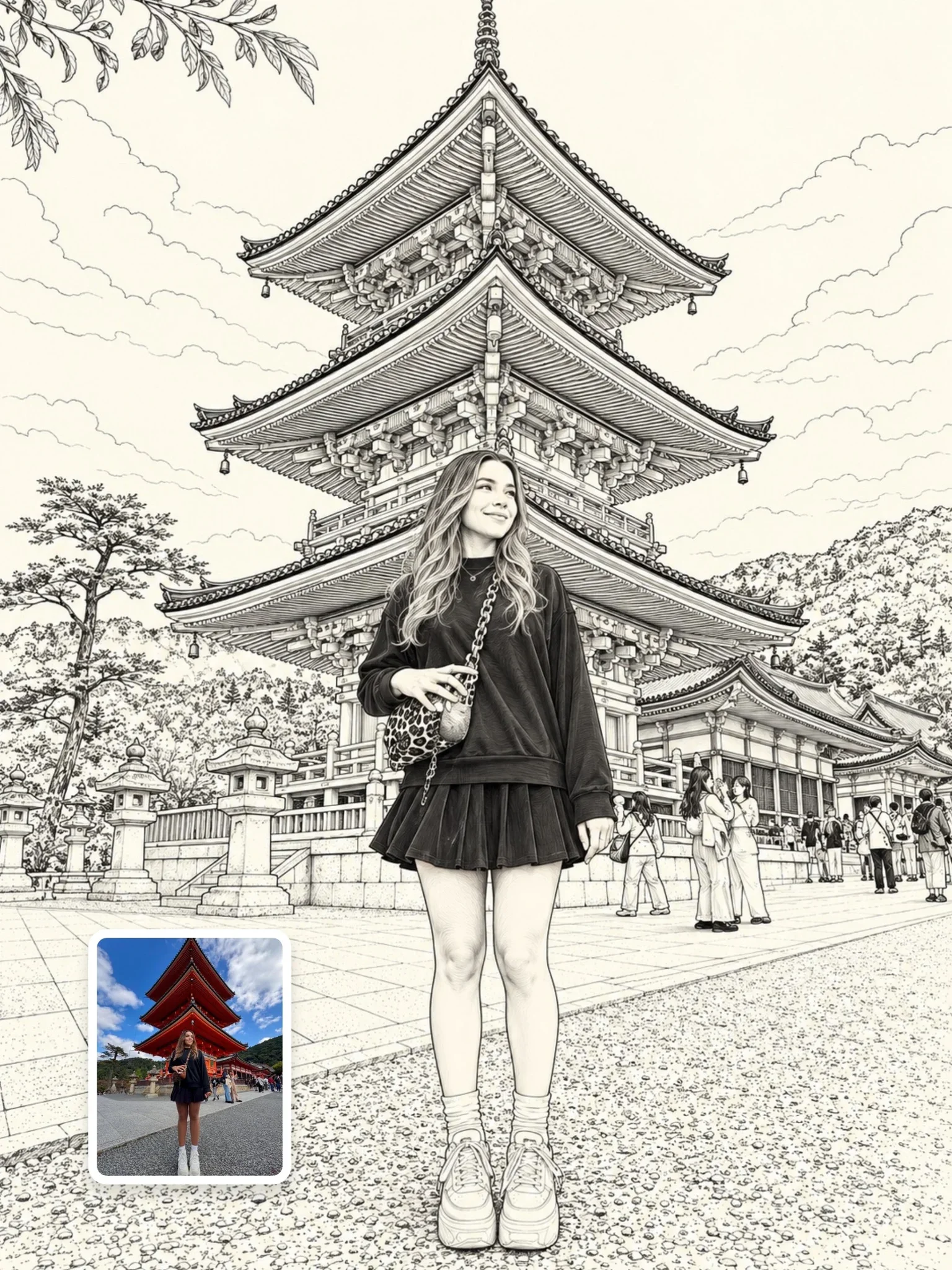
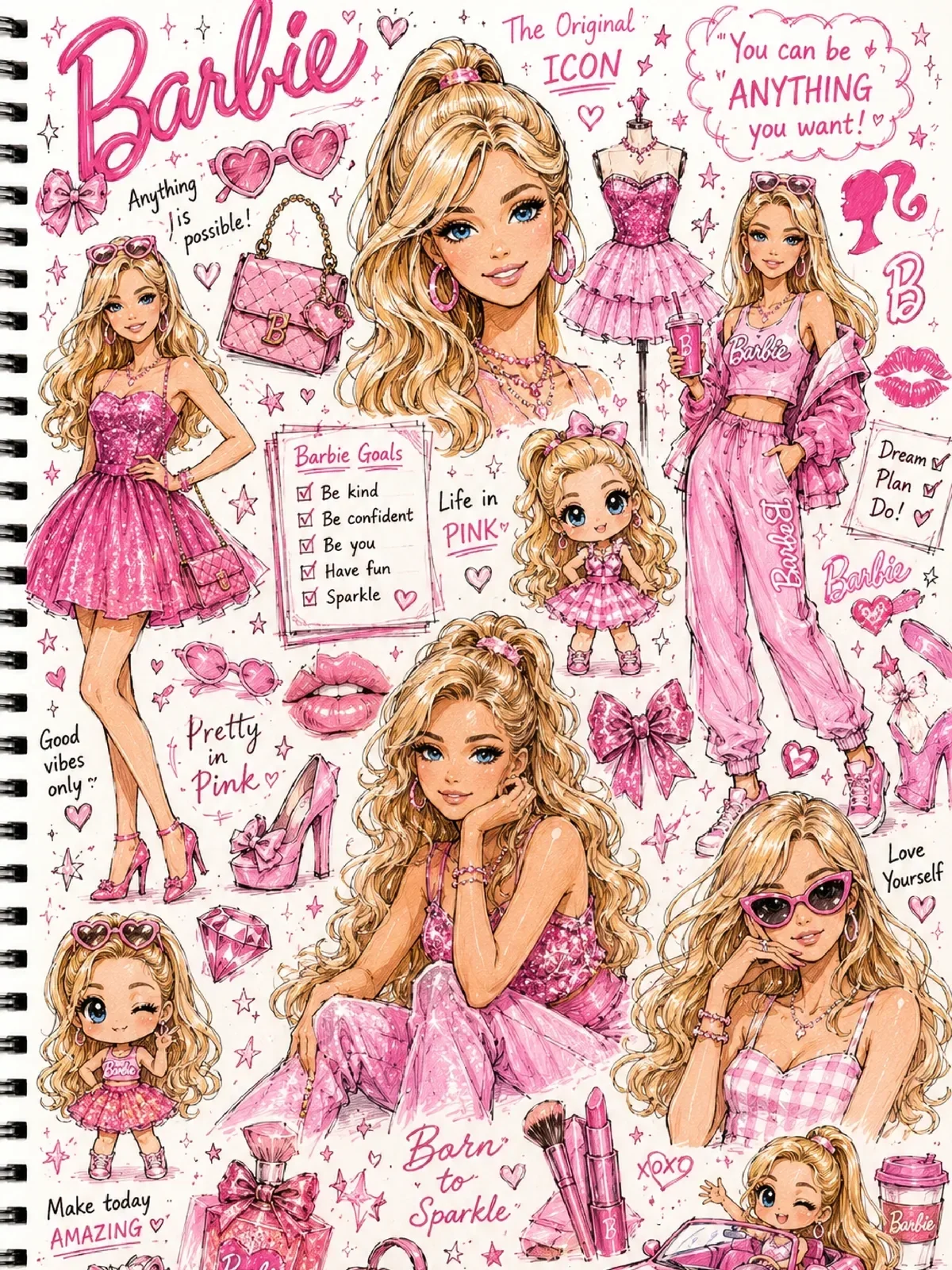
When you transform a photo, the model has to choose between keeping detail and respecting the medium. Watercolor in particular cannot hold fine detail everywhere; painters simplify. Tell the model what to keep sharp, usually the eyes and the outline of the face, and what it may loosen, like clothing folds and the background.
A good rule is one area of detail and everything else suggested. That is how painters guide the eye, and it also helps the model keep the person recognizable without fighting the style. For a deeper look at keeping a face intact, read how to keep a person recognizable. Use photos of yourself or of people who agreed to it.
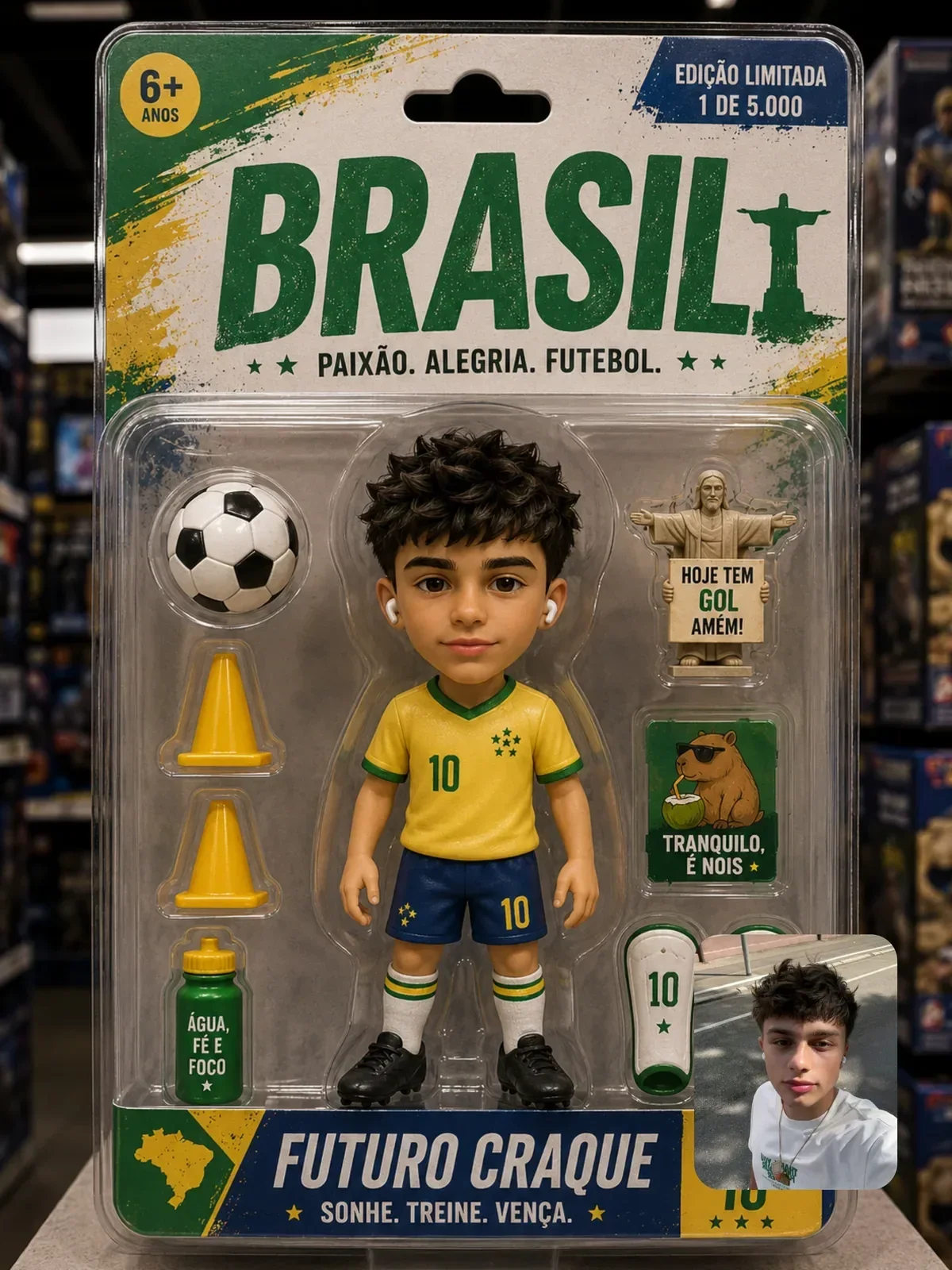
Pencil is the most forgiving medium for likeness, because it can carry detail. Crayon is the least forgiving, which is exactly why the childlike version is funny: the resemblance comes from a few kept details, such as glasses, a hairstyle or a striped shirt, rather than accurate features.
Troubleshooting the digital look
- Too smooth: add paper texture, a named paper type, and visible strokes or tide lines.
- Too saturated: real watercolor is lighter than people expect; ask for transparent washes and lots of bare paper.
- Outlines everywhere: watercolor rarely has black outlines. Ask for shapes defined by edges of color, or a light pencil underdrawing only.
- Uniform fill: ask for uneven pressure, streaks and areas where the color thins out.
- Looks like a filter on a photo: remove photographic words like sharp focus or 8K and simplify the background.
A ten-minute comparison test
Pick one photo with a clear subject and simple background. Run it three times with the same structure, changing only the medium and its evidence words. Keep everything else, from aspect ratio to framing, identical, so you are really comparing the media. This is the same discipline described in iterate one variable at a time.
- Watercolor: cold-press paper, wet-in-wet background, crisp details on the face, reserved whites.
- Wax crayon: heavy pressure in the darks, broken strokes in the lights, paper tooth visible.
- Colored pencil: layered hatching, burnished darks, toned tan paper with white highlights.
- Pick the best one and run it again as a desk photo with soft window light.
Look at the edges first, then the whites, then the texture. Those three areas tell you whether the model understood the medium or just painted a picture with a style label on it.