Editorial Fashion Photography Prompts: Styling, Set and Pose
Write fashion prompts the way a shoot crew plans a story: fabrics and fit, backdrops and sets, editorial poses, and the lenses and light of a magazine page.
Visual AI Club7 dk okuma
Bu rehber İngilizce yazılmıştır.
A fashion editorial is never one person deciding everything. A stylist chooses the clothes, a set designer builds the space, a photographer picks the lens and light, and the model brings the pose. If you write your prompt in that order, one department at a time, your images start to look planned instead of generic, and that is what this guide teaches.
Editorial, catalog and campaign are different jobs
Before you write a word, decide which kind of fashion image you are making. They look different because they have different goals, and the model will happily blend them into something bland if you do not choose.
| Type | Goal | Visual signals |
|---|---|---|
| Catalog | Show the garment clearly so people can judge it | Plain backdrop, even light, neutral pose, full outfit visible |
| Campaign | Make a brand feel desirable | Polished, bold, one strong idea, often a clear product hero |
| Editorial | Tell a story or mood across several pages | Unusual poses, strong light, locations, cropping that leaves things out |
This guide focuses on editorial, the most expressive of the three. Editorial images are allowed to hide part of the outfit, crop through a shoulder or put the model far away in a landscape. The story matters more than the product.
Styling: describe clothes like a stylist
Models know fashion vocabulary very well, because fashion is one of the most photographed subjects online. Generic words like stylish outfit waste that knowledge. Name the fabric, the cut and the fit, and the image gains texture and believability.
Fabric changes the light
- Satin and silk reflect light in long, liquid highlights. Good with hard light.
- Wool crepe and gabardine are matte and show the cut. Good for tailoring.
- Organza and tulle are sheer; backlight makes them glow.
- Tweed, boucle and knit have visible texture that needs side light to show.
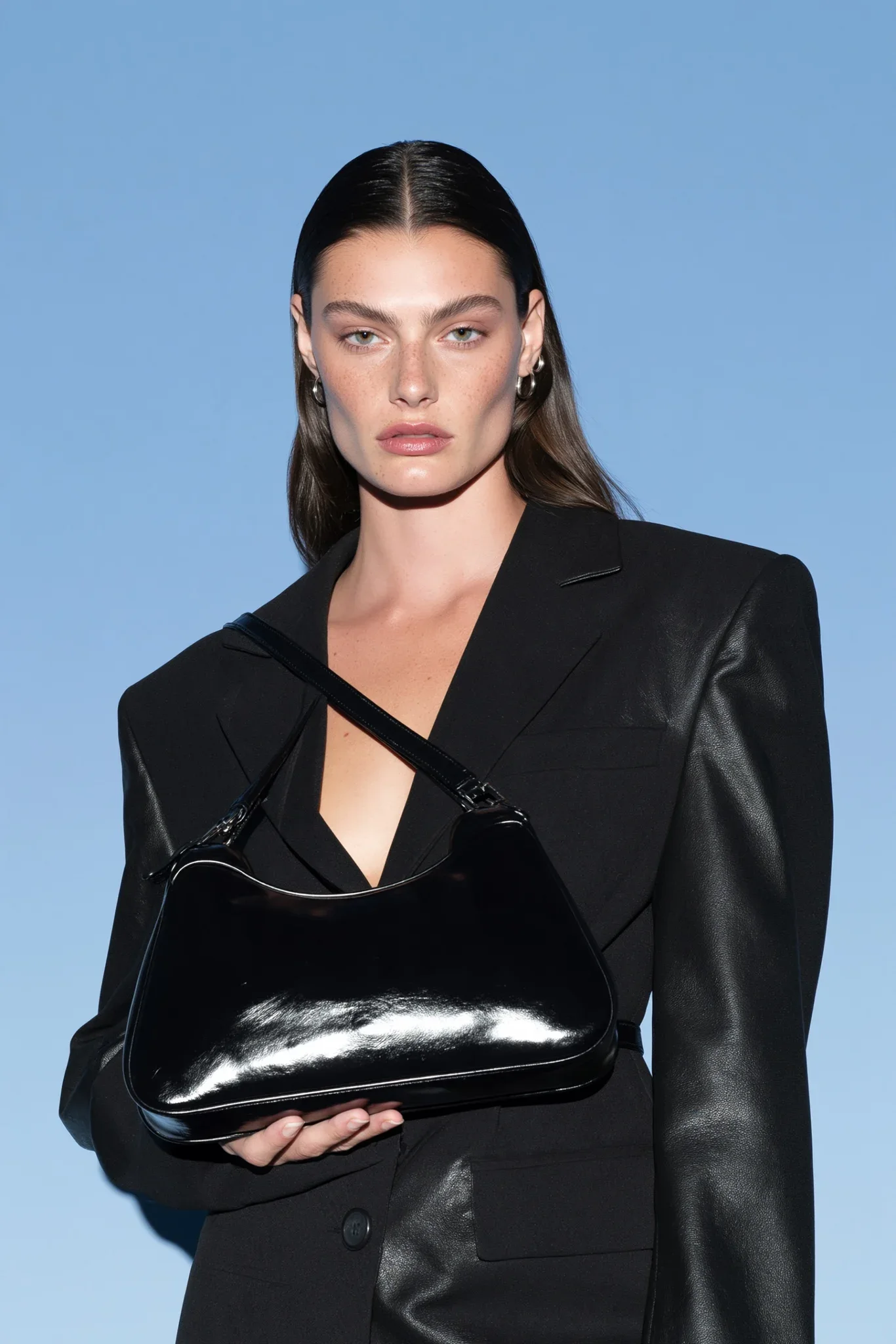
- Leather and vinyl give hard specular highlights that outline the body.
Fit and one hero piece
Stylists usually build a look around one statement item and keep the rest quiet. Say what the hero piece is and how it fits: an oversized double-breasted coat with dropped shoulders, wide-leg trousers that pool at the ankle, a cropped boxy jacket. Then keep the supporting pieces simple and in one color family.
Write the colors as a palette, not a list of items. A tonal look in camel, cream and chocolate brown reads as expensive; five unrelated colors read as a costume.
Hair, makeup and grooming
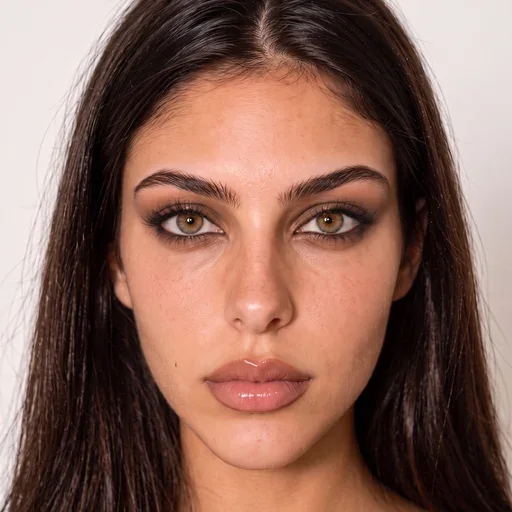
On a real shoot, hair and makeup get as much planning as the clothes, and a single line in your prompt does the same work. Slicked-back wet-look hair, a low loose bun, a bare fresh face with groomed brows, or one strong element like a graphic eyeliner shape. Pick one statement and keep the rest natural. Editorial makeup often means visible skin texture rather than heavy retouching, so ask for natural skin with real texture if you want it to feel like print rather than an advert.
Set: the backdrop is part of the story
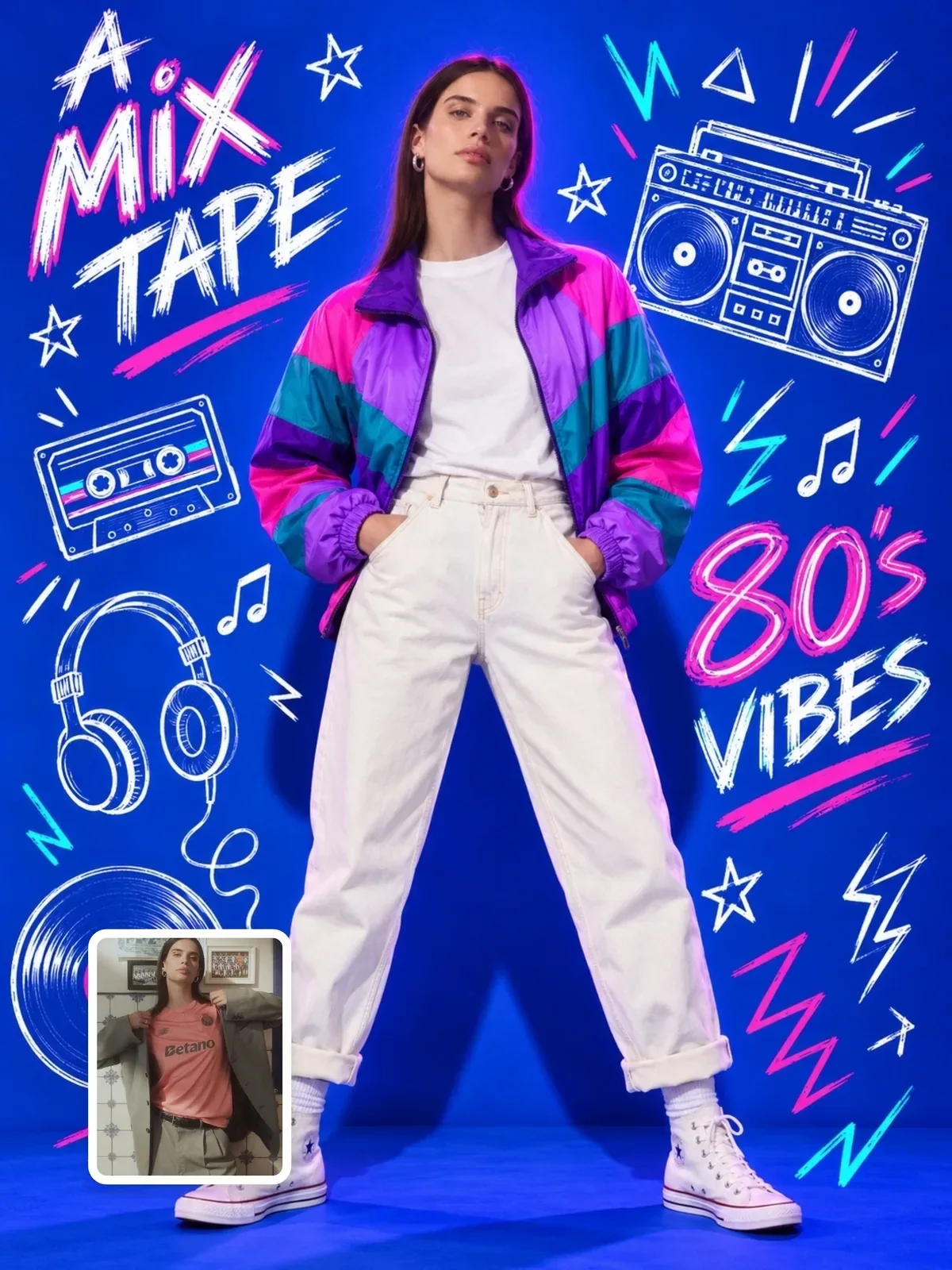
In the studio, the classic set is a seamless paper backdrop, a long roll that curves from the wall onto the floor so there is no visible corner. Paper comes in many colors, and choosing one is a real styling decision: a saturated backdrop that contrasts with the clothes makes them pop, while a backdrop in the same color family creates a calm tonal image.
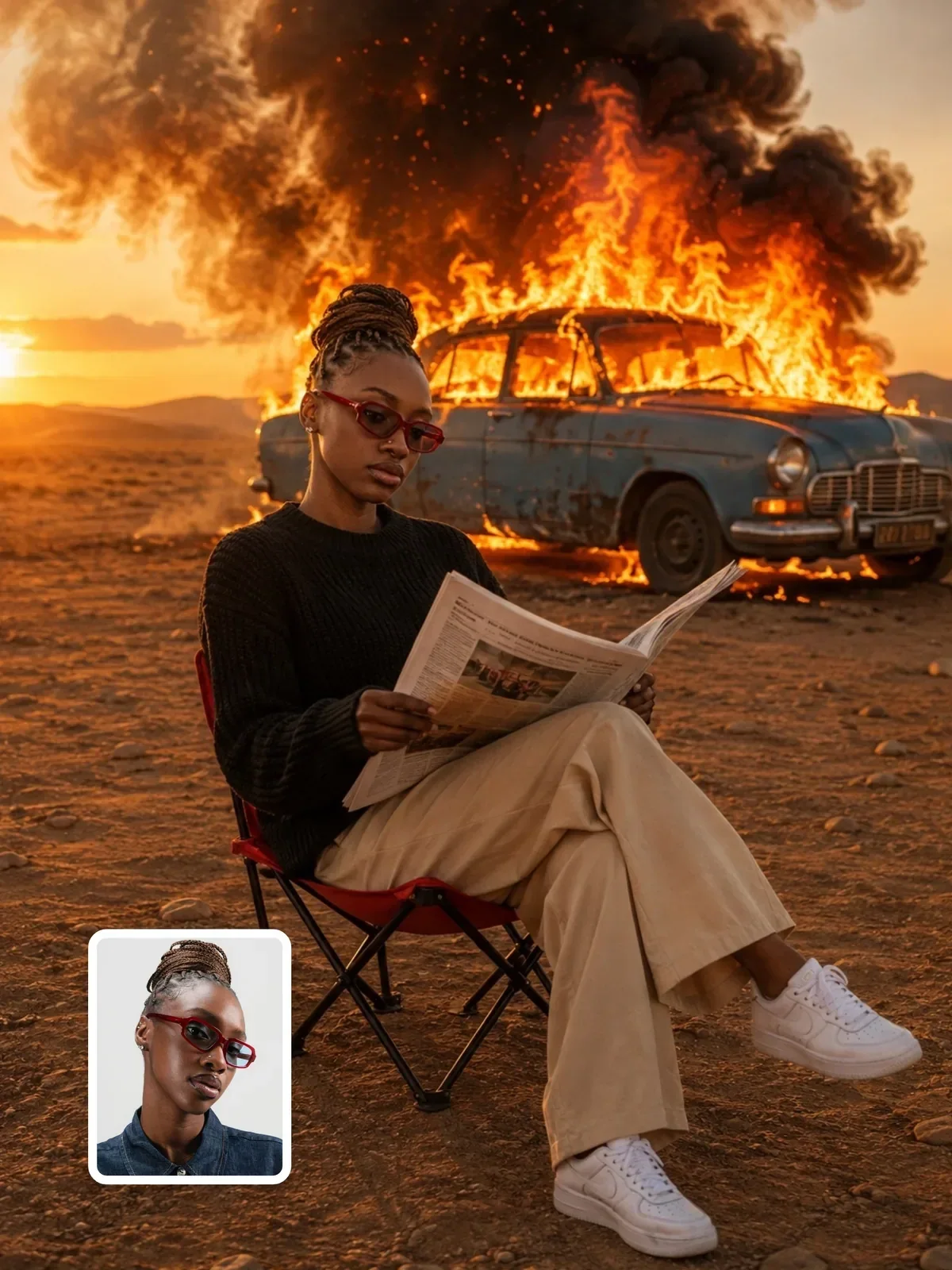
On location, editorial photographers pick places that echo or contradict the clothes. Couture in a parking garage, sportswear in a museum hall, a dark wool coat on a windy coastline. The contrast is the idea. Name the place, the time of day and one or two real details: wet concrete, a row of fluorescent tubes, sea grass bending in the wind.
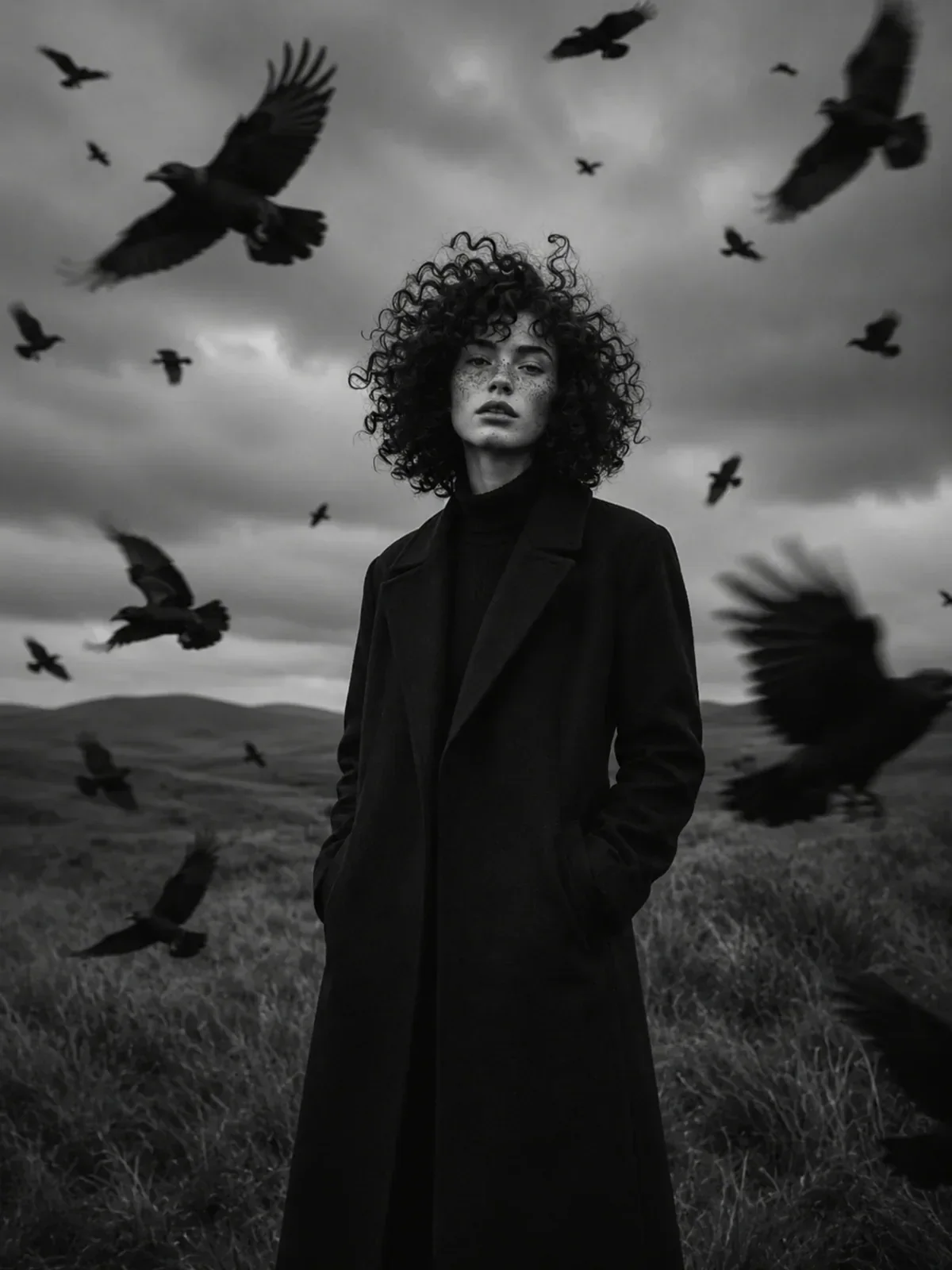

Props should be few and deliberate. A single chair, a mirror, a ladder or a stack of books gives the model something to pose with and gives the image a shape. A room full of props looks like a lifestyle ad, not an editorial.
If you are unsure which backdrop color to choose, use the color wheel. A complementary backdrop, such as a cobalt blue paper behind a rust-orange suit, makes the clothes vibrate. An analogous backdrop, a neighbor on the wheel, makes everything calm and rich. A neutral gray lets texture and silhouette do the talking.
Pose: the part most prompts forget
If you do not describe a pose, you get a person standing straight and facing the camera, which is the least editorial pose there is. Fashion poses are built from angles: bent elbows, a hip shifted, a turned shoulder, weight on one leg. Angles create triangles of negative space between the arms and body, and those shapes are what make a figure look designed.
- Contrapposto: weight on one leg, hips and shoulders tilted in opposite directions. Relaxed and classic.
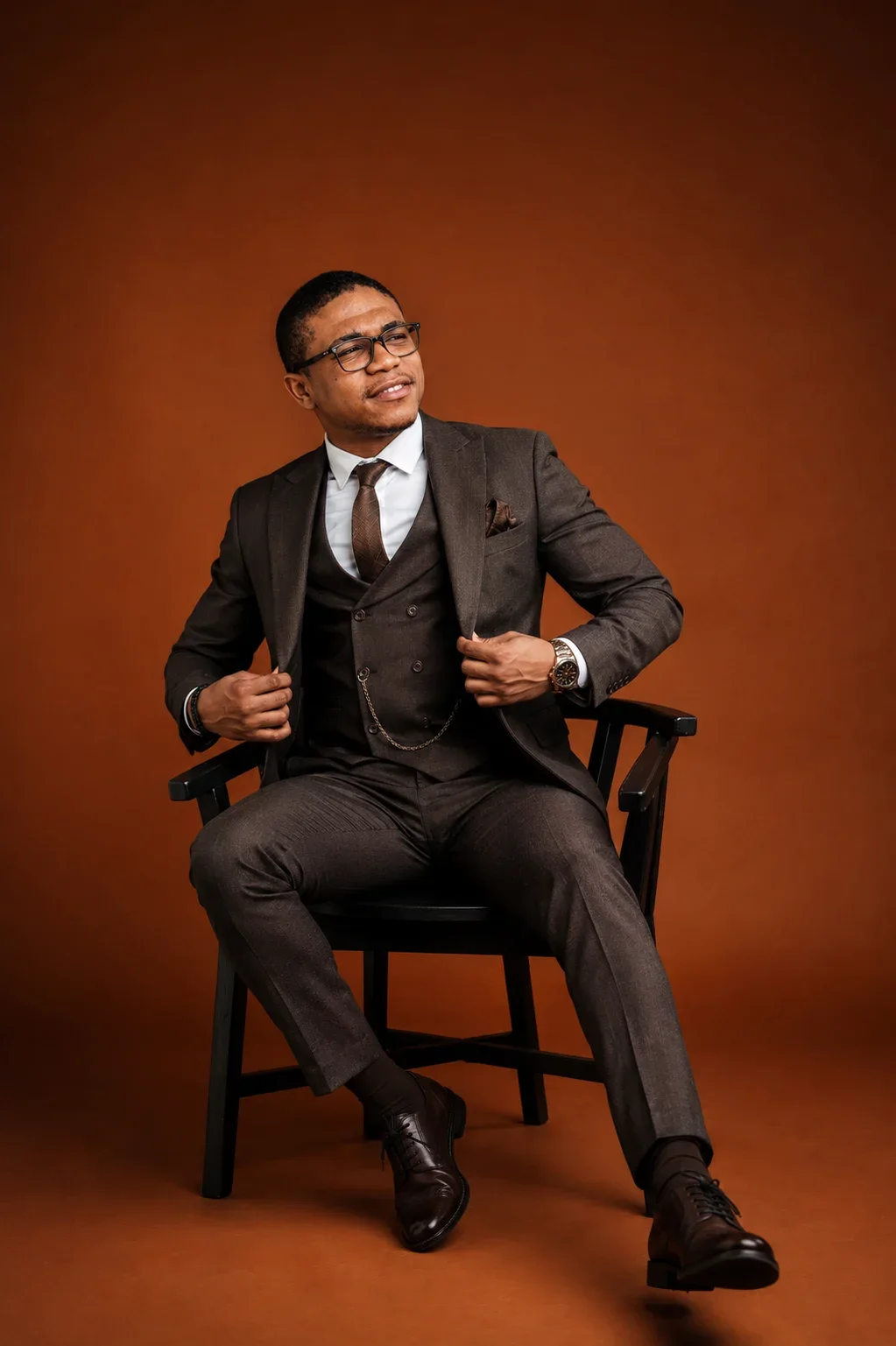
- Seated angular: sitting sideways on a chair, legs extended, one arm over the backrest.
- Hands busy: adjusting a cuff, holding a lapel, a hand in the hair. Busy hands look natural; hanging hands look stiff.
- Gaze off camera: looking past the lens makes the viewer an observer of a moment.
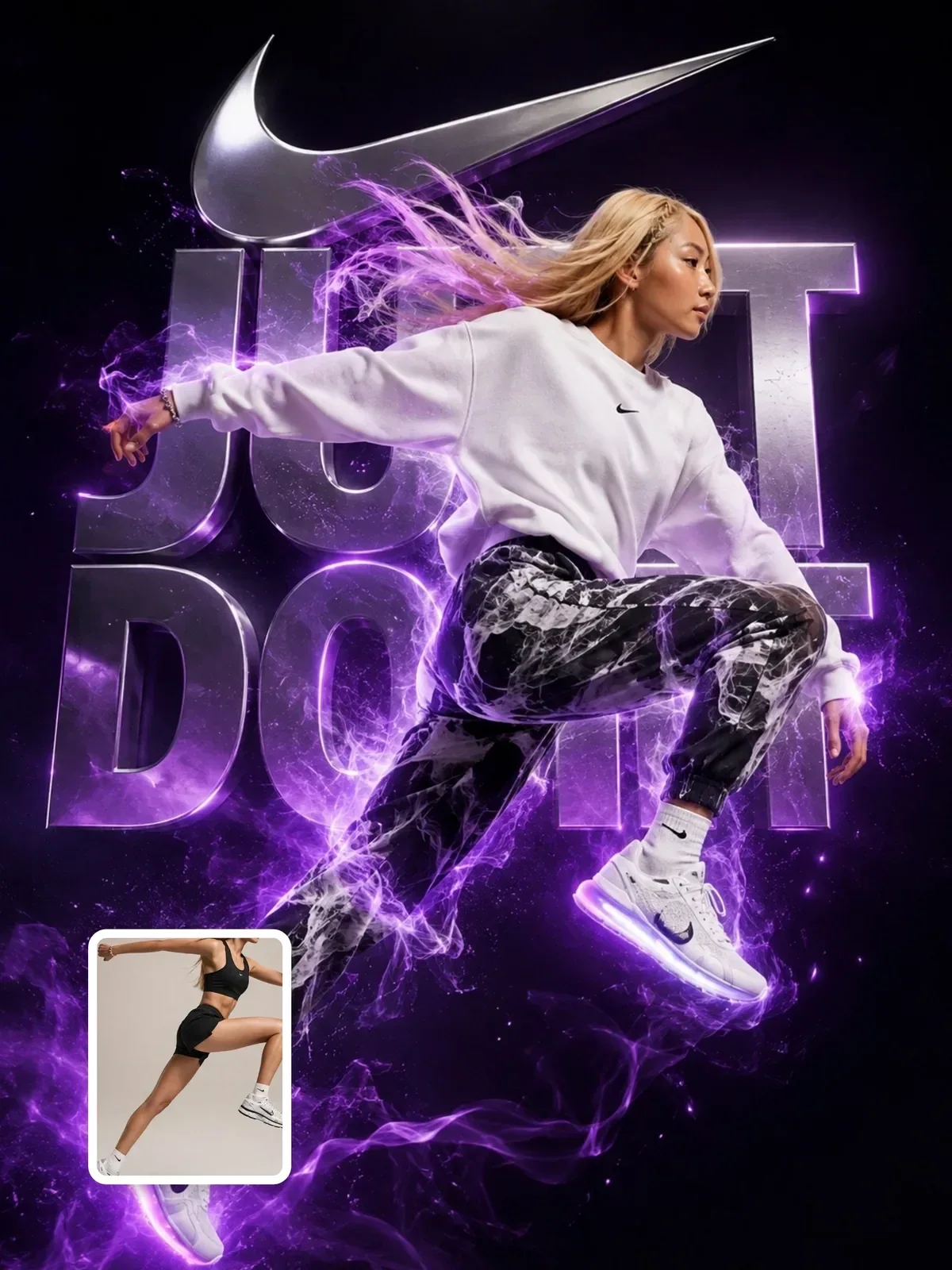
- Movement: a step mid-stride or a coat swinging gives energy and shows how fabric moves.
A stylish woman in a fashionable outfit posing in a studio.
Editorial fashion photo. A woman in an oversized camel wool coat with dropped shoulders over a cream knit, wide-leg chocolate trousers. She sits sideways on a black bentwood chair, legs extended, one hand lifting the coat collar, gaze off to the left. Seamless rust-orange paper backdrop, soft directional light from the right, full-length frame with space above her head.
If you are transforming your own photo into an editorial, keep the pose description gentle or ask the model to keep your original pose, because large pose changes are where faces drift. The guide on keeping a person recognizable explains why.
Camera and light for fashion
Lenses
For full-length shots, fashion photographers often use 50mm to 85mm from a few meters back, which keeps legs and body in natural proportion. A 35mm lens used close and low makes legs look longer and the scene more dramatic, a common editorial trick. Tight beauty and accessory shots use 85mm to 135mm for flattering compression. The focal length guide compares these in detail.
Light
- Large softbox or octabox at 45 degrees: soft, sculpting, flattering. The default for clean editorial.
- Hard direct light from a bare flash or the sun: crisp shadows on the backdrop, strong graphic look.
- On-camera flash at night or indoors: flat, bright subject, dark background, a deliberately raw party-photo feel.
- Window light: soft and directional, good for quiet, intimate stories.
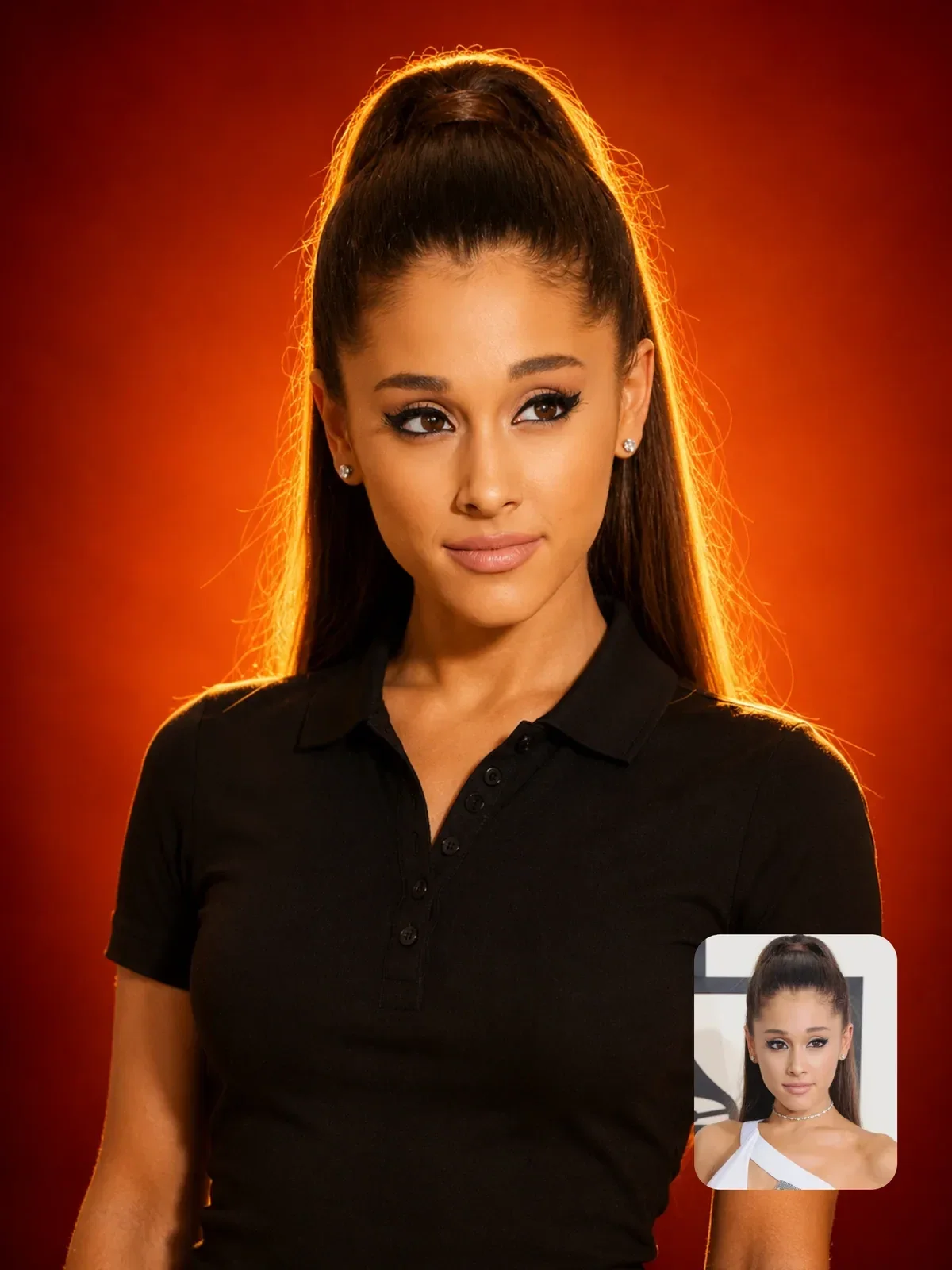
Mention where the shadow falls. A shadow cast sharply on a colored backdrop beside the model is one of the strongest editorial signals, and it only happens with hard light. For lighting setups by name, see studio lighting setups.
Think in a series, not a single frame
Editorials run across several pages, usually with a mix of shots: a wide establishing frame, a full-length look, a medium shot and a close detail of a fabric or accessory. Planning your prompts as a set makes each image stronger, because each one only has to do one job.
Keep the set, light and color palette fixed across the series, and change only framing and pose. That consistency is what makes a group of images feel like one story. It is also the easiest way to keep the model's interpretation steady from frame to frame.
Borrowing an era without copying anyone
Many editorials are built on a decade: the clean minimalism of the 1990s, the soft warm film tones of the 1970s, the big shoulders and bold color of the 1980s. Era references are useful because they bundle styling, makeup, color and photography into one idea that the model already understands.
Describe the era through its visible ingredients rather than naming a specific photographer or magazine. For a 1990s feel: slip dress, minimal makeup, gray seamless backdrop, slightly cool color, direct flash. That gives you the mood without imitating someone's signature work, and it keeps you in control of each part. The same idea applies to film looks; the guide on film looks in AI images covers grain and color stocks.
Plan a three-frame story
Try this with your own photo or an invented model. Write one shared block first, then three short frame lines.
- Shared block: story in one sentence, outfit with fabrics and fit, palette, set or location, light direction and quality.
- Frame one, wide: model small in the frame, location dominant, 35mm feel.
- Frame two, full-length: the hero piece clearly visible, a strong angular pose, 50mm to 85mm.
- Frame three, detail: a hand on a lapel, a shoe on wet concrete, a sleeve in the wind, 100mm macro feel.
Lay the three results side by side. If they look like they belong to the same magazine story, your shared block is doing its job. If one feels off, change only that frame's line and run it again.