

Black Friday SaleEnds in0 00:00:00
PromptOpen ChatGPT
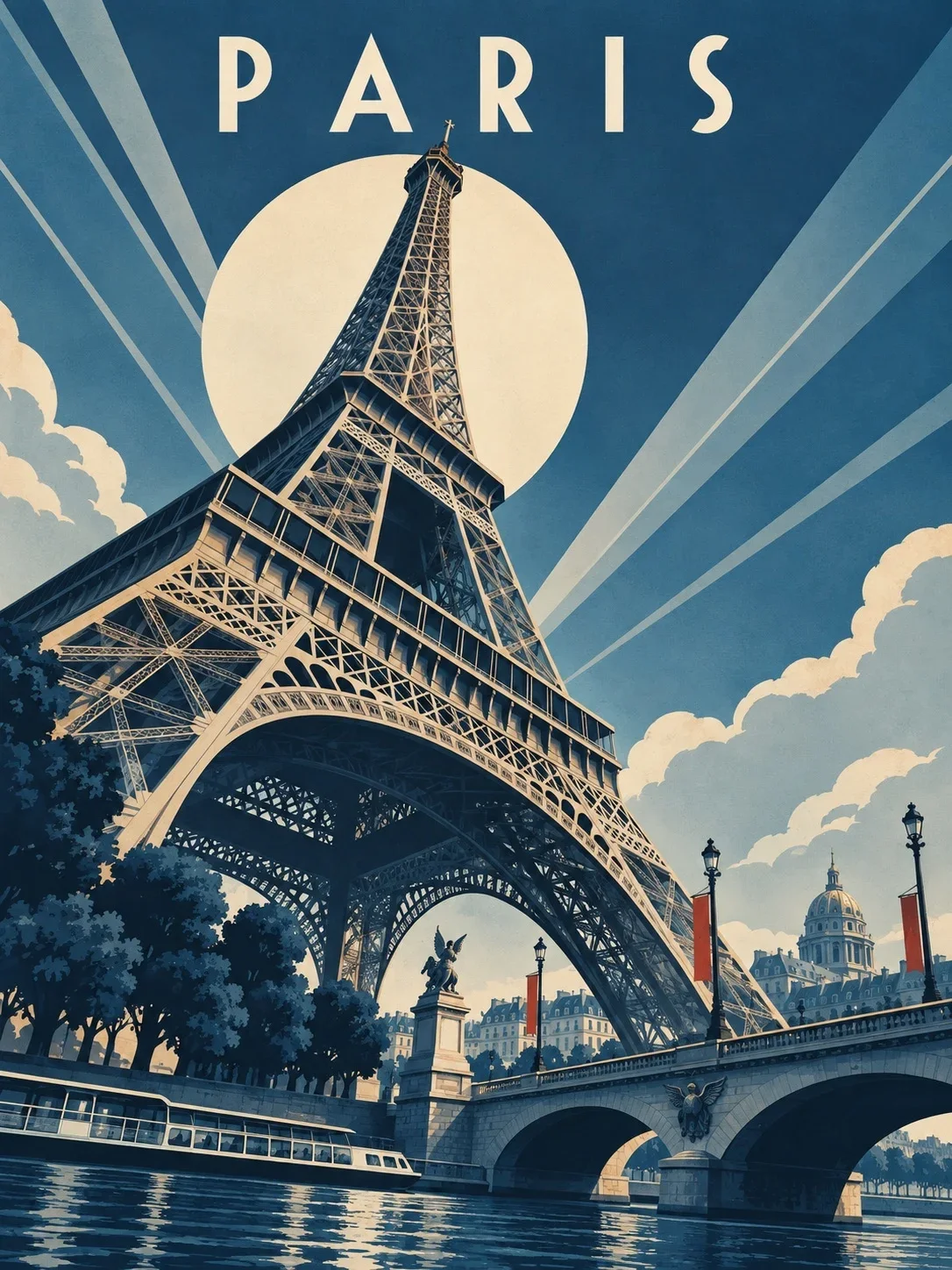
Art Deco travel poster
A Visual AI Club ChatGPT image prompt, ready to use.
Use the Copy button below for the full text, then run it in ChatGPT.
Learn the craft behind it in the guide and in Learn AI Academy.
+19 more lines · Copy gets the full text
256
479
Prompt guide
Art Deco travel poster
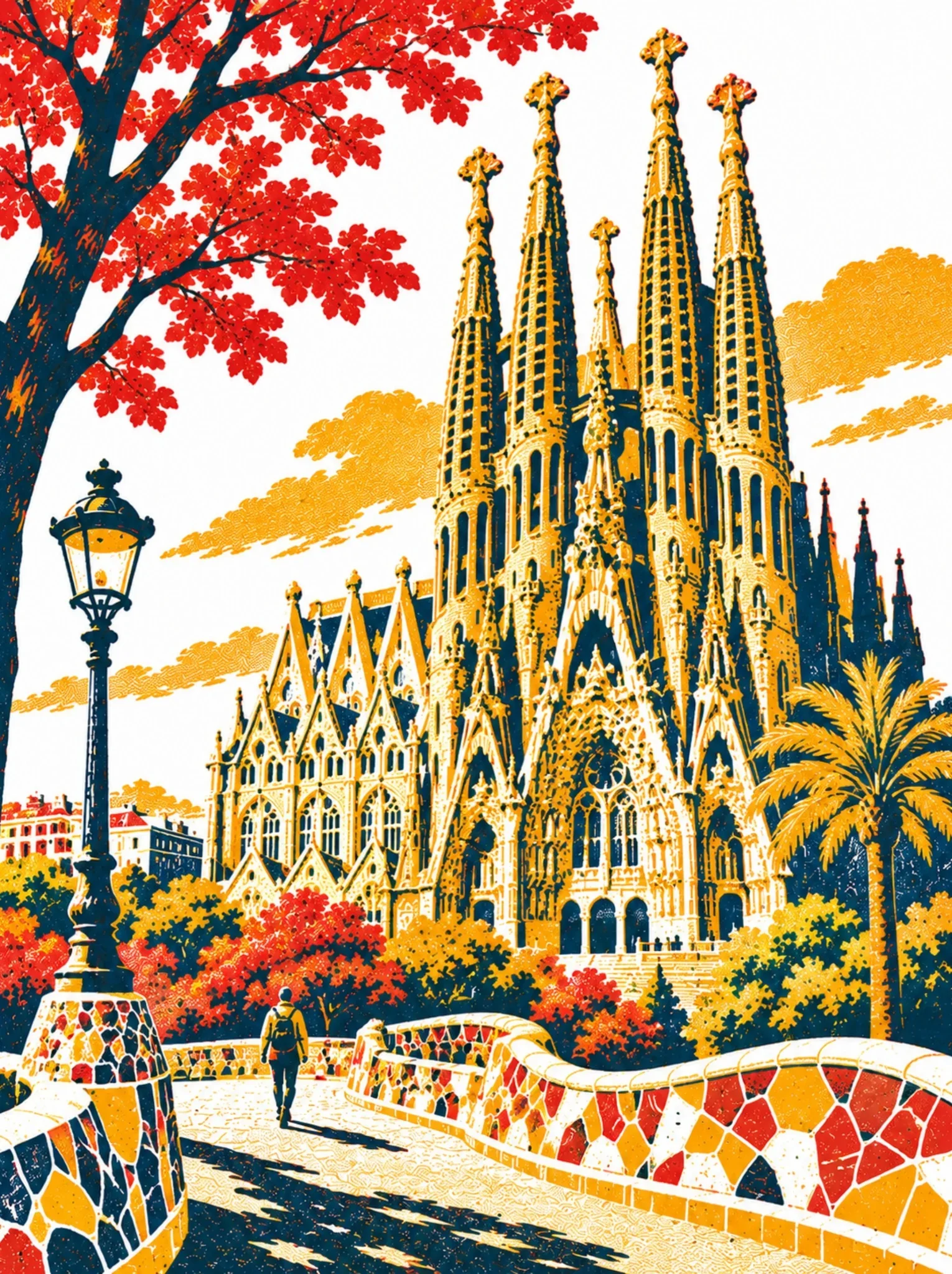
A fill-in-the-blanks template for a 1930s-style travel poster of any city: a towering landmark seen from below, a pale disc and radiating rays behind it, and the city name in wide-spaced capitals. Unlike most vintage poster prompts, it deliberately avoids warm gold and sepia in favor of cool, desaturated blues.
By the Visual AI Club team · How these guides are written
You need
- Tool
- ChatGPT
- Input
- Your own photo of the landmark, plus the city name
- Works best with
- Short city names and a landmark described by its shape
- You get
- A cool-blue 1930s poster with the landmark towering from below
Steps
Fill every bracket
Put the city in both CITY NAME slots, then add three to five supporting elements like a river and six to eight cool colors.
Describe the landmark's shape, not its fame
Curved iron legs, a narrowing lattice spire and an observation deck give the model more to draw than a name.
Check every letter of the title
Long names can drop or swap letters, so compare the wide-spaced capitals with the real spelling.
If this happens
Do this
If this happens
It came out gold and sepia
Repeat the ban on mustard, ochre, gold, amber and warm sunsets.
The city name is misspelled
Regenerate; the text lock already limits lettering to that one name.
The landmark looks flat, not towering
Ask again for the low camera angle with the upper third open for sky, disc and title.
Your town has no famous landmark
Treat a lighthouse, church spire or harbor crane as the hero building.
If you want
One warm highlight
one sunlit face of the building against navy shadowsIf you want
A stronger diagonal
a bridge running from lower left to upper rightDetailed guide
Filling the bracketed slots
Four placeholders in square brackets do the work. Replace [CITY NAME] in both places it appears, describe one or two landmarks as they look from street level, add three to five supporting elements such as a river or bridge, and list six to eight cool colors that suit the place.
The more physical your landmark description, the better. Instead of naming the tower, describe it: four curved iron legs, a narrowing lattice spire, an observation deck near the top. Shape words give the model something to draw.
Why yellow and orange are banned
The negative prompt rules out mustard, ochre, gold, amber and warm sunsets. Ocean-liner posters of the era leaned heavily on navy and sea blues, while modern models tend to slap a golden-hour glow on anything labeled vintage. Banning warm tones forces a cooler, more graphic result.
Warm colors are still allowed as small accents on lit surfaces. One sunlit face of a building against blue shadows makes the landmark pop without turning the poster orange.
Composition rules baked in
- A strong diagonal from lower left to upper right, often traced by a bridge or shoreline.
- A low camera angle so the landmark towers over the viewer.
- The upper third left open for sky, the cream disc and the title.
- Navy as the one shadow color, which keeps the print look unified.
- Flat color planes with light paper grain instead of soft gradients.
Getting the city name spelled right
Text is where image models stumble. Short names like Rome or Oslo usually come out clean. Long names may lose or swap letters, so check the spelling closely and regenerate if needed. The TEXT LOCK asks for no other words, which helps by giving the model only one thing to letter.
Finished posters make good framed prints for a trip you took, a cover image for a travel blog post, or a set of matching city prints for a hallway.
Questions people ask
Do I need to upload a photo?
The header asks for one, and a photo of the landmark helps the model get its shape right. Your own travel photo is ideal.
Can I use it for a small town without a famous landmark?
Yes. Describe whatever defines the place, such as a lighthouse, a church spire or a harbor crane, and treat it as the hero building.
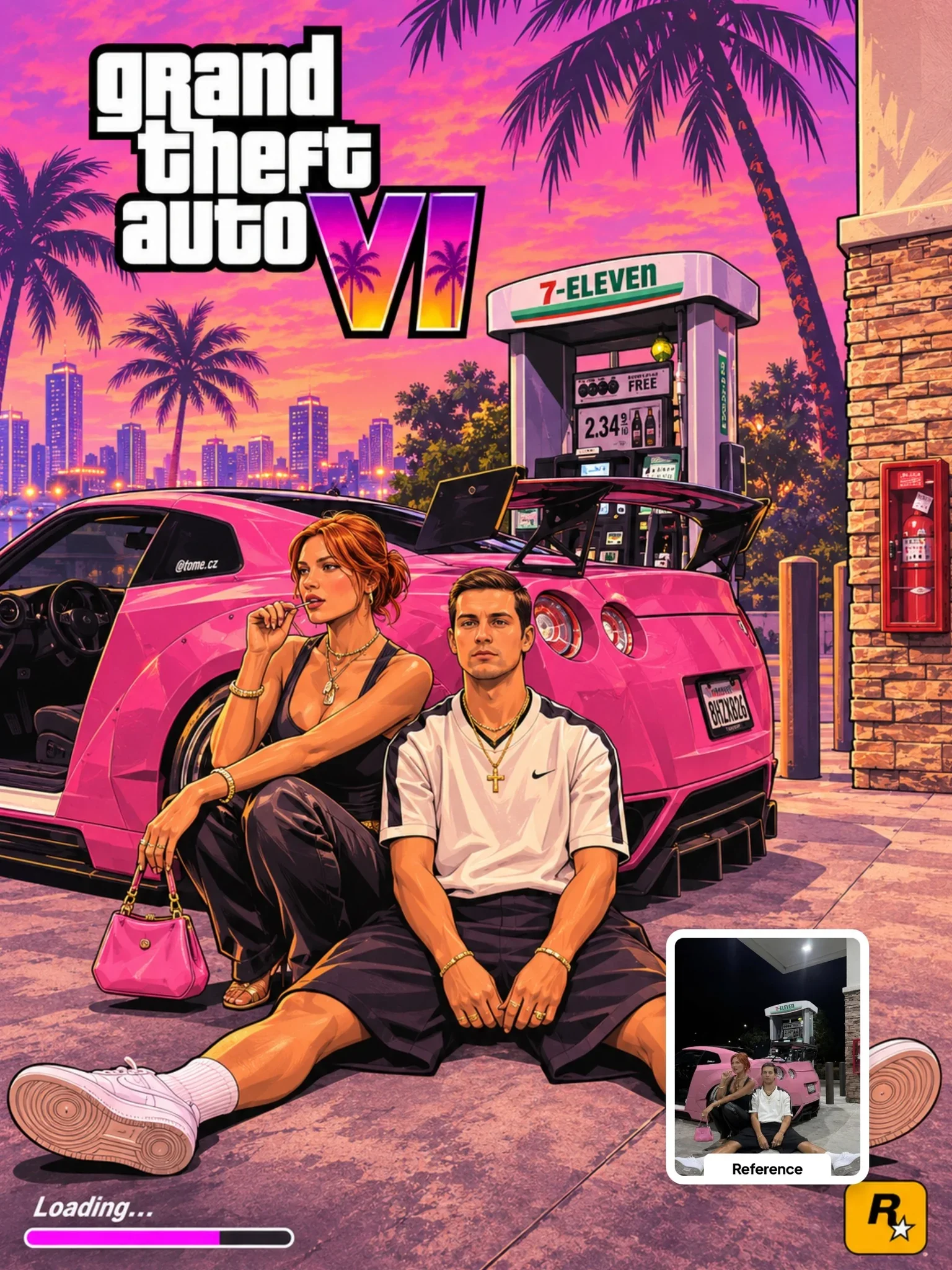 Next prompt · ChatGPTGTA VI Artwork PromptOpen








Learn AI Academy
Learn AI with Visual AI Club
Copy prompts that work, then learn why they work. The Learn AI Academy teaches AI image and AI video creation step by step: writing prompts, light and camera, consistent characters, product shots and directing a short film with Seedance.
Open the Learn AI Academy