Black Friday SaleEnds in0 00:00:00
PromptOpen ChatGPT
Paper Watercolor Prompt
A Visual AI Club ChatGPT image prompt, ready to use.
Use the Copy button below for the full text, then run it in ChatGPT.
Learn the craft behind it in the guide and in Learn AI Academy.
+15 more lines · Copy gets the full text
349
675
Prompt guide
Paper Watercolor Prompt
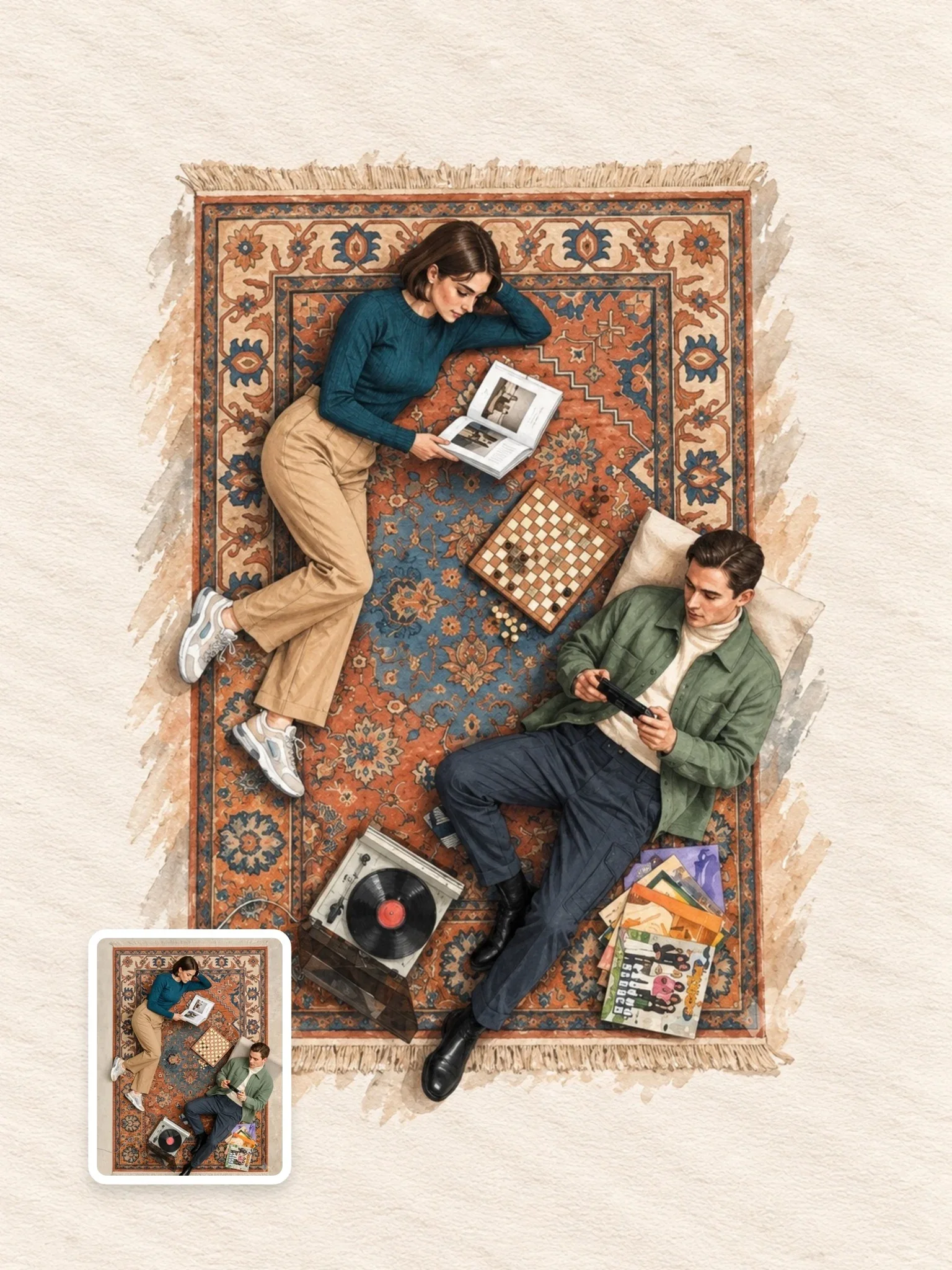
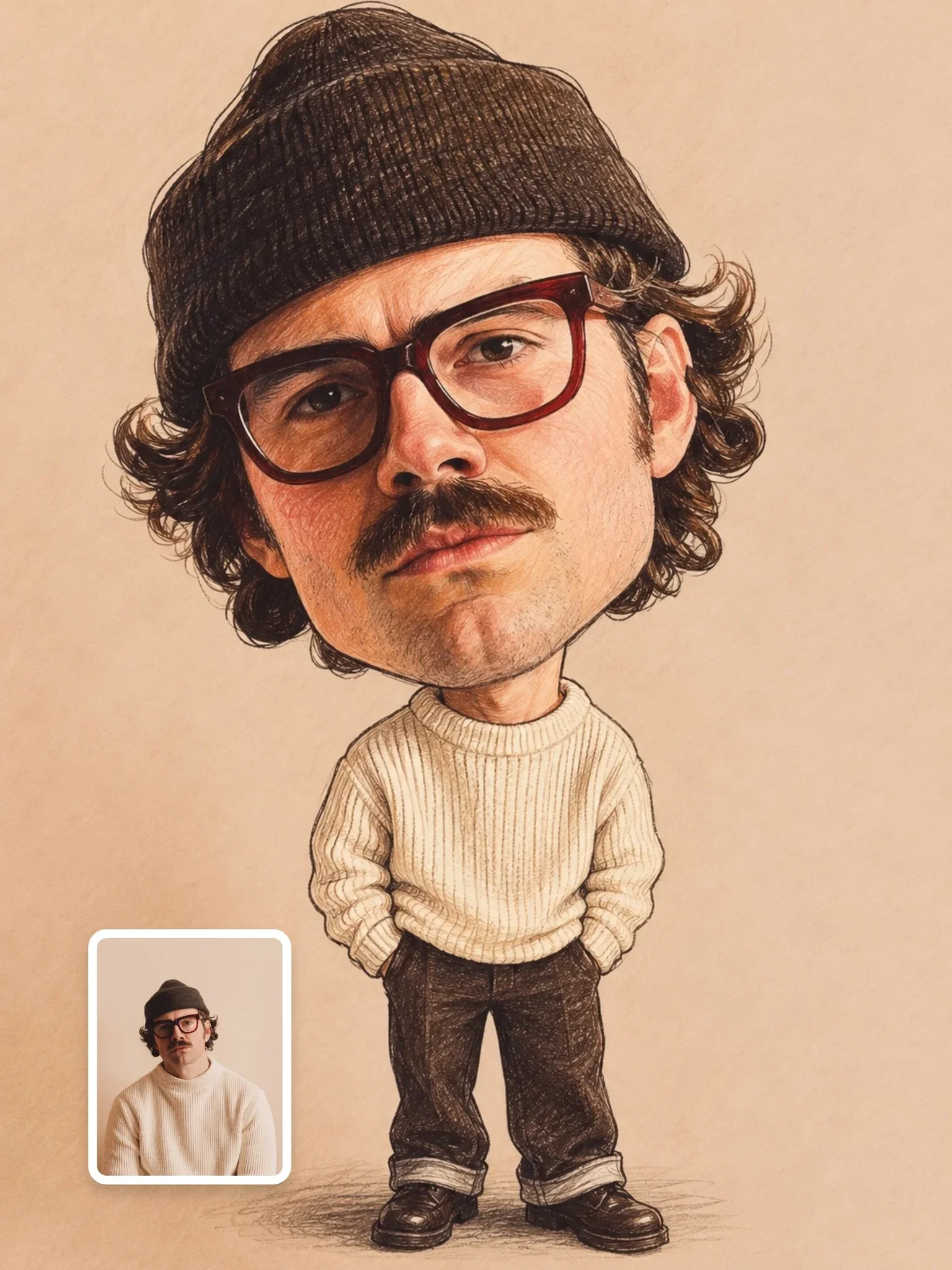
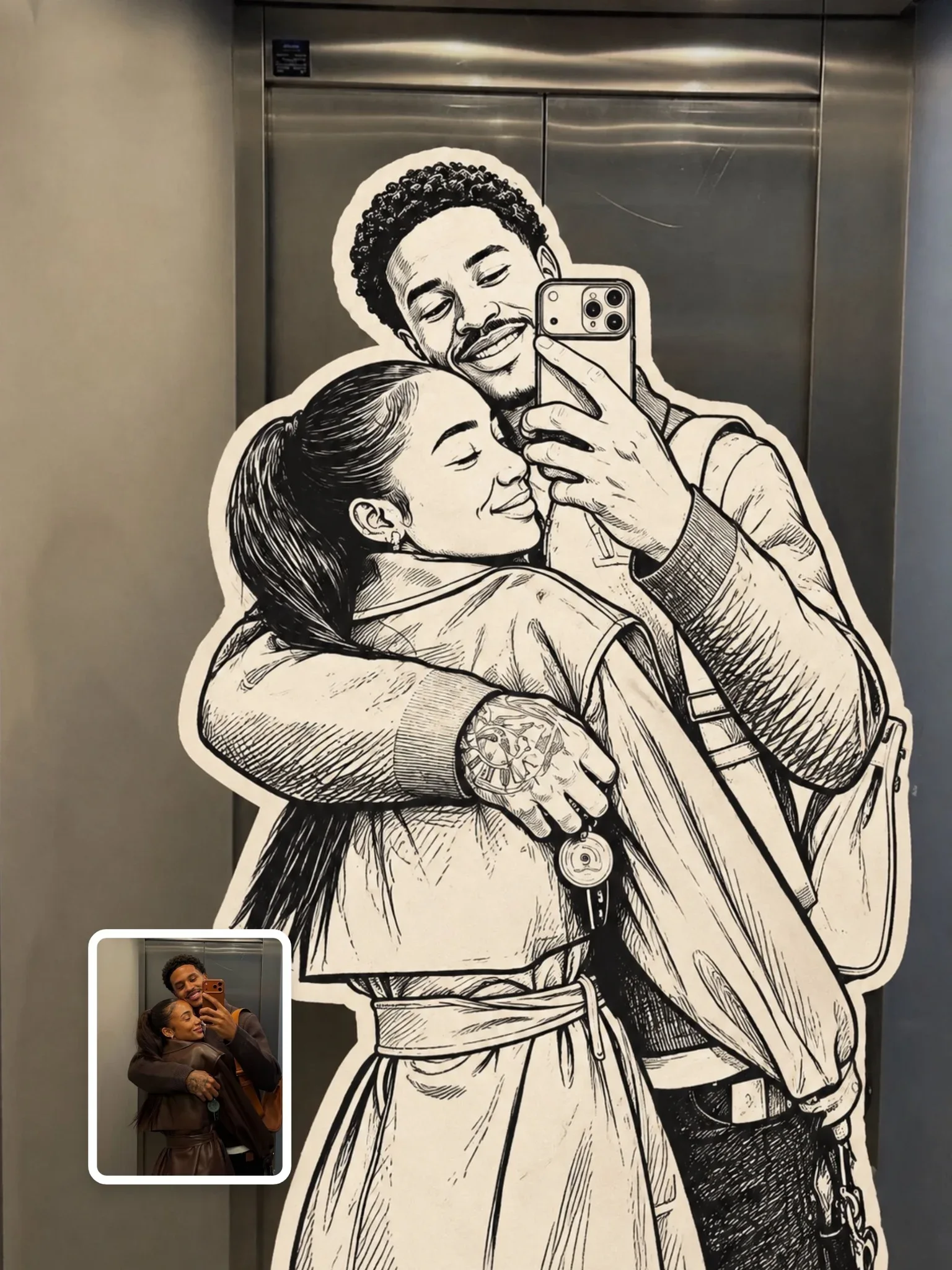
Think of a quiet page in an art book: a small, centered figure in watercolor, acrylic, colored pencil and ink on warm ivory paper, surrounded by lots of empty space. It feels more like a gallery piece than a portrait, with a restrained navy, dark green and ochre palette.
By the Visual AI Club team · How these guides are written
You need
- Tool
- ChatGPT
- Input
- A full or three-quarter photo holding an umbrella, a bag or flowers
- Works best with
- A clear silhouette and one distinctive object; not a tight face crop
- You get
- A small mixed-media figure on a 3:4 sheet of mostly bare ivory paper
Steps
Rewrite the umbrella photo's details
Replace the wavy hair, navy sweater, green umbrella and ring with the four or five things that identify your own picture.
Tune the palette to your clothes
Keep the navy, dark green and ochre line, and add a brick red if your photo shows a red coat.
Read the layers on the sheet
Thin ink outlines, loose washes, a few solid acrylic shapes and pencil grain should all sit on visible ivory fibers.
If this happens
Do this
If this happens
The figure fills the frame
Ask for a figure about a fifth of the canvas height with bare paper visible on every side.
It split into a photo and a drawing
Request a single illustration on one sheet; the negatives already rule out split-screen layouts.
An umbrella or beard appeared from nowhere
Those come from the original composition lines; delete them when your photo has neither.
The face could be anyone
Ask for slightly clearer eyes and smile while keeping the loose brushwork.
If you want
Room for a title later
leave wider empty paper above the figureIf you want
Lighter color
paler watercolor washes with more paper showing throughDetailed guide
Why the figure is kept so small
The format lock asks the subject to fill only about 15 to 25 percent of a 3:4 canvas. That is unusual for a portrait prompt, and it is the defining choice. Generous empty paper makes the image calm and gallery-like, and gives the eye room to notice brush marks and paper grain.
The negatives back this up with oversized subject and large illustration. If the model still fills the frame, say the figure should be about a fifth of the canvas height with bare paper visible on every side.
Lines tied to the original umbrella photo
The composition section was written for a specific picture: wavy dark hair, light facial hair, a navy sweater over a pale collar, a green umbrella with a curved wooden handle, and a ring on the hand. Run on a different photo, these lines can add an umbrella you weren't holding or a beard you don't have.
Replace that list with the four or five things that make your own photo recognizable: hair, one key piece of clothing, anything you are holding. Keep the palette line, or nudge it toward your clothes; a red coat would call for adding a brick red to the navy and green.
Mixed media, read layer by layer
- Ink: thin, slightly imperfect outlines that describe the figure.
- Watercolor: loose washes for skin and clothing, with rough pigment edges.
- Acrylic: a few solid shapes, often the umbrella or a coat, that anchor the color.
- Colored pencil: fine texture layered over the washes.
- Paper: ivory with visible fibers, showing through wherever the paint is thin.
Avoiding the photo-plus-drawing layout
A common hiccup with photo-to-illustration prompts is a result split into a photograph and a drawing. This one guards against it with split-screen, top-and-bottom layout and photographic half in the negatives. If it happens anyway, ask for a single illustration on one sheet.
Watch for the opposite too: a subject simplified so far that the face could be anyone. Asking for slightly clearer eyes and smile while keeping the loose brushwork usually restores the likeness.
Questions people ask
What kind of photo works best?
A full or three-quarter figure with a clear silhouette, ideally holding something distinctive like an umbrella, a bag or flowers. Tight face close-ups lose too much at this small scale.
Can I add a title or a date?
Text is excluded on purpose. Add it afterward in a design tool; the empty paper above or below the figure is a natural place for it.
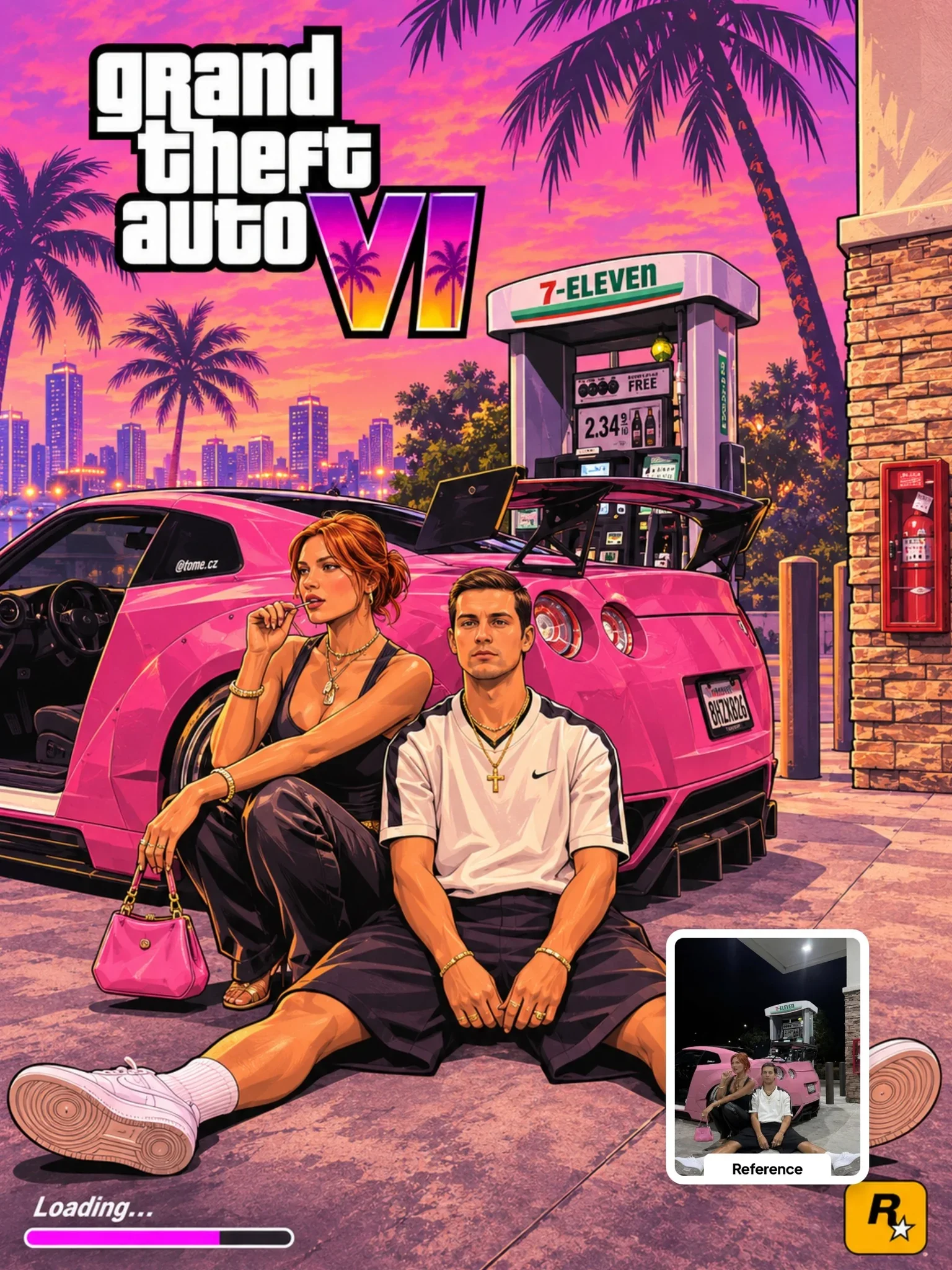 Next prompt · ChatGPTGTA VI Artwork PromptOpen
Learn AI Academy
Learn AI with Visual AI Club
Copy prompts that work, then learn why they work. The Learn AI Academy teaches AI image and AI video creation step by step: writing prompts, light and camera, consistent characters, product shots and directing a short film with Seedance.
Open the Learn AI Academy