

Black Friday SaleEnds in0 00:00:00
PromptOpen ChatGPT
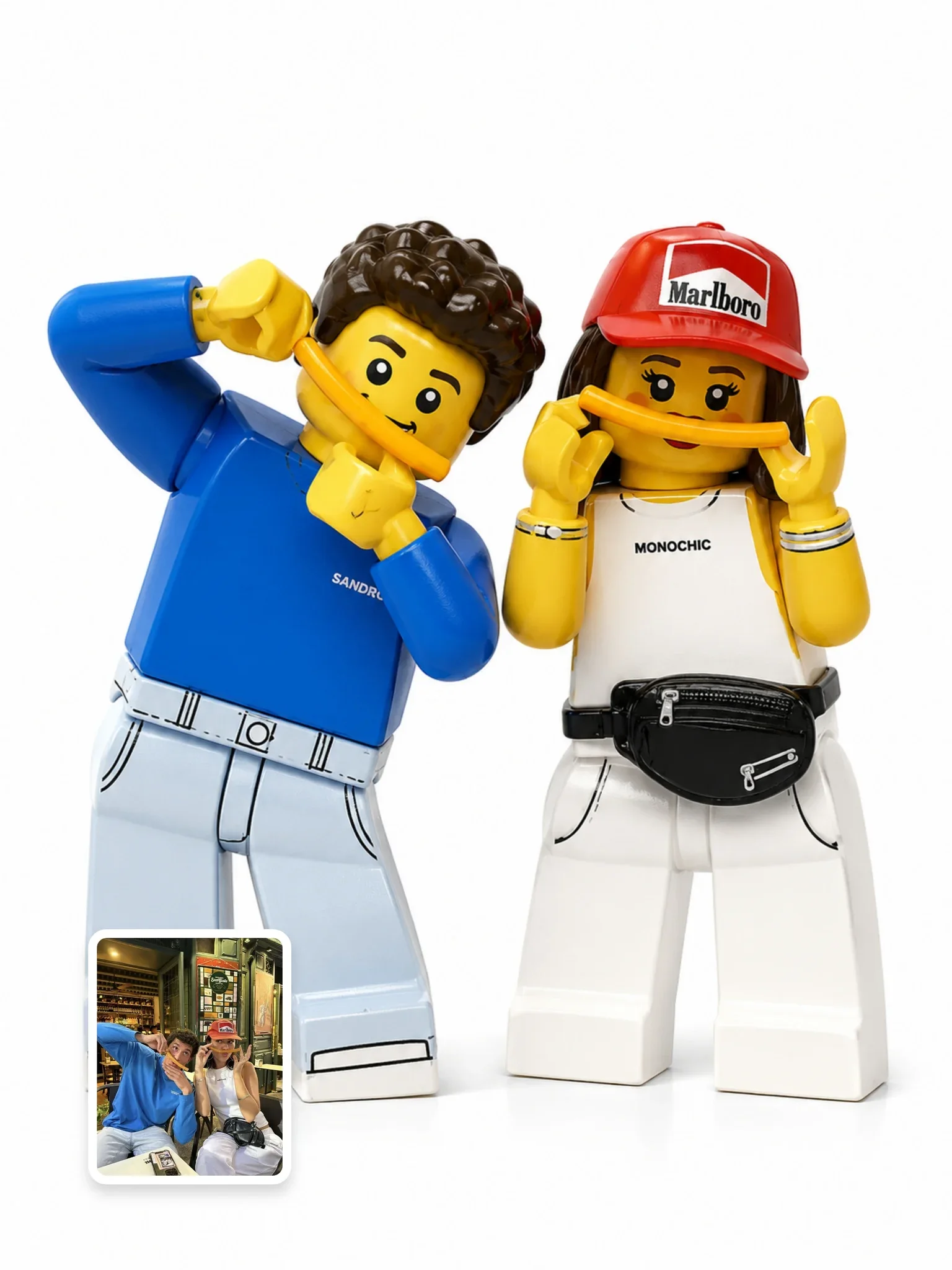
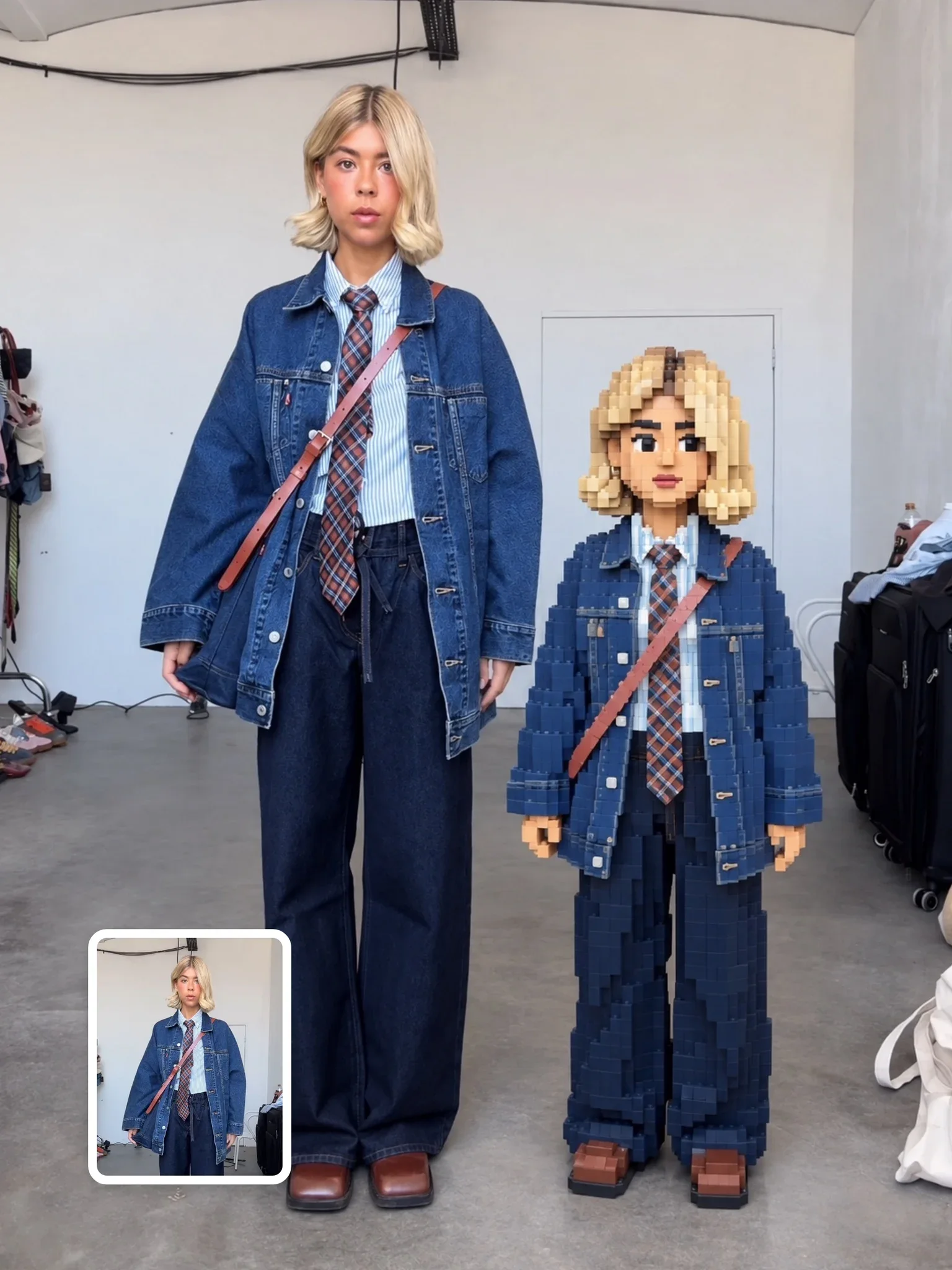
Everyone as LEGO minifigures
A ChatGPT image prompt written and tested by Visual AI Club.
Copy the full prompt with the button below and paste it into ChatGPT.
The guide further down explains each part and what to change.
+86 more lines · Copy gets the full text
360
631
Prompt guide
Everyone as LEGO minifigures
Upload a photo of one person, a couple or a whole group, and every person comes back as their own toy-brick-style minifigure, lined up on a clean white background like a custom collectible set. Outfits, hair colors and height differences carry over into printed torsos and molded hairpieces.
By the Visual AI Club team · How these guides are written
You need
- Tool
- ChatGPT
- Input
- A photo of one person, a couple or a group of two to five
- Works best with
- Every face visible and distinctive outfits like stripes or team jerseys
- You get
- One toy-brick minifigure per person, lined up on pure white
Steps
Choose yellow or skin-tone heads
The structure block leaves it open, so add one line picking classic yellow or skin tones, which help tell a mixed group apart.
Avoid half-hidden friends
People tucked behind others or cut off at the photo's edge are the ones the person count lock most often loses.
Count and line up the heights
Match the number of figures to the photo and confirm the tallest person is still the tallest in plastic.
If this happens
Do this
If this happens
Someone is missing or two people merged
Repeat the person count lock: one figure per visible person, nobody removed, merged or duplicated.
A figure wears a hat nobody had
Name the invented accessory and ask for it to be removed.
Plain grey outfits look generic
Ask for the collars, zippers, buttons and bag straps from the photo to be printed on the torso.
Faces do not look like anyone
Lean on hair shape, glasses and beards for recognition; the faces are simple prints by design.
If you want
A display base
stand the figures on a simple green baseplate, background still whiteIf you want
The classic toy look
classic yellow minifigure heads for everyoneDetailed guide
The head count rule
Group transformations often lose someone, merge two people or add a stranger. This prompt has a whole block, the person count lock, that spells out one figure per visible person and forbids removing, merging or duplicating anyone.
It helps if everyone is clearly visible. People half-hidden behind others or cut off at the edge of the photo are the ones most likely to go missing, so pick a shot where each face can be seen.
Clothes as printed plastic
Real minifigures carry their outfits as printed graphics on block torsos and short legs. The clothing lock asks the model to translate collars, zippers, buttons, bags and patterns into that printed toy language without falling back to generic toy clothing.
Distinctive outfits make the best figures. A striped shirt, a bright jacket or a team jersey reads instantly in toy form, while plain grey layers can end up looking generic.
Yellow heads or skin-tone heads
The structure block leaves this open: classic yellow heads or skin-tone heads. If you care which one you get, add a single line choosing it. Skin tones help recognition in mixed groups; yellow gives the most classic toy look.
Faces are simplified prints, so recognition comes mostly from hair shape, glasses, beards and clothing colors. Expect a charming likeness, not a portrait.
A quick head count before posting
- Count the figures against the photo.
- Compare heights: a tall person should still be taller in plastic.
- Look for invented accessories, such as a hat nobody wore, and ask for it to be removed.
- Make sure everyone in the photo is happy to appear in the set.
Questions people ask
How many people can I include?
The prompt has no upper limit, but small groups of two to five give the cleanest results. Large groups shrink each figure and make mistakes more likely.
Can I add a background or a base plate?
The prompt keeps a pure white background on purpose. You can ask for a simple green baseplate under the figures, but avoid full scenery or you lose the product-shot look.
Is this an official LEGO image?
No. It is a toy-brick style rendered by an image model, with no link to the LEGO company. Use it for personal keepsakes and fun, not as merchandise.
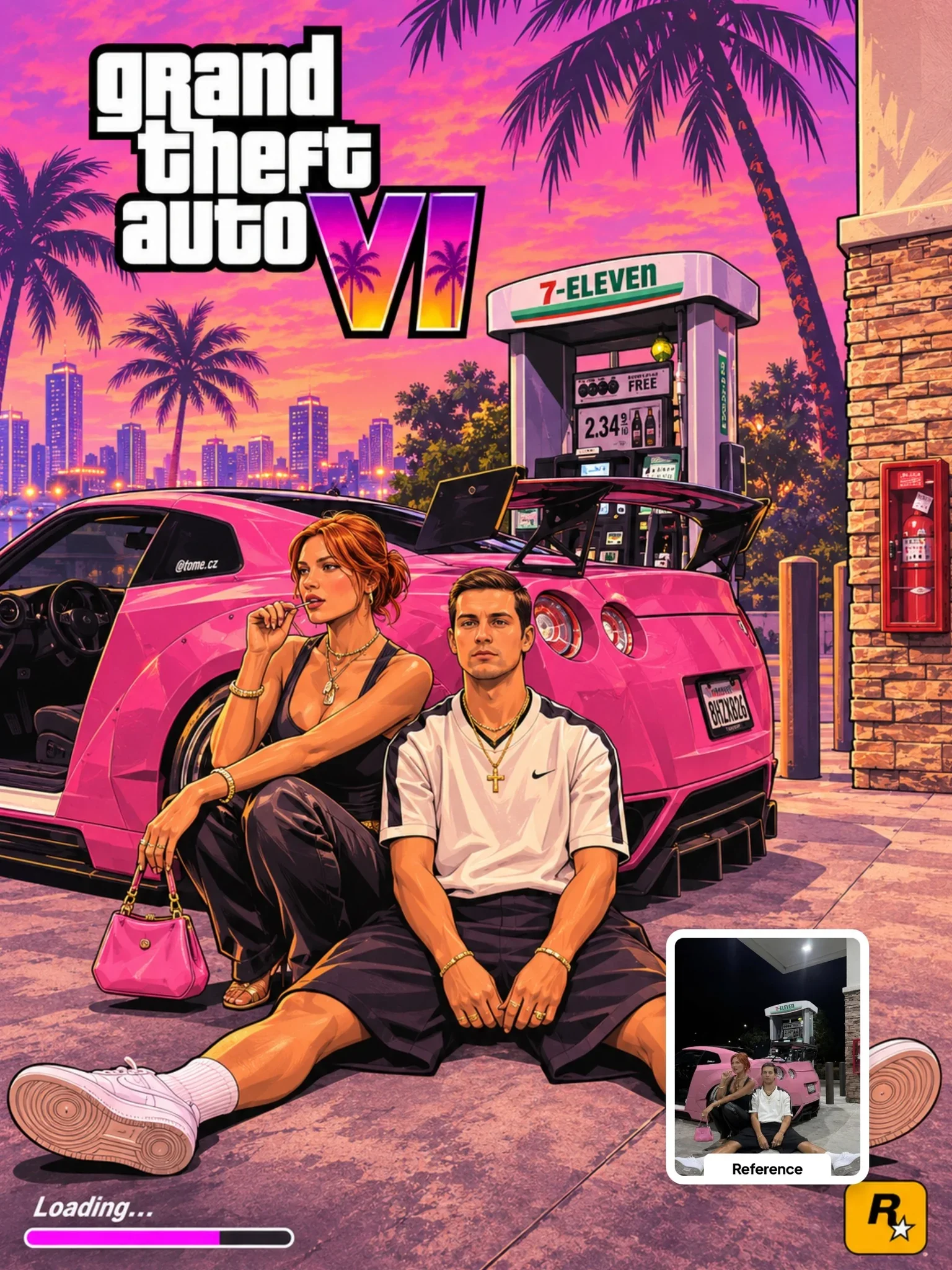 Next prompt · ChatGPTGTA VI Artwork PromptOpen


Learn AI Academy
Learn AI with Visual AI Club
Copy prompts that work, then learn why they work. The Learn AI Academy teaches AI image and AI video creation step by step: writing prompts, light and camera, consistent characters, product shots and directing a short film with Seedance.
Open the Learn AI Academy