

Black Friday SaleEnds in0 00:00:00
PromptOpen ChatGPT
Neon Point Cloud Art Prompt
A Visual AI Club ChatGPT image prompt, ready to use.
Use the Copy button below for the full text, then run it in ChatGPT.
Learn the craft behind it in the guide and in Learn AI Academy.
+20 more lines · Copy gets the full text
30
229
Prompt guide
Neon Point Cloud Art Prompt
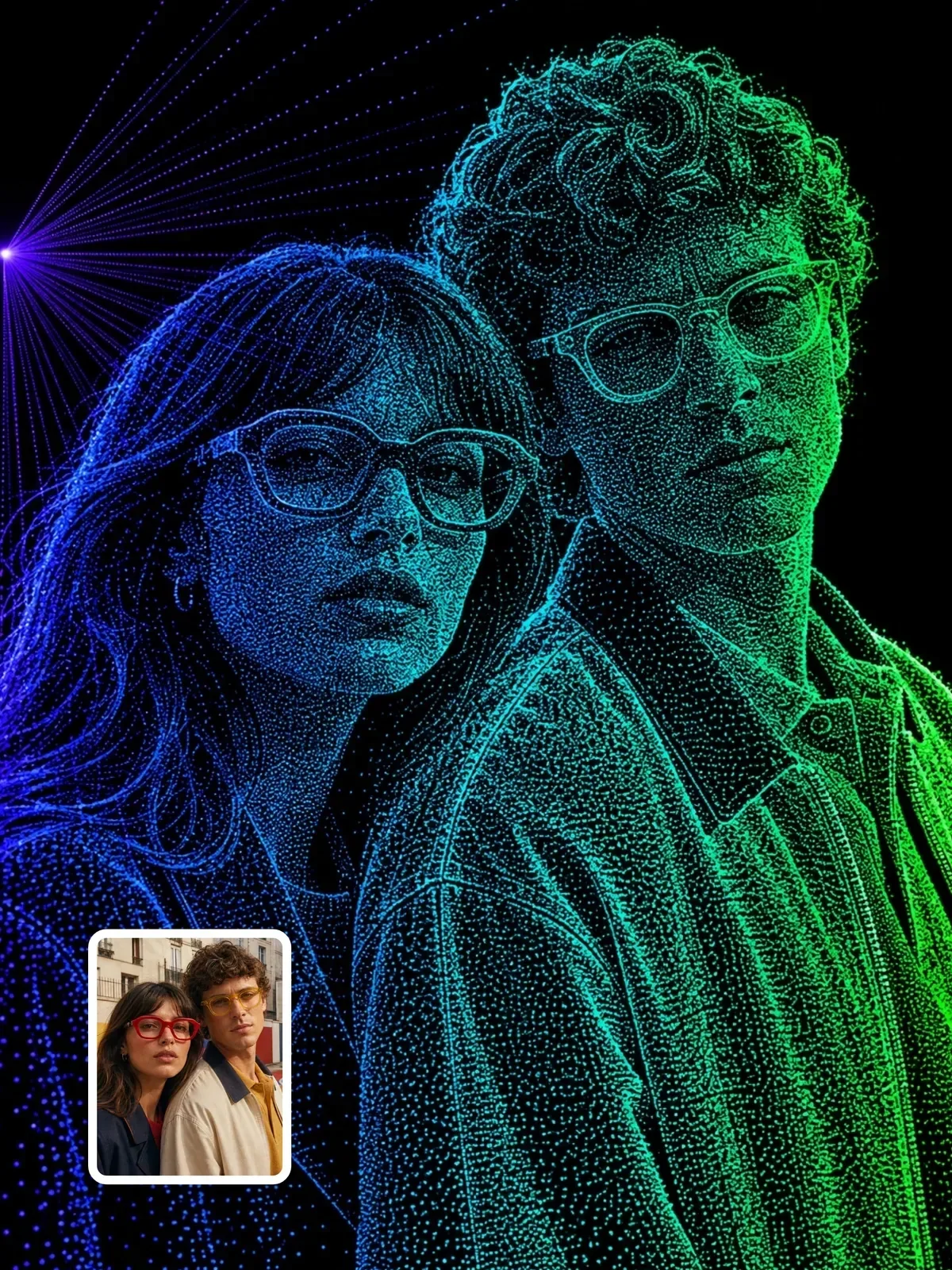
Your photo is rebuilt as a laser-scan point cloud: thousands of separate glowing dots hanging in black space, colored from violet to green by distance. The prompt mimics how real LiDAR scanners capture a scene, including the empty shadows they leave behind objects.
By the Visual AI Club team · How these guides are written
You need
- Tool
- ChatGPT
- Input
- A photo with real depth: a person in a hallway or a car on a street
- Works best with
- A subject standing apart from the background, with clear, simple shapes
- You get
- Glowing scan dots in black space, colored violet to green by distance
Steps
Leave a gap behind your subject
Space between the person and the wall gives the laser room to cast a sharp, person-shaped hole in the points behind them.
Read the colors as distance
Near surfaces should glow violet, middle ones cyan and the far parts green; random sparkle means the depth ramp was ignored.
Look for the scanner signature
Radial sweep lines, thinning dots on steep edges and the far side faintly visible through the near side are signs of a convincing scan.
If this happens
Do this
If this happens
It looks like a photo sprinkled with dots
Ask again for pure black between every point and no skin or fabric texture at all.
Lace, leaves or hair became noise
Pick a subject with simpler shapes; very fine detail dissolves in a point cloud.
There is nothing to see on a flat wall
Use a scene with layers of depth; a head-on shot of a wall gives the scanner nothing to measure.
No shadows behind objects
Repeat the request for empty occlusion zones behind each object, facing away from the scanner.
If you want
A warmer palette
color the points by distance from red through orange to yellowIf you want
A denser scan
more points on surfaces facing the scanner, still with black gapsDetailed guide
What a real scanner would record
LiDAR works by firing laser pulses and recording where each one bounces back. The prompt copies that logic. Points are dense on surfaces facing the scanner and thin out on edges and steep angles, because fewer pulses return from those areas. Nothing is solid; there are always black gaps between dots.
That is why the scene feels hollow. The prompt even asks for the far side of the subject to show faintly through the sparse near side, as it would in a real scan viewer.
The violet to green depth ramp
Color here is data, not decoration. Each point gets its hue from its distance: violet, then cyan, then green. Scientific visualizations use ramps like this so you can read depth at a glance, and it gives the image a cool, technical look.
If you want a warmer piece, you could swap in a ramp such as red through orange to yellow. Keep the rule that color follows distance, or the image turns into random sparkles.
Shadows where the laser cannot reach
The SCANNER SIGNATURE block asks for radial sweep lines spreading from the scanner position and sharp empty zones behind objects. Those occlusion shadows are the most convincing detail: a person standing in front of a wall leaves a person-shaped hole in the wall points behind them.
Photos that scan well
- Scenes with real depth, like a person in a hallway, a car on a street or a chair in a room.
- A subject standing a little away from the background, so occlusion shadows have space to show.
- Clear, simple shapes; very fine detail like lace or leaves tends to dissolve into noise.
- Avoid flat, head-on shots of a wall, which give the scanner nothing to measure.
Questions people ask
Why does my result look like a photo covered in dots?
The model kept the photographic surface underneath. Ask again for pure black between every point and no skin or fabric texture at all, which the final rule already demands.
Is this an actual 3D scan I can rotate?
No. It is a single flat image styled after scan data. For a real point cloud you would need a scanner or a phone with a depth sensor and scanning software.
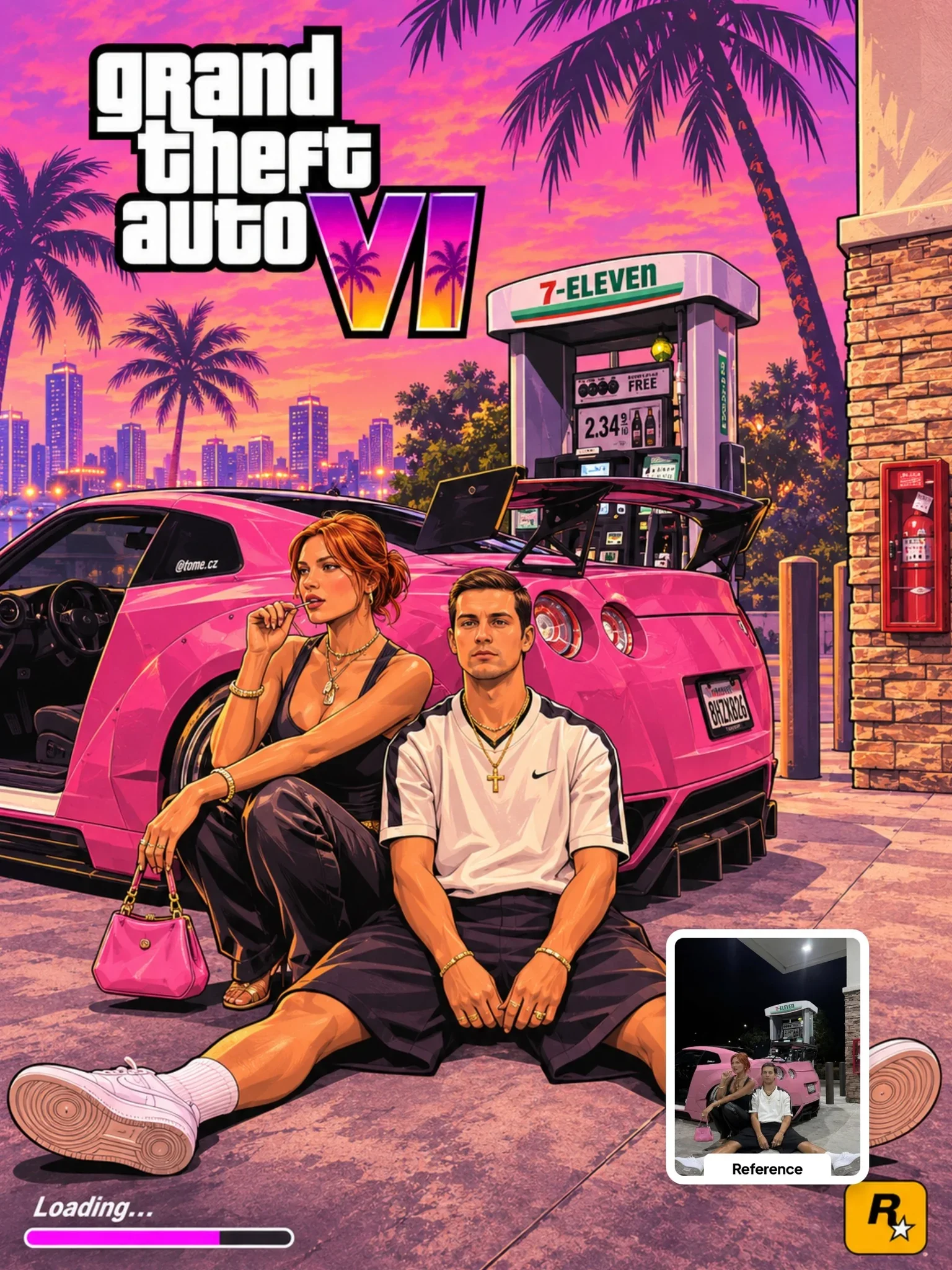 Next prompt · ChatGPTGTA VI Artwork PromptOpen










Learn AI Academy
Learn AI with Visual AI Club
Copy prompts that work, then learn why they work. The Learn AI Academy teaches AI image and AI video creation step by step: writing prompts, light and camera, consistent characters, product shots and directing a short film with Seedance.
Open the Learn AI Academy