
Black Friday SaleEnds in0 00:00:00
PromptOpen ChatGPT
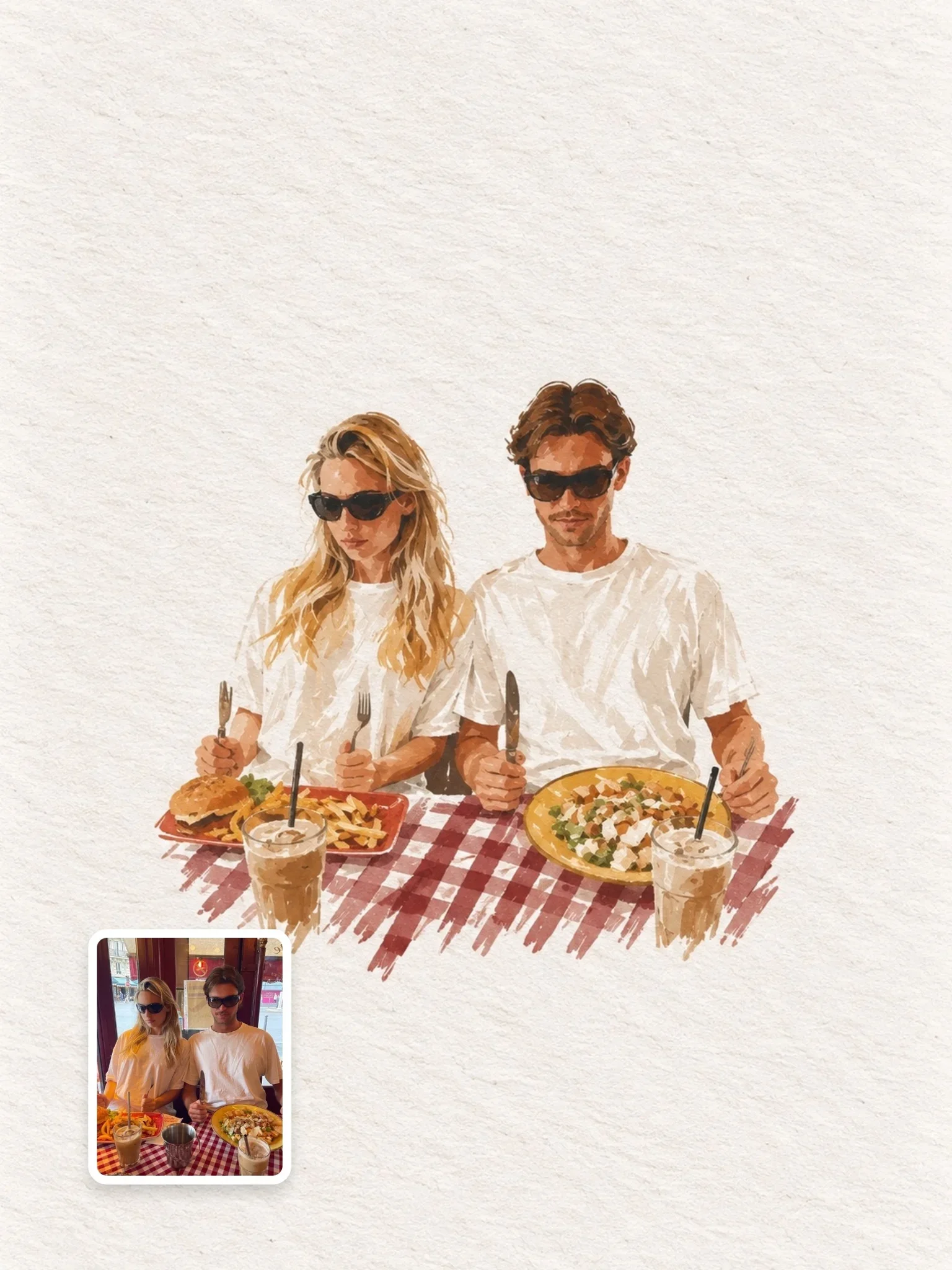
Minimalist handmade paper illustration for ChatGPT
Created by Visual AI Club and tested before it was published.
Press Copy below to get the complete prompt in one click.
Then follow the steps in the guide on this page for a close match.
+42 more lines · Copy gets the full text
103
278
Prompt guide
Minimalist handmade paper illustration
Your photo becomes a tiny painted figure floating in a large field of off-white paper, using four colors at most and no text at all. It is closer to an art-book plate than a portrait, and the emptiness around the subject is what makes it feel calm and expensive.
By the Visual AI Club team · How these guides are written
You need
- Tool
- ChatGPT
- Input
- A photo with a clear silhouette: a person, a pet or a held object
- Works best with
- One or two solid clothing colors and a distinctive gesture
- You get
- A tiny four-color painted figure on mostly bare off-white paper
Steps
Pick a shot with a readable outline
Someone walking with an umbrella or sitting on a bench survives being shrunk to 10 to 20 percent of the canvas far better than a headshot.
Attach a few photos for a matching set
The prompt transforms each uploaded image, so several pictures from one trip come back as a coherent series of paper plates.
Judge it by hairstyle and posture
Expect the face to shrink to a few marks; if clothing colors and the pose still say who it is, the scale is doing its job.
If this happens
Do this
If this happens
It looks like clean vector art
Ask again for dry-brush texture and visible paper fibers.
A signature or caption crept into a corner
Point to the mark and request zero text; the prompt bans it, but tiny marks still slip in.
Your patterned shirt vanished
Only four colors are pulled from the photo, so busy prints get dropped; an outfit with one or two solid colors survives.
The figure is too small to recognize
Ask for 30 to 40 percent of the canvas, knowing the quiet gallery feel fades as it grows.
If you want
A hint of where it happened
add a single thin horizon line beneath the figureIf you want
Somewhere to sit
include one simple chair beside the figureIf you want
A larger subject
scale the figure to about 35 percent of the canvasDetailed guide
Why the figure takes up so little space
The prompt fixes the subject at 10–20% of the canvas. That is unusually small, and it is intentional: most of the image is bare paper, so the eye goes straight to the figure and rests there. Editorial illustrators use this kind of negative space to make a single small drawing feel important.
Because the figure is small, the prompt asks the model to simplify aggressively. Expect a face reduced to a few marks, with recognition coming from hairstyle, clothing colors and posture rather than fine features.
Four colors, pulled from your photo
The color system tells the model to extract its palette from the photograph and stop at four. A red scarf, a navy coat, skin tone and hair color might be all you get. That limit keeps the result coherent and makes a series of these images look like a set.
Photos with one or two strong clothing colors give the best results. A busy patterned shirt forces the model to choose, and it may drop the pattern entirely.
Source photos that suit the style
- A full-body or three-quarter shot with a clear silhouette, such as someone walking, sitting on a bench or holding a cup.
- A distinctive gesture or object, like an umbrella or a bicycle, which survives simplification better than facial expression.
- Several photos at once if you want a matching series; the prompt says to transform each uploaded image.
- Pets work nicely, since their outline is easy to recognize at small sizes.
Keeping it handmade and text-free
If the result looks like clean vector art, ask again for dry-brush texture and visible paper fibers. If a signature or caption sneaks into a corner, point it out and ask for zero text; the prompt bans it, but small marks occasionally appear.
These images print well as small framed pieces, greeting cards or the cover of a photo album, where the empty paper leaves room to breathe.
Questions people ask
Can I make the figure bigger?
You can ask for 30 to 40 percent, but the quiet, gallery feel fades as the figure grows. Try the original scale first.
Why is there no background scene?
The prompt keeps the paper almost empty on purpose, allowing only a few lines to hint at the setting. Ask for a single horizon line or a chair if you want a small clue.
 Next prompt · ChatGPTGTA VI Artwork PromptOpen
Learn AI Academy
Learn AI with Visual AI Club
Copy prompts that work, then learn why they work. The Learn AI Academy teaches AI image and AI video creation step by step: writing prompts, light and camera, consistent characters, product shots and directing a short film with Seedance.
Open the Learn AI Academy